22 October, 2026 | 2:34 PM


RBI pegs FY26 inflation at 4.2%
08-02-2025 12:00:00 AM
FPJ News Service mumbai
Headline inflation, after moving above the upper tolerance band in October, has since registered a sequential moderation in November and December. Going ahead, food inflation pressures, absent any supply side shocks, should see a significant softening due to good kharif production, winter-easing in vegetable prices and favourable rabi crop prospects.
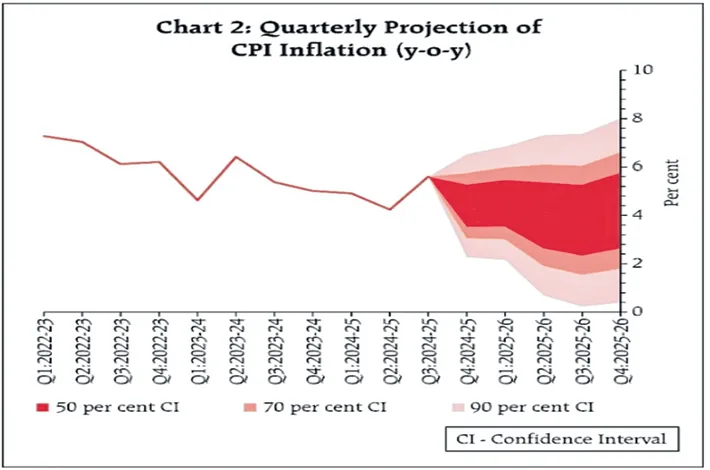
Core inflation is expected to rise but remain moderate. Rising uncertainty in global financial markets coupled with continuing volatility in energy prices and adverse weather events presents upside risks to the inflation trajectory. Taking all these factors into consideration, CPI inflation for the current financial year is projected at 4.8% with Q4 at 4.4%.
Assuming a normal monsoon, CPI inflation for the financial year 2025-26 is projected at 4.2% with Q1 at 4.5%; Q2 at 4.0%; Q3 at 3.8%; and Q4 at 4.2%. The risks are evenly balanced.
On the external sector, Malhotra said, India’s CAD moderated from 1.3% of GDP in Q2 of last year to 1.2% in Q2 of this year. According to the World Bank, India, with an estimated inflow of 129.1 billion US dollars, continues to remain the largest recipient of remittances globally in 2024.
The CAD for this year is expected to remain well within the sustainable level. As on 31st January this year, India’s foreign exchange reserves stood at 630.6 billion US dollars, providing an import cover of over 10 months. Overall, India’s external sector remains resilient as key indicators stay robust.
“The RBI’s exchange rate policy has remained consistent over the years. Our stated objective is to maintain orderliness and stability, without compromising market efficiency. Accordingly, our interventions in the forex market focus on smoothening excessive and disruptive volatility rather than targeting any specific exchange rate level or band. The exchange rate of the Indian Rupee is determined by market forces,” RBI Governor said.
After remaining in surplus from July to November 2024, system liquidity – as measured by the average net position under the liquidity adjustment facility–turned into deficit during December 2024 and January 2025. The drainage of liquidity is mainly attributed to advance tax payments in December 2024, capital outflows, forex operations and a significant pickup in currency in circulation in January this year.