20 September, 2026 | 8:17 PM


"Rebel Bastar" Looks Beyond the Conflict to Trace the History of Maoism
02-08-2026 09:44:43 PM
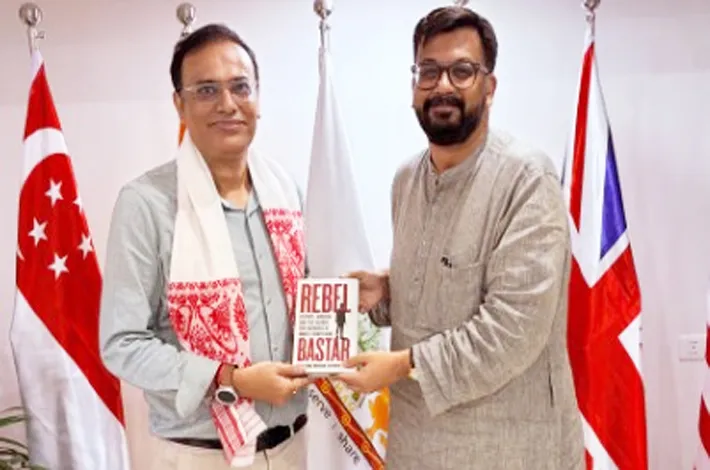
In March 2026: the Government of India announced that the Maoist insurgency had been effectively defeated, marking a significant milestone in the country's internal security journey. Yet, even as the conflict recedes from the headlines, an important question remains: how did Bastar become the epicentre of one of the world's longest-running insurgencies in the first place. Senior journalist and historian Shantanu Nandan Sharma explores this question in his latest book, Rebel Bastar: History, Maoism and the Search for Answers in India's Heartland.
Rather than viewing Maoism solely through the lens of security or conflict, the book examines the longer historical, social and administrative developments that shaped the region over centuries. By placing recent events within a much broader historical framework, Rebel Bastar offers readers an opportunity to better understand a region that has often been discussed but seldom understood in its entirety.
For much of the national conversation, Bastar has been associated with conflict, security operations and insurgency. However, Sharma argues that its story cannot be understood without looking at its historical evolution. Drawing upon years of field reporting and extensive historical research, he traces Bastar's journey through tribal resistance, colonial intervention, changing systems of governance and developmental transitions that have influenced the region across generations.
Importantly, Rebel Bastar does not attempt to simplify a complex story. Instead, it presents Bastar as a region with a distinctive historical identity, where tribal societies, local traditions, administrative systems and external interventions have interacted over centuries. By examining these multiple dimensions together, Sharma encourages readers to move beyond conventional narratives and engage with the deeper historical context surrounding one of India's most discussed regions.
Beyond reconstructing Bastar's history, Rebel Bastar also brings together lesser-known accounts that illuminate the wider intellectual and political currents surrounding the Maoist movement. Among them is former NITI Aayog Vice Chairman Rajiv Kumar's candid recollection of briefly embracing Naxalite ideology as a student in the 1970s before ultimately rejecting it.
The publication arrives at a time when questions around governance, inclusive development, tribal communities, natural resources and internal security continue to shape national discourse. As governments, policymakers and researchers increasingly focus on sustaining peace and accelerating development in previously conflict-affected regions, understanding the historical context behind these challenges becomes equally important.