26 September, 2026 | 3:39 AM


Revanth’s Infrastructure Test
04-01-2026 12:00:00 AM
Chief Minister A. Revanth Reddy faces a pivotal moment in his administration's infrastructure agenda. As of early 2026, reports indicate the Telangana government is gearing up to re-invite tenders for its ambitious rural road projects under a revised Hybrid Annuity Model (HAM). This comes after a humiliating setback where initial bids drew zero interest from contractors, exposing deep flaws in the original framework. Metro India, a prominent voice in regional journalism, has urged Reddy to proceed with caution, advocating for comprehensive stakeholder consultations to craft a "fool proof" policy. Drawing parallels to Andhra Pradesh's success under Chief Minister N. Chandrababu Naidu, the advice underscores a broader debate: Can Telangana salvage its rural connectivity dreams without repeating fiscal missteps?
The Hybrid Annuity Model, a staple in India's infrastructure playbook since its introduction by the National Highways Authority of India in 2016, blends public and private funding to mitigate risks. Under HAM, the government shoulders 40% of construction costs through milestone payments, while developers fund the remaining 60% via equity and debt. Post-completion, developers recoup investments through fixed annuities over 10-15 years, plus interest, shielding them from volatile toll revenues. This model has propelled national highway expansions, but its application to rural roads in Telangana has ignited fierce controversy.
Launched amid fanfare by the Congress-led government, the plan aimed to build over 13,000 kilometers of rural roads at a staggering Rs 20,000 crore. Promoted as a lifeline for Telangana's agrarian heartlands—complete with glossy visuals of pothole-free villages—the initiative was timed to bolster electoral prospects ahead of local polls. Yet, the tender process collapsed spectacularly. No contractors stepped forward, a damning indictment of the scheme's viability. Critics, including Metro India, have branded it a "total fraud," arguing it balloons costs while committing taxpayers to 15 years of subsidies for private entities. The Builders Association of India echoed this, warning of unchecked expenditure and inefficiencies that could drain state coffers.
At the heart of the uproar lies a litany of procedural and fiscal lapses. The government allegedly flouted Reserve Bank of India (RBI) guidelines by not establishing a dedicated corporation to handle funding, repayments, and interest. Such an entity would ring-fence projects from budgetary whims, ensuring stability. Instead, annuities hinge entirely on unpredictable state budgets—a risky proposition given Telangana's fiscal history. The state, carved out in 2014, has grappled with debt burdens, often resorting to asset sales to stave off insolvency. Without tolls on rural roads—deemed politically toxic due to potential farmer protests—there's no independent revenue stream, leaving banks hesitant. Under RBI norms, financing budget-reliant projects risks classifying loans as non-performing assets, deterring lenders and amplifying the zero-bid fiasco.
Compounding these issues is the marginalization of local talent. Small contractors in Telangana, many equipped with machinery and expertise honed over years, find themselves relegated to subcontractor roles under larger, often out-of-state firms. This dynamic has been decried as "economic slavery," perpetuating dependency a decade after statehood. Analysts suggest it stifles inclusive growth, missing chances to empower regional economies. Whispers of political intrigue further muddy the waters: the Rs 20,000 crore allocation, critics allege, could facilitate electoral hype or illicit "benefits" like commissions, though no concrete evidence has surfaced.
Chief Minister Reddy has not shied away from accountability. Expressing "strong dissatisfaction" with the tender preparation, he highlighted how it ignored RBI safeguards despite access to advisors, consultants, and bureaucrats. Sources indicate he intends to pinpoint culprits and enforce "strict action," signaling a potential purge in the roads department. This response aligns with Reddy's image as a decisive leader, but it also reveals internal fractures—why were experts' inputs overlooked initially?
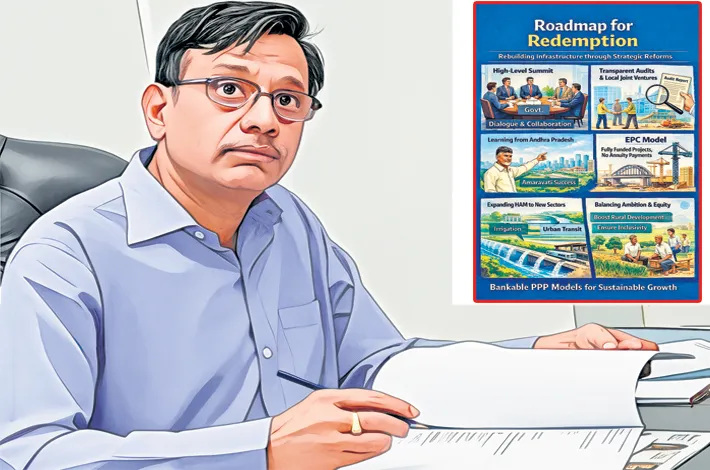
Roadmap for redemption
Metro India offers a roadmap for redemption. The outlet recommends convening meetings with representatives from major banks, financial institutions, construction companies, and foreign investors. Through in-depth deliberations, the government could forge a revised HAM policy that attracts capital without controversy should formulate structure bankable.
Emphasizing transparency, such as public audits and joint ventures for local firms, could rebuild trust. A shift to the Engineering, Procurement, and Construction (EPC) model—where projects are fully budget-funded without long-term annuities—has also been floated as a simpler alternative, though it would strain immediate finances.
Telangana could learn from its neighbor. Andhra Pradesh's Chandrababu Naidu successfully courted top executives from construction giants, foreign investors, and financial bodies to fund mega projects like the Amaravati capital city revival. By fostering direct dialogues, Naidu minimized risks and secured commitments, avoiding the pitfalls that plagued Telangana. Implementing a similar strategy—perhaps through high-level summits—could position Reddy's administration as investor-friendly, drawing parallels to Naidu's tech-savvy governance.
This saga illuminates systemic challenges in India's infrastructure financing. HAM's allure lies in deferring costs, but without safeguards, it morphs into a liability. In cash-strapped states like Telangana, where rural development is crucial for poverty alleviation, ambitious schemes must balance aspiration with prudence. The zero-bid episode highlights investor wariness amid economic uncertainty;
post-pandemic inflation and global slowdowns have made lenders cautious. Moreover, sidelining locals exacerbates inequality, undermining the very equity HAM purports to promote.
Broader implications extend to national policy. As India pushes for $5 trillion economy status, states must refine PPP models to incorporate fiscal buffers and stakeholder inclusivity. Telangana's pivot could set precedents: successful revisions might encourage other states to adopt hybrid frameworks for non-toll projects, like irrigation or urban transit. Conversely, failure risks eroding public faith, fueling opposition narratives of mismanagement.
In case bankable HAM models structured with the approval of banks and all the stakeholders, this can even extend to other sectors like Irrigation, which is being implemented in the state Bihar.
As 2026 unfolds, Reddy's government stands at a crossroads. Reissuing tenders under a fortified HAM could catalyze rural transformation, creating jobs and boosting agriculture. But without heeding Metro India's warnings—stakeholder buy-in, RBI compliance, and local empowerment—the effort might falter again, turning a noble vision into a fiscal quagmire. In an era of scrutiny, transparency isn't optional; it's the bedrock of sustainable progress. The coming months will test whether Telangana can turn controversy into triumph, or if the HAM debacle becomes a lasting scar on its developmental narrative.