15 October, 2026 | 2:19 PM


`4L cr revival redefines India Inc
29-05-2026 12:00:00 AM
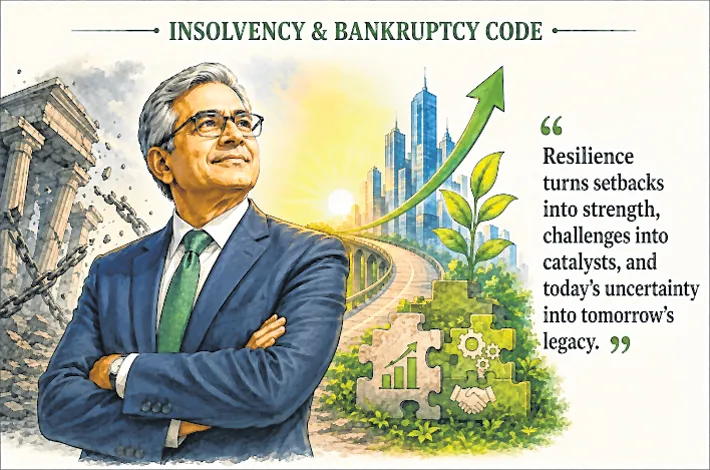
CREDIT CULTURE RESTORED | IBC framework revives enterprises, reduces bad loans and accelerates creditor recoveries across sectors remarkably
Palazhi Ashok Kumar MUMBAI
At a time when several major economies continue to struggle with fragile banking systems, rising corporate distress and mounting debt anxieties, India’s insolvency framework is increasingly emerging as one of the country’s most consequential economic reforms — quiet in tone, yet transformative in impact.
A decade after the Insolvency and Bankruptcy Code came into force, creditors have realised more than ₹4 lakh crore through resolution processes, Insolvency and Bankruptcy Board of India (IBBI) Chairperson Ravi Mital said on Thursday, describing the reform as a defining shift in India’s financial governance architecture.
“Behind the numbers lies a larger national transition — from an era where distressed assets remained trapped for years in legal uncertainty to one where accountability, creditor rights and corporate revival have acquired institutional force,” IBBI sources told The FPJ Money.
“The Code has fundamentally altered debtor-creditor behaviour and strengthened confidence in India’s financial and legal systems,” Mital observed while outlining the progress achieved under the insolvency framework.
As of March 2026, 1,419 cases had yielded successful resolution plans. Out of the 8,987 cases admitted under the framework, nearly 7,102 reached closure. Of these, around 58% resulted in the rescue of companies, while 3,003 cases proceeded towards liquidation. Equally significant is the quality of revival achieved. Nearly 42% of companies resolved under the process had earlier remained before the erstwhile Board for Industrial and Financial Reconstruction or had virtually become defunct, underlining the framework’s growing ability to restore financially distressed enterprises.
India’s banking landscape has correspondingly witnessed a remarkable shift. According to the RBI’s report on Trend and Progress of Banking in India, gross non-performing assets declined sharply from nearly 11.8% in 2017 to around 2.1% by September last year.
The behavioural impact has been equally striking. More than 30,000 matters involving nearly ₹14 lakh crore were settled even before formal admission before the National Company Law Tribunal. The deterrent effect of insolvency proceedings itself appears to have encouraged faster repayments, negotiated settlements and improved credit discipline across sectors.
Recovery efficiency too has improved steadily. Average recovery rates, once languishing near 15–20% before the reform, have risen to around 30%, while resolution timelines have reduced dramatically from nearly six to eight years to about two years.
Global institutions have begun recognising the structural improvement. S&P Global Ratings upgraded India’s insolvency regime from “Group C” to “Group B”, citing improvements in recovery systems and creditor empowerment.