23 July, 2026 | 2:16 PM


State faces crop imbalance
16-05-2026 12:00:00 AM
Paddy cultivation surges, pulses & oilseeds decline
metro india news I hyderabad
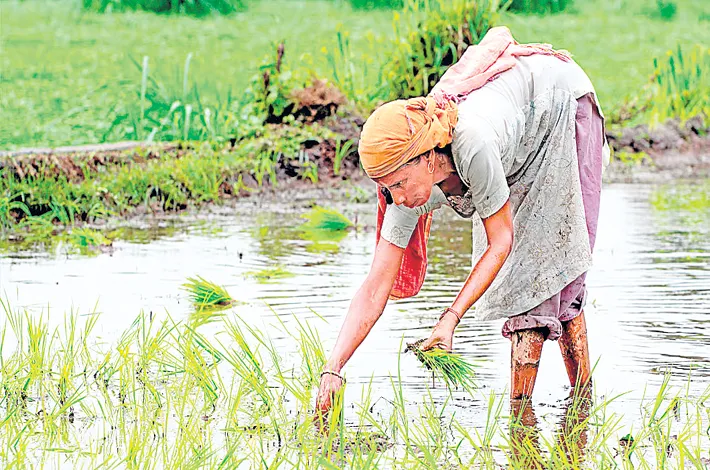
While paddy cultivation in Telangana has witnessed a massive increase over the years, the production of pulses, millets, oilseeds and vegetables has dropped significantly, raising serious concerns about crop diversification and food security in the state. Although Telangana’s lands are suitable for a variety of crops, farmers are increasingly limiting themselves to paddy. As a result, the state, which once produced enough to meet its own needs across multiple crops, is now heavily dependent on neighboring states for vegetables, pulses and oilseeds.
According to Agriculture Department statistics, since 2013-14, the area under paddy cultivation has increased by 131.7%, while the area under pulses has declined by 39%. Several other crops have seen drastic reductions. Officials and experts point out that excessive focus on a single crop (mono-cropping) is leading to soil nutrient depletion. The indiscriminate use of urea is further reducing soil fertility and crop productivity.
To address this, the Agriculture Department and Agriculture University are actively working on strategies to encourage farmers to diversify into pulses, millets, oilseeds and vegetables, thereby reducing dependence on other states. With the southwest monsoon approaching, the Agriculture Department is preparing a comprehensive crop plan for the Kharif season. Meteorologists have warned of below-normal rainfall this year due to El Niño effects. Northern Telangana is likely to receive less rainfall, while southern Telangana may experience even lower precipitation.
District-wise crop plans are being finalized based on local weather forecasts and rainfall predictions to guide farmers on suitable crops. Officials noted that many farmers are preferring urea over complex fertilizers because urea is significantly cheaper in the market. This imbalance in fertilizer usage is also contributing to soil degradation. The Agriculture Department is planning awareness campaigns to promote crop rotation, balanced fertilizer use, and cultivation of pulses and millets to restore soil health and achieve nutritional security in the state.