18 October, 2026 | 8:16 PM


Sugar export ban sparks new fears over industry-wide financial crisis
16-05-2026 12:00:00 AM
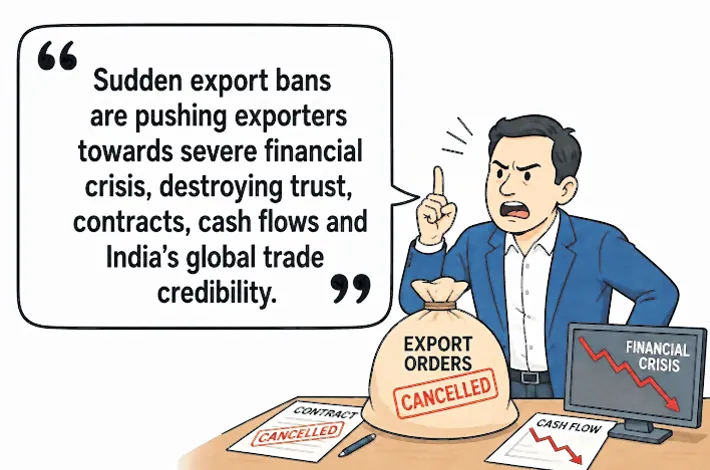
Falling domestic sweetener prices and mounting payment dues raise concerns over farmer incomes, exports and factory cash flows
Commodity Desk MUMBAI
India’s decision to ban sugar exports till September 30 has drawn strong criticism from sugar industry leaders, who warned that the move could sharply hurt domestic sugar prices, weaken factory finances and impact payments to farmers.
The Centre imposed the export ban to improve domestic availability and control prices amid inflation concerns and global uncertainty linked to the ongoing West Asia conflict.
However, industry experts said the sudden restriction could create serious financial stress across the sector. Bhairavnath Thombre, president of the West Indian Sugar Mills Association, said on Friday domestic sugar prices have already started declining after the announcement, making it difficult for sugar mills to clear Fair and Remunerative Price (FRP) dues owed to farmers.
He warned that the sudden policy decision could damage the credibility of Indian sugar exporters in international markets where long-term trade relationships had already been established. India exports sugar to countries including Sri Lanka, Bangladesh, Afghanistan, Nepal and several Arab nations. According to Thombre, sugar factories in Maharashtra alone have FRP dues of nearly ₹1,550 crore, while pending payments across the country are estimated at around ₹12,000 crore. He said lower sugar prices would reduce earnings for both mills and sugarcane growers despite stable cultivation levels.
Industry representatives also expressed concern that existing export agreements with overseas buyers could now face disruptions due to the policy change. Thombre suggested that the government should increase procurement of ethanol produced from sugarcane as an alternative support mechanism for mills. He also called for increasing ethanol blending in petrol to 30% from the current 20%, saying higher ethanol usage could improve cash flows for sugar factories and reduce pressure on sugar inventories.
He said sugar industry bodies have been demanding higher sugar prices for the past four years, but instead the government repeatedly increased the FRP paid to farmers, significantly raising costs for mills. Industry experts warned that the export ban could further weaken the financial condition of sugar factories already struggling with rising costs, delayed payments and volatile global markets. Industry participants also warned that continued restrictions on overseas shipments could increase domestic sugar inventories significantly in the coming months.
Higher stock levels may put additional pressure on open market prices, affecting liquidity for mills ahead of the next crushing season. Traders said uncertainty around government policy could discourage long-term export agreements and weaken India’s competitiveness in global markets.
Analysts added that stable export policies and higher ethanol procurement are crucial to maintain financial stability across the sugar value chain and protect farmer payments.