28 September, 2026 | 9:45 AM


Sukhi Ubuntu flouts every rule
25-09-2025 12:00:00 AM
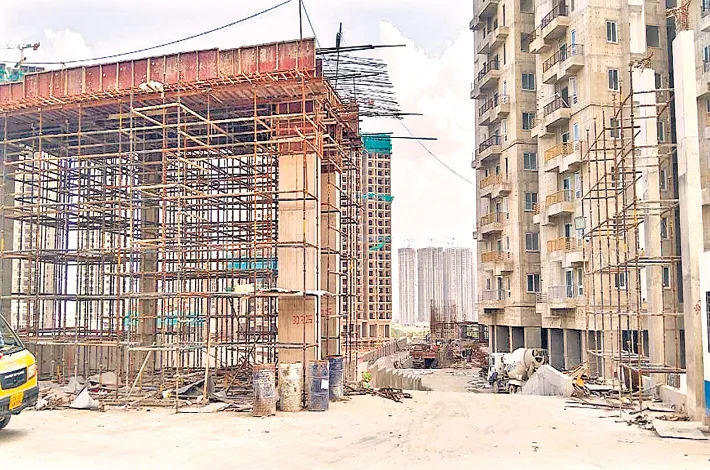
No one is Sukhi here!
■ Officials Blinded by Crores in Commissions?
■ HMDA, HYDRAA Ignore Complaints
■ Experts Warn of Severe Traffic Hazards in the Future
■ With Officials’ Support, Bulkapur Nala Encroached
■ Even a Radial Road Cut Open to Create Project Entry
■ Nexus Between Construction Company, HMDA & Revenue Officials
■ Historic Bulkapur Nala Buried Without a Trace
metro india news I hyderabad
In western Hyderabad, long hailed as a paradise for real estate, influential builders flout the rule of law, rapidly demolishing public infrastructure and encroaching on government land. The Puppalaguda area exemplifies this trend, with the Sukhi Group’s "Sukhi Ubuntu" project burying Bulkapur Nala and cutting through a busy radial road for private access. Residents and activists criticize these violations, alleging that authorities are complicit or passive. The trend highlights a dangerous erosion of regulatory oversight, turning development into a lawless pursuit driven by powerful interests rather than public good.
The saga of environmental and infrastructural sabotage in Puppalaguda unfolds against a backdrop of unchecked urban expansion. This affluent suburb, nestled under the Manikonda Municipality limits, has seen a boom in luxury housing over the past decade, drawing middle-class families and investors alike to its verdant outskirts. Yet, beneath the glossy facades of towering apartments lies a darker narrative of greed overriding sustainability.
The Bulkapur Nala, a once-vibrant waterway snaking through survey numbers 414, 416, 417, 428, and beyond, has been erased from the physical landscape. Originating in the lush environs of Shankarpally and meandering eastward to merge with the mighty Musi River, this stream was more than a mere drainage channel. For generations, it sustained surrounding villages by providing essential irrigation for farmlands and a reliable source of drinking water for communities. Elders in the area still recount tales of how the nala's gentle flow supported rice paddies and vegetable gardens, fostering a delicate ecological balance in an otherwise arid region.
Today, however, those memories are all that remain. Official records may still acknowledge the nala's existence, but on the ground, it has vanished without a whisper. Filled to the brim with truckloads of earth and debris, the watercourse has been transformed into a flat expanse of buildable land, primed for multimillion-rupee developments. This act of erasure has unlocked crores in potential value, allowing the Sukhi Group to erect structures where nature once held sway. During monsoons, Hyderabad's already strained drainage systems could buckle under the pressure, they warn, channeling excess rainwater into unintended paths and endangering lives.
Compounding the nala's demise is the ruthless reconfiguration of Radial Road No. 5, a lifeline of the city's outer ring road network. This broad arterial thoroughfare links the bustling Narsingi and Kollur interchanges, facilitating seamless connectivity for residents commuting to IT hubs in Gachibowli and the financial district.
It handles a relentless stream of vehicles—cars, bikes, buses, and heavy trucks—serving as a vital artery for the western corridor's economic pulse. Yet, in a move that defies all planning norms, the Sukhi Ubuntu project has carved a gash through this road to install a dedicated entry gate. Spanning five acres, the development features three imposing towers, each soaring 36 floors high and poised to accommodate 867 families. Marketed as a "serene urban oasis" with amenities like clubhouses and landscaped gardens, the project promises modern living. But at what cost?
Recipe for tragedy
The intrusion into the radial road lacks any stamp of approval from the Hyderabad Metropolitan Development Authority (HMDA), the body tasked with overseeing urban planning. Engineers and traffic consultants have raised red flags, forecasting a cascade of hazards. The unauthorized cut could funnel additional private traffic onto the public route, creating chokepoints and bottlenecks during peak hours. With educational institutions like Triveni Talent School and medical facilities such as AMV Hospital in close proximity, the stakes are perilously high.
School buses laden with children and ambulances racing to emergencies now navigate a fractured roadway, where sudden merges and narrowed lanes heighten the specter of collisions. "This isn't just an inconvenience; it's a recipe for tragedy," asserts Dr. Lakshmi Reddy, a local urban planner. "Altering a major radial without environmental impact assessments or traffic studies invites chaos. We're talking about potential pile-ups that could claim innocent lives, all for a builder's shortcut."
At the epicenter of these allegations lies a web of suspected collusion involving the Sukhi Group and key officials from HMDA, Revenue, and Irrigation departments. Regulations are crystal clear: a mandatory 100-meter buffer zone must flank either side of any nala to preserve its integrity and prevent contamination. Yet, multi-storied edifices are rising mere ten feet from the buried stream's former path, in brazen defiance. When confronted by irate locals, project representatives allegedly brandish forged or expedited HMDA clearances, silencing dissent through intimidation.
Whispers in the community point to a lucrative underbelly: crores in kickbacks allegedly flowing to officials, clouding their judgment and sealing their lips. "It's a classic case of the powerful preying on the public good," says activist Ravi Kumar from the Hyderabad Environmental Protection Forum. "Revenue officers, who should safeguard land records, turn a blind eye. Irrigation experts, meant to protect water bodies, feign ignorance. And HMDA planners? They're complicit in the carve-up."
The disparity in enforcement stings deeply among residents. "When a poor family erects a modest hut on marginal land, bulldozers arrive at dawn, leaving them homeless," laments Sunita Devi, a long time Puppalaguda inhabitant. "But when a corporate giant swallows a historic nala and hacks a public road, the same authorities avert their gaze. Why the double standards? Is it the size of the wallet that dictates justice?" The fear is palpable: by the time higher-ups intervene—if they do—the concrete will have set, and the irreversible harm done. Families who have poured life savings into plots and flats could find themselves ensnared in legal quagmires, their dreams shattered by structural flaws or flooding nightmares.
For weeks, the Alkapur Township Residents’ Association has bombarded HMDA and Greater Hyderabad Municipal Corporation (GHMC) with petitions, detailing the encroachments with photographs and surveys. Responses have been perfunctory at best—promises of inspections that never materialize. "We surrendered our lands years ago for the greater good of area development, trusting that roads and amenities would follow," recounts Association Secretary Mohan Reddy in a voice thick with frustration. "Instead, our tranquility and security are being bulldozed by these rogue projects.
We've lodged complaints for over a month now, but it's crickets from the top. They murmur about site visits, yet no boots hit the ground. This isn't oversight; it's outright dereliction. Are they waiting for units to sell out and keys to change hands before wielding the demolition hammer? What fate awaits the salaried families betting their futures on these homes? In broad daylight, crimes against our city unfold, and the watchdogs nap. It's an outrage that demands accountability."
Prasad Rao, Chief Planning Officer at HMDA, has pledged swift intervention. "We are aware of the grievances regarding the unauthorized alteration of the radial road adjacent to the Puppalaguda Sukhi Ubuntu site," he stated firmly. "Our Engineering and Town Planning teams have been directed to conduct an on-ground inspection without delay and furnish a comprehensive report. Should the evidence confirm illegal tampering, we will enforce stringent measures against the perpetrators in line with established protocols. Restoration orders will be mandated to revert the road to its pristine alignment, ensuring public safety remains paramount."
But for the beleaguered residents of Puppalaguda, words ring hollow without action. As Hyderabad's real estate frenzy accelerates, cases like Sukhi Ubuntu underscore a perilous trajectory: one where profit eclipses preservation, and tomorrow's disasters are sown in today's shortcuts. Experts urge a systemic overhaul—stricter audits, whistleblower protections, and citizen oversight—to reclaim the city's green lungs and safe passages. Until then, the nala's silent grave and the road's jagged scar stand as indictments of a system teetering on the brink. Will authorities heed the alarm before the next deluge—or the next headline—strikes?