13 September, 2026 | 8:15 AM


Tadiya Vratham holds special significance in Hindu tradition
13-09-2026 12:00:00 AM
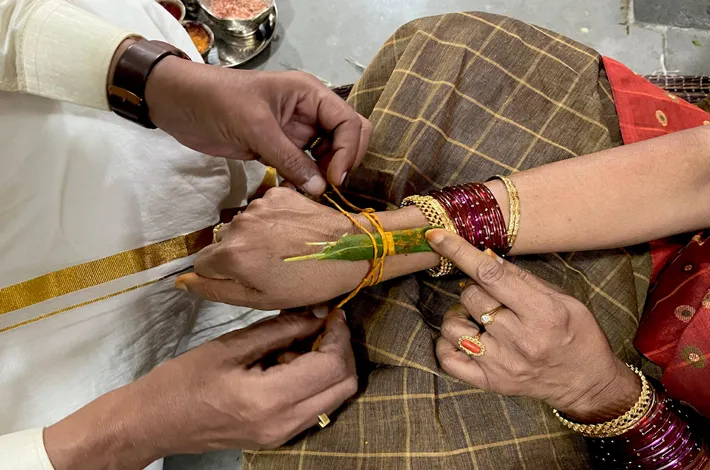
Tadiya Vrathamham, a traditional Hindu observance associated with Goddess Gauri, is considered significant for marital happiness, family welfare and prosperity. The Vratham, also known as Shodasa Gauri Vratham and, in some regions, Suvarna Gauri Vratham, is observed during the Bhadrapada month. Speaking about the significance and rituals associated with the Vratham, prominent astrologer and spiritualist Latha Jandhyala said Tadiya Vratham is observed before Vinayaka Chavithi. It is performed on Bhadrapada Shukla Tritiya (Tadiya) when Hasta Nakshatra is present.
According to traditional belief, Hasta Nakshatra is associated with Lord Ganesha, who is the son of Goddess Gauri. Worshipping Gauri on a day associated with her son's nakshatra is believed to enhance saubhagya, or marital good fortune. The Vratham is particularly observed in parts of Telangana, Rayalaseema and Karnataka, although customs and procedures differ from region to region, much like the variations seen in the observance of Varalakshmi Vrathamam.
Traditionally, Tadiya Gauri Vratham is primarily observed by married women, or suvasinis, who pray for marital happiness, the health and longevity of their husbands, family prosperity and the well-being of their children. Astrologer Latha Jandhyala explained that preparations for the Vratham begin on the previous night. Devotees are traditionally advised to have a light, sattvic meal and avoid heavy or spicy food. A silk cloth is placed beneath the arrangement, followed by rice on which the kalash is installed. A turmeric idol representing Gauri, commonly referred to as Pasupu Gauramma, is then prepared and worshipped.
Latha Jandhyala also distinguished Tadiya Vratham from Hartalika Vratham. Hartalika Vratham is particularly popular in North India and is traditionally associated with Goddess Parvati's penance to obtain Lord Shiva as her husband. It may be observed by unmarried devotees seeking a suitable spouse. Tadiya Gauri Vratham, on the other hand, is primarily associated with married women seeking marital well-being and saubhagya.
Traditionally, three torams are prepared. Unlike ordinary torams that may be decorated with flowers or betel leaves, the toram associated with this Vratham is traditionally prepared using Uttareni leaves. Uttareni leaves are generally available during the rainy season, particularly during the Shravan and Bhadrapada months. The leaves are also among the 21 types of leaves traditionally offered to Lord Ganesha during Vinayaka Chavithi. The tradition also connects Uttareni with Mercury, the planetary lord associated with Hasta Nakshatra, symbolically linking Gauri with her son Ganesha.
Offerings, or vayanam, are another important part of the Vratham. The number 16 again assumes significance, with devotees either preparing 16 varieties of offerings or preparing one type of food in a quantity of 16. Items such as kudumulu or bhakshalu may be prepared and offered to Goddess Gauri. In some traditions, vayanam is also given to a Brahmin. The worship of Gauri continues alongside the celebrations of Vinayaka Chavithi. When Gauri is ceremonially sent off after the festival, curd rice is offered to the Goddess.
Another customary practice is the distribution of musivayanam. Traditional baskets or chatalu are arranged with auspicious items, with 16 baskets being used in some traditions. Depending on family customs, sarees, blouse pieces and other items associated with marital auspiciousness may also be included. According to Latha Jandhyala, the various rituals associated with Tadiya Vratham are traditionally performed with the intention of seeking marital happiness, the affection and well-being of one's husband, family prosperity and the welfare of children.
She also said devotees need not be overly fearful about making minor mistakes while performing traditional Vrathamas. Understanding the basic procedures and observing them with faith and sincerity is considered more important than worrying excessively about minor deviations in practice. The Vratham continues to hold cultural and spiritual importance for many women as a way of maintaining traditional practices and expressing prayers for family welfare.˘

Astrologer
Latha Jandhyala