1 October, 2026 | 8:02 AM


Telangana Assembly sessions losing steam?
28-03-2026 12:00:00 AM
metro india news I hyderabad
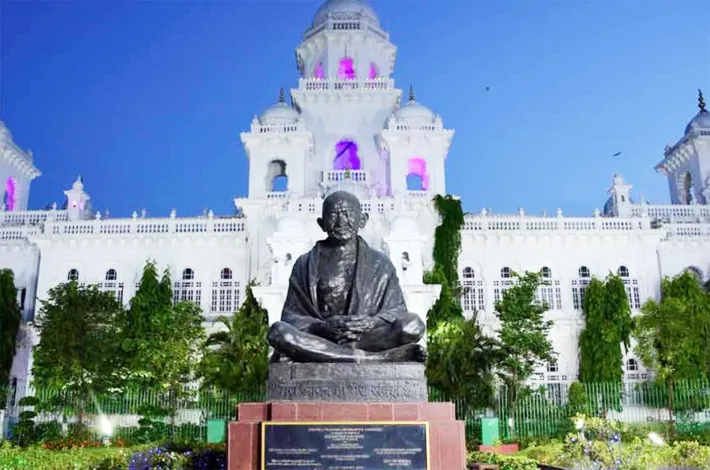
The Telangana Legislative Assembly and the national Parliament occupy a unique position in the country’s democratic framework. They are the constitutional bodies empowered to enact laws and formulate policies, and their proceedings, especially the annual budget sessions, traditionally draw intense public scrutiny. Yet, as the current budget discussions unfold in the Telangana Assembly, political observers and analysts are voicing sharp criticism that the sessions are steadily drifting away from their core purpose of deep deliberation on public issues and effective oversight of the government.
Once a vibrant platform for extended debate, the Assembly now operates in a severely truncated format. In the era of the undivided Andhra Pradesh state, the House used to convene for well over 60 days a year, providing ample scope for thorough examination of people’s problems. The budget session alone would stretch for nearly 30 days, with department-wise discussions allowing the opposition to grill the government rigorously on every policy and expenditure.
Today, however, average annual sittings have shrunk to fewer than 15 days, and some sessions conclude in as little as five days. Frequent adjournments and limited agendas further erode the time available for substantive discussion, reducing the Assembly’s role to little more than a constitutional formality.
A major casualty of the shortened calendar is the quality and depth of legislative scrutiny. Critics point out that key mechanisms such as question hour, adjournment motions and private members’ bills are being squeezed into an ever-shrinking window. Question hour, once a powerful tool for MLAs to highlight constituency issues and hold ministers accountable, is now restricted to roughly 90 minutes a day.
Only two or three questions are taken up orally, while many others receive written replies without any opportunity for supplementary questions. The absence of detailed follow-up has left legislators frustrated and weakened the House’s ability to exercise meaningful oversight.
Even when opposition parties are allotted time to speak, the impact remains limited, according to analysts. While the number of opportunities for opposition voices has marginally increased in recent years, the government’s responses are often brief, vague or lacking in concrete data. Discussions frequently end without clear commitments or follow-up action, leaving pressing public concerns — ranging from irrigation and agriculture to education and health — unresolved. The result, observers say, is a growing sense of disillusionment not only among opposition benches but across parties, as MLAs feel their interventions rarely translate into tangible outcomes.
Another recurring complaint is the excessive use of adjournments even within the already curtailed sessions. Important debates are interrupted midway, only to resume much later, breaking the continuity of discussion and preventing comprehensive analysis of any single issue. In the backdrop of limited total sitting days, these breaks further diminish the time available for question hour, urgent discussions and private legislation.
Analysts warn that unless systemic reforms are introduced, the Assembly risks becoming a weakened institution unable to fulfill its constitutional mandate. They urge the government to schedule budget, monsoon and winter sessions with fixed, adequate durations; allocate sufficient time for department-wise reviews; strengthen question hour to ensure more oral queries and proper supplementary discussions; and establish mechanisms to track and report follow-up action on issues raised in the House. Reducing unnecessary adjournments and giving due importance to private members’ bills and adjournment motions are also seen as essential steps to restore the Assembly’s vitality.