26 September, 2026 | 4:39 AM


Telangana scraps two-child Norm
04-01-2026 12:00:00 AM
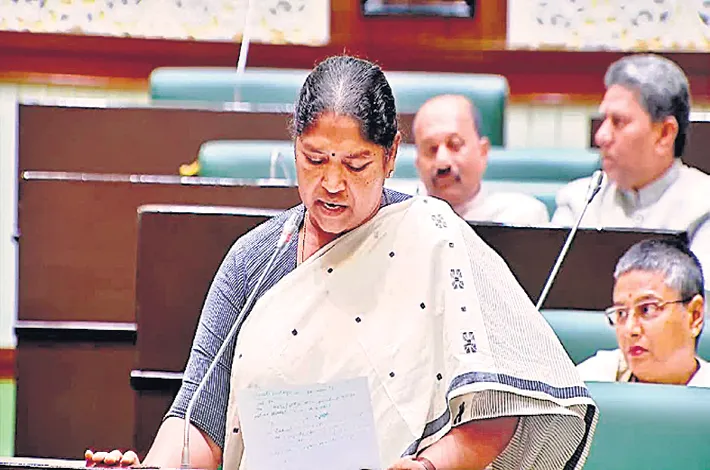
Seethakka warns of North's rising political dominance
In a significant move aimed at addressing evolving demographic challenges and ensuring equitable representation in rural governance, the Telangana Legislative Assembly on Saturday passed the Telangana Panchayat Raj (Amendment) Bill, 2026. The bill, introduced by Panchayat Raj and Rural Development Minister Danasari Anasuya Seethakka, amends Section 21 of the Panchayat Raj Act to remove the longstanding disqualification for individuals with more than two children from contesting rural local body elections. This reform replaces an earlier ordinance on the matter and reflects the government's proactive stance on population dynamics.
The two-child norm, originally enacted in 1994, was designed to curb population explosion amid concerns over food security, employment, and poverty during the 1980s and 1990s. However, Minister Seethakka emphasized during the assembly session that the demographic landscape has transformed dramatically over the past three decades. "Southern states, including Telangana, have effectively implemented population control measures, while northern states lag behind. This disparity is leading to increased political dominance by northern regions," she stated. Highlighting Telangana's rural fertility rate, which has dropped to 1.7—below the replacement level of 2.1—she warned of potential long-term risks, including a shrinking workforce and an aging population. "If population growth continues to decline, the number of elderly citizens will rise disproportionately, straining resources. By removing this norm, we aim to stabilize our population at a sustainable replacement rate for the welfare of future generations," the Minister added.
The government conducted a thorough review of population data and consulted with Panchayat Raj representatives before introducing the amendment. Seethakka noted that citizens are increasingly opting for smaller families voluntarily, rendering the disqualification outdated and potentially hindering smooth conduct of local elections. She also referenced global examples, such as China's past overzealous population controls leading to current demographic imbalances, underscoring the need for balanced policies. "India's population has been advantageous in many ways, but we must foster awareness on self-regulated family planning among the public," she said, echoing concerns raised by CPI member Kunamneni Sambasiva Rao, who advocated for public education on population self-control to avoid extremes.
The bill received unanimous support from assembly members, who welcomed the decision as forward-thinking. "In the future, if circumstances demand, we can revisit and introduce appropriate regulations," Seethakka assured. The reform is expected to encourage broader participation in grassroots democracy, particularly in rural areas, by eliminating barriers that no longer align with current socio-economic realities.