28 September, 2026 | 3:43 AM


Three Years of Yuva Galam
28-01-2026 12:00:00 AM
Nara Lokesh’s Yuva Galam Padayatra continues to Shape AP Politics
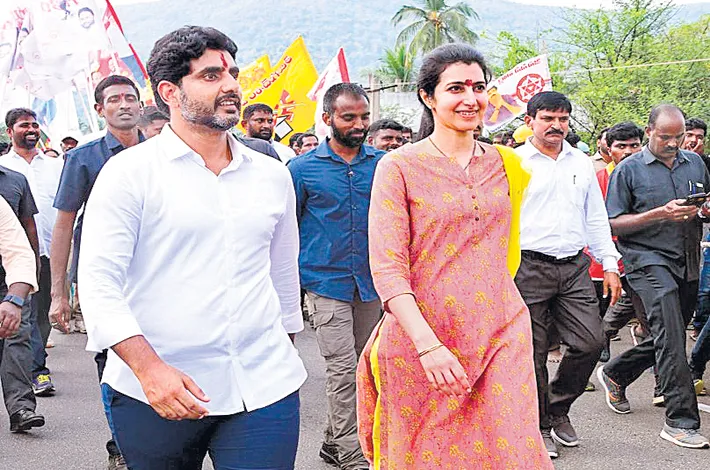
Exactly three years ago today, on January 27, 2023, Telugu Desam Party (TDP) National General Secretary Nara Lokesh launched his ambitious Yuva Galam (Youth Voice) padayatra from Kuppam in Chittoor district. What began as a planned 400-day, 4,000-km mass contact campaign to amplify youth concerns and challenge the then-ruling YSR Congress Party (YSRCP) government evolved into one of Andhra Pradesh's most significant political movements in recent history. The padayatra, which actually spanned 226 days and covered 3,132 km, is credited with galvanizing public sentiment, strengthening TDP's grassroots network, and contributing to the party's resounding victory in the 2024 assembly elections.
The yatra kicked off at 11:03 AM at the feet of Lord Sri Varadarajaswamy in Kuppam, the political stronghold of the Nara family and the constituency represented by TDP chief N. Chandrababu Naidu. Thousands of supporters, clad in TDP yellow, turned out amid flags, balloons, and banners, filling hotels and lodges in the border town. Lokesh, accompanied by family members including his wife Nara Brahmani and son Nara Devansh, began the walk with a clear message: to fight poverty, unemployment, corruption, and alleged anarchy under the YSRCP regime. The campaign aimed to create a platform for youth to voice grievances while restoring TDP's credibility as a people-centric alternative.
The journey traversed 11 erstwhile districts, 97 assembly constituencies, 232 mandals/municipalities, and 2,097 villages. It started in the arid Rayalaseema region, moved along the Andhra coast, and concluded in northern coastal areas. Daily marches covered 10-12 km, starting around 7 AM and ending by 6 PM, with Lokesh holding face-to-face interactions in every constituency. He conducted 70 public meetings, 155 interactive sessions, 12 special programs (such as "Hello Lokesh" for students, "Raithanna tho Lokesh" with farmers, and "Dalit Galam" for marginalized communities), and 8 Rachabanda programs. Over 1.50 crore people were directly met, and 4,353 written petitions were received, documenting issues ranging from unemployment and farmer suicides to waterlogging, fluoride contamination, Waqf land encroachments, and false cases filed by the previous government.
The padayatra faced significant challenges. Extreme weather—48-degree heat in Rayalaseema and heavy monsoons—tested endurance, yet it continued without weekly breaks except for unavoidable interruptions. A major halt occurred on September 9, 2023, following the arrest of Chandrababu Naidu, leading to a 79-day suspension. The yatra resumed as Yuva Galam 2.0 on November 27, 2023, in Podalada village, Rajole constituency, with renewed public support. It reached milestones every 100 km with specific promises, such as dialysis centers, degree colleges, safe drinking water, and support for affected communities. The 3,000-km mark was crossed on December 12, 2023, with family members joining the celebration.
The padayatra concluded on December 18, 2023, after 226 days, having covered 3,132 km. The final stretch ended in the Aganampudi area of Visakhapatnam, symbolically linking to Naidu's earlier Vastunna Mee Kosamyatra. Lokesh interacted with diverse groups—including steel plant workers, agrigold victims, auto drivers, and farmers—promising to oppose Visakhapatnam Steel Plant privatization and protect displaced persons' interests. A grand Vijayotsava Sabha followed on December 20, attended by TDP leaders and drawing massive crowds.
The yatra's impact proved profound. Of the 97 assembly constituencies covered, alliance candidates won 90 in 2024, reflecting strong voter connect. Lokesh himself secured Mangalagiri with a margin of 91,413 votes—the third-highest in the state. The movement mobilized youth, strengthened TDP's organization across 125+ constituencies, and gathered policy inputs that shaped post-election governance. Promises on job creation have seen progress: Chief Minister Naidu signed the Mega DSC file on day one for teacher recruitment, while MoUs worth Rs. 23.5 lakh crore were signed for 16 lakh jobs from firms like Google, TCS, Cognizant, and others. Lokesh, now IT Minister, has set mechanisms to deliver 20 lakh jobs in five years.
On the third anniversary, Lokesh reflected: "Yuva Galam was a journey that grounded me and deepened my connection with the underprivileged across Andhra Pradesh. It was not just my walk; it was our collective march towards a brighter future." TDP leaders highlight how the padayatra infused confidence among unemployed youth, women facing insecurity, and taxpayers burdened by rising costs. Described as the longest in state history, it redefined political engagement by making leadership accessible and accountable.
Three years later, Yuva Galam remains a benchmark for grassroots mobilization. As Andhra Pradesh advances under TDP rule, the yatra's legacy endures in youth empowerment, job-focused policies, and a renewed emphasis on direct democracy.
One of the most prominent hurdles was the harsh weather. The yatra began in the arid Rayalaseema region, where temperatures soared to 48 degrees Celsius in places like Anantapur and Kurnool districts. Participants endured blistering heat during long daily marches of 10-15 km, often starting early morning to avoid peak sun. Later phases brought heavy monsoons, particularly in coastal areas like Krishna and East Godavari districts. Despite torrential rains and flooded roads, the padayatra pressed on without weekly breaks—unlike many political walks—continuing through Emmiganur constituency and other rain-hit zones. TDP leaders later highlighted this resilience, noting that the march "did not halt except under unavoidable circumstances," even as participants faced dehydration, fatigue, and health risks in extreme conditions.
Administrative and political obstructions from the then-ruling YSR Congress Party (YSRCP) government posed another major challenge. TDP alleged deliberate hurdles, including restrictions under Government Order (GO) 1, issued after stampedes at TDP events in late 2022, which regulated public meetings and processions for opposition leaders. Permission delays plagued the initial phase, with police reportedly dragging feet on licenses. During the yatra, incidents included power cuts to disrupt public addresses, seizure of DJ vans and sound equipment (e.g., in Bangarupalem, Chittoor district), and physical interventions like snatching microphones or removing stools Lokesh stood on to speak (notably in Renigunta). Lokesh publicly warned errant officials of a "heavy price" for such actions, accusing them of acting on instructions from the "Tadepalli palace" (a reference to the CM's residence). Drones were allegedly deployed for surveillance in early days, and false cases or harassment against TDP workers added to the pressure.
The yatra faced its most significant disruption on September 9, 2023, when TDP supremo N. Chandrababu Naidu was arrested in a skill development scam case. This led to a 79-day suspension of the padayatra, halting momentum at a critical juncture. Lokesh paused activities amid the crisis, resuming as Yuva Galam 2.0 on November 27, 2023, from Podalada village in Razole constituency. Critics noted this pause as a missed opportunity to capitalize on public sympathy for Naidu's arrest, though concerns over potential arrest warrants against Lokesh himself (e.g., in the Amaravati Inner Ring Road case) influenced the decision. The interruption shifted focus temporarily to legal battles and Delhi meetings.
Physical and logistical strains were constant. Daily routines were intense: marches from 7 AM to late evening, interactions with thousands, public meetings, special programs like "Hello Lokesh" for students, and handling petitions. Lokesh walked extended hours—once till 2:30 AM in Penamaluru constituency covering over 17 km—building a reputation for commitment but risking exhaustion. Health concerns loomed, compounded by the death of cousin Nandamuri Taraka Ratna in early 2023, which briefly affected morale. Security threats, crowd management (post-stampede GO restrictions), and maintaining discipline amid high political tensions—including clashes between TDP and YSRCP workers—added layers of difficulty.