11 October, 2026 | 3:06 PM


Trump tariffs feel like a gut punch: Farmers
06-04-2025 12:00:00 AM
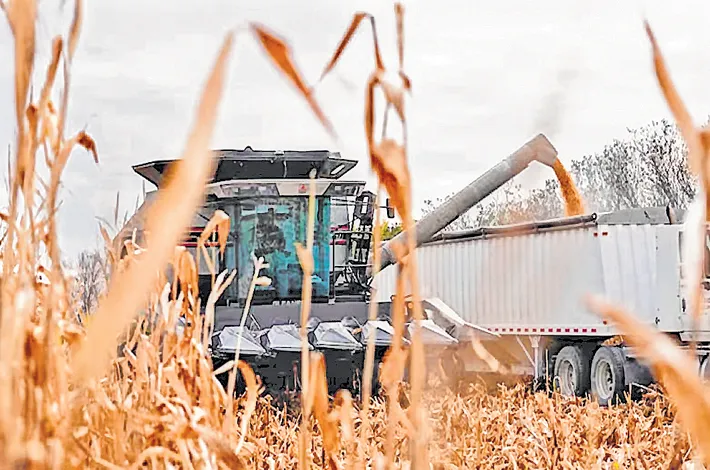
May lose Chinese market | Say China use to buy American corn, beef, chicken and other crops but now, it may turn to other countries like Brazil to buy the same at lower rates
US farmers, already facing slim profit margins, now confront the loss of crucial export markets due to China's retaliatory tariffs against President Donald Trump. Soybean and sorghum growers are particularly vulnerable, as China has been their largest buyer.
China, which spent USD 24.65 billion on US agricultural products last year, is now imposing 34% additional tariffs, making these goods significantly more expensive. Last year, China also bought a lot of American corn, beef, chicken and other crops.
Tim Dufault, a Minnesota farmer, said , "I just hope to God they can stay in business," referring to young farmers who may face losses. He fears the tariffs could drive many out of business.
Dufault, active with Farmers for Free Trade, worries about losing market as China could turn to Brazil and other countries to buy the soybeans, beef, chicken and other crops it consumes.
Possibility of government aid?
Farmers recall Trump's previous trade war with China which required tens of billions of government aid payments, but it's not clear if he will do that this time. This time, with global tariffs, the impact could be broader. Agriculture Secretary Brooke Rollins stated, "But if it is, then this President has always said and he is resolute in his commitment to our farmers and our ranchers and our great rural communities in America, so we will make sure we're ready if in fact that is necessary." She currently doesn't anticipate massive aid, but the situation is being monitored. Andy Hineman, of the Kansas Grain Sorghum Producers Association, said, "We don't want to live on government handouts. We'd rather sell the crops we grow."
Rush to buy big-ticket items
Facing impending tariffs, US consumers are rushing to purchase big-ticket items. John Gutierrez of Austin, Texas, needing a new laptop for photography, and ordered one from a Taiwanese brand before the tariffs hit. “I thought I'd bite the bullet, buy it now, and then that way I'll have the latest technology on my laptop and don't have to worry about the tariffs,” he explained. Additional reciprocal tariffs on roughly 60 countries are set to begin on April 9.
Facing impending tariffs, US consumers are rushing to purchase big-ticket items. John Gutierrez of Austin, Texas, needing a new laptop for photography, ordered one from a Taiwanese brand before the tariffs hit. “I thought I'd bite the bullet, buy it now, and then that way I'll have the latest technology on my laptop and don't have to worry about the tariffs,” he explained. Additional reciprocal tariffs on roughly 60 countries are set to begin on April 9th.
Economists anticipate these tariffs will raise prices on everyday goods and potentially weaken US economic growth. The White House hopes the tariffs will pressure countries to open their markets and lead to tariff-reducing negotiations, or encourage domestic production.
Rob Blackwell and his wife in Arlington, Virginia, leased a General Motors Optiq, made in Mexico, before the tariffs took effect. He noted a shift at the dealership.
: “They know what we know, which is suddenly it flips from a buyer’s market to a seller’s market very quickly,” Blackwell said.