22 September, 2026 | 5:49 PM


Urban mining push faces recycling gaps
25-02-2026 12:00:00 AM
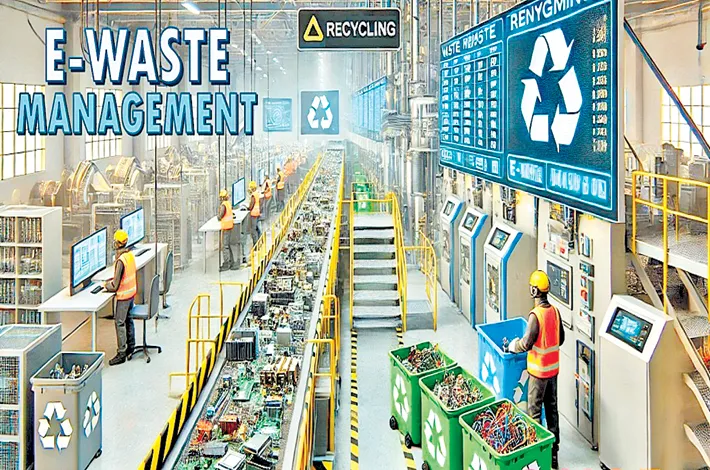
India’s growing mountain of electronic waste could become a strategic asset for its aviation and defence sectors, but weak recycling infrastructure across several states is slowing progress. Experts say systematic “urban mining” — the recovery of valuable metals from discarded electronics — can reduce import dependence and strengthen national capabilities in aerospace manufacturing.
India generates more than 3.2 million tonnes of e-waste annually, according to the Central Pollution Control Board. Discarded smartphones, laptops, and other devices contain lithium, cobalt, nickel, tantalum, and rare earth elements. These metals are critical for advanced batteries, avionics, sensors, and defence electronics used in aircraft and military platforms.
Strategic projects such as the HAL Tejas rely on high-performance materials and components, many of which depend on imported raw materials. At present, countries like China and the Democratic Republic of Congo dominate global supply chains for several of these strategic minerals. Experts argue that recovering them domestically through urban mining could partially offset import dependence and enhance supply security.
However, nearly 17 states, including Delhi, do not have authorised e-waste recycling facilities. In the absence of certified units, much of the country’s electronic waste is handled by informal scrap dealers. This often results in inefficient extraction processes and environmental hazards, including the release of toxic substances such as lead and cadmium into soil and groundwater.
Policy reports from the Environment Ministry and the CPCB have repeatedly highlighted these gaps. Officials stress that end-of-life electronics should not be treated merely as waste but as urban resource reserves with strategic value. Beyond fighter jets, recovered metals could also support unmanned aerial vehicles, satellites, and precision components used in space and defence systems. Lithium and cobalt extracted domestically could strengthen India’s lithium-ion battery manufacturing ecosystem, supporting electric aircraft and drone development under the Atmanirbhar Bharat initiative.
Experts recommend a multi-pronged approach. States must expand authorised recycling infrastructure with advanced recovery technologies. Urban local bodies need stronger collection systems to channel e-waste into formal networks. Incentives for private firms and startups working on high-efficiency material recovery could further align circular economy goals with national security priorities.
Apart from defence and economic benefits, scientific recycling reduces landfill pressure and cuts the environmental cost of mining virgin ores abroad. Without urgent policy intervention and investment in formal recycling systems, India risks missing a major opportunity to convert its electronic waste into a strategic advantage for its aerospace and high-technology ambitions.