21 October, 2026 | 3:39 AM


US Army OKs its first lethal hand grenade
03-04-2026 12:00:00 AM
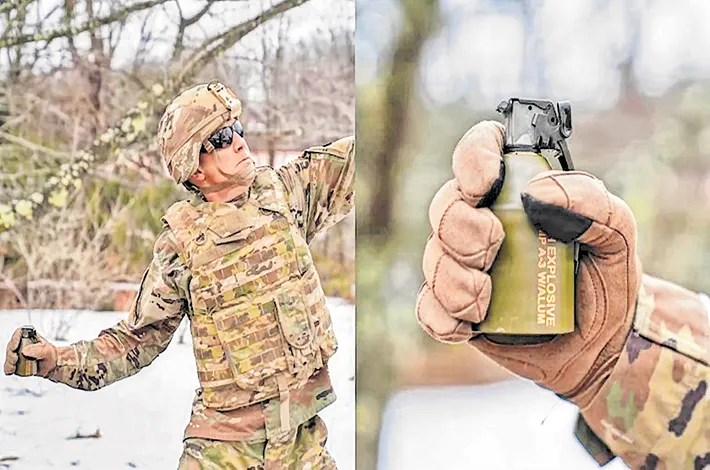
The US Army has introduced its first new lethal hand grenade in decades. The M111, made of plastic, uses powerful shock waves to kill enemies, rather than spreading metal fragments like traditional grenades. When this wave hits a person, it compresses and decompresses the body’s tissues very quickly, which can damage organs like the ears, lungs, eyes, and stomach.
Designed for urban combat, it is safer and better for close-quarters fighting, unlike older grenades that could be harmful even to the people using them, CNN reported.
Col Vince Morris, a project manager for the programme at Picatinny Arsenal in New Jersey, said, “A grenade utilising BOP can clear a room of enemy combatants quickly, leaving nowhere to hide while ensuring the safety of friendly forces.”
The grenade’s plastic shell vaporises when it explodes, so there’s no metal flying around. Soldiers can throw the M111 into a room, and it can reach enemies hiding behind walls, furniture, or appliances.
This is the first new grenade for the Army since 1968, when they used the MK3A2 grenade during the Vietnam War. That older grenade was later taken out of use in the 1970s because it contained asbestos, and its tiny fibres could get into the lungs and cause serious diseases, including cancer. After the old MK3A2 grenade was withdrawn, soldiers mainly used the M67 grenade. The M67 works by sending shrapnel in all directions, making it dangerous. The fragments could hit bystanders, friendly soldiers, or bounce off walls.
Bigger blasts from the grenade, powered by RDX, can even harm the brain or cause limbs to be amputated. “By standardising the arming process and the fuzing, the Army saves taxpayer money without sacrificing lethality on the battlefield,” said Morris.