24 October, 2026 | 5:36 PM


Was the parliament session productive enough?
22-12-2025 12:35:47 AM
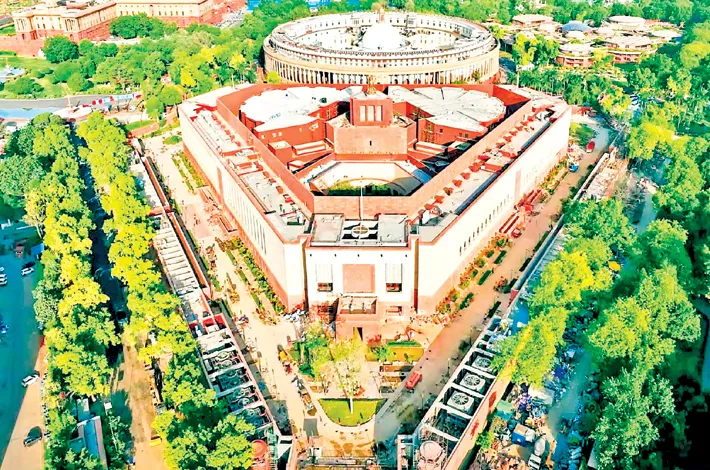
The Winter Session of India's Parliament concluded amid high drama, protests, and disruptions. For over 15 days, the session featured heated exchanges, including a notable debate between the Home Minister and Rahul Gandhi on electoral reforms, celebrations for the 150th anniversary of "Vande Mataram," and controversy surrounding the newly passed "Ji Ram Ji" bill. However, critical issues like the alarming pollution crisis in North India were sidelined due to ongoing disruptions and protests.
A senior journalist of a news channel emphasized that while the House debated several key bills, public concerns were pushed to the backseat once again. He questioned political leaders on when Parliament would address issues affecting ordinary citizens without drama, aiming for real outcomes. provided a quick overview of the session's scorecard: 10 bills introduced, five passed by both Houses, two pending in Rajya Sabha, and one referred to a standing committee. Despite this, he pointed out the failure to debate pollution, an issue affecting every citizen across party lines and states. A scheduled debate on pollution was not held on Thursday, leading to the adjournment of Lok Sabha without discussion.
A Congress leader highlighted statistics from a Lancet report released in October 2025, showing over 1.7 million deaths due to air pollution in 2022—a 38% jump since 2010. The Global Air Report echoed this, attributing 980,000 deaths to PM 2.5 particles, representing 17% of all deaths in India. He stressed the need for all parties to act on a war footing, criticizing the government's denial of conclusive data linking high AQI to lung diseases.
A section of political analysts defended the opposition, stating that parties like Congress, Samajwadi Party, Aam Aadmi Party, and NCP had demanded a long debate on pollution, which affects not just Delhi but national cities—seven or eight of the world's top 10 most polluted are in India, many in BJP-ruled states. They accused the government of avoiding the topic and recalled a statement from Prime Minister Narendra Modi dismissing global warming as merely feeling colder with age, calling it "pseudo-scientific."
A BJP spokesperson RP Singh countered saying that the treasury benches bear the duty to run the House, but disruptions like protests and climbing on tables prevented serious discussions. He argued that pollution issues could have been addressed if the opposition had stayed back, and shifted focus to the "Ji Ram Ji" scheme, clarifying it as a new initiative unrelated to MGNREGA, offering 125 days of guaranteed work compared to MGNREGA's 100 days without surety.
On pollution, he blamed successive Delhi governments, noting the Aam Aadmi Party's failure to reduce AQI levels as promised. Singh highlighted improvements under the current regime, including traveling to the studio via metro to promote public transport, adding 3,427 electric buses in the last 10 months, and ordering 7,500 more to reach over 13,000 buses. He also mentioned a proposed last-mile connectivity scheme to pick up people from home to bus or metro stops.
A Samajwadi party leader urged learning from China's Beijing, which reduced pollution through a coordinated Air Pollution Prevention and Control Action Plan involving surrounding regions. He suggested a central control system for NCR states—all BJP-ruled—to allocate budgets and act decisively, accusing the government of corruption or neglect that leaves Delhi's people "orphaned."
Meanwhile, an Aam Aadmi Party leader argued that Parliament could have discussed pollution despite disruptions by expelling troublemakers. He blamed the government for finding excuses on critical issues affecting people the most, pointing to a Lancet report claiming 1.7 million deaths due to pollution. He also criticized the BJP for presiding over poor infrastructure development, leading to traffic jams and rising AQI under previous administrations. He expressed public loss of faith in the BJP's ability to control pollution, citing crowds chanting "AQI" at events involving chief ministers and criticizing the government for debating "Vande Mataram" for 10 hours but not pollution for even one.
Regarding the "G RAM G” bill, a revamped rural employment guarantee scheme, BJP defended the name, noting Gandhi's last words were "Hey Ram," and argued the scheme creates smart villages with better fund utilization. It also clarified that clarified that the new scheme offered 125 days plus 60 for farming periods, totalling 185, with over Rs 7 lakh crore allocated. The opposition however termed it as a last-minute face-saving by a bankrupt government, objecting to the shift from 90-10 to 60-40 funding and from demand-driven to supply-driven, killing the right to work.
As the session ends, questions linger over when Parliament will prioritise life-threatening issues like pollution without drama, delivering real outcomes for the common citizen.