24 October, 2026 | 5:38 PM


“Raitannaku Vennudannu – Kalam,Galam & Drusyam "
23-12-2025 12:00:00 AM
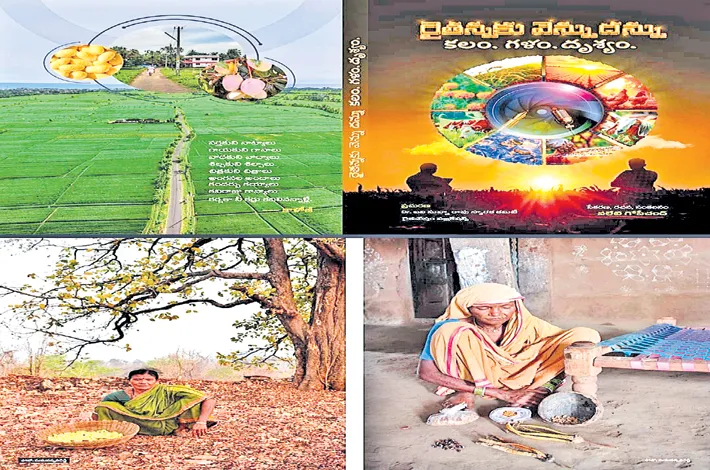
Written, compiled, and edited by Valeti Gopichand
In recent times, publishing a book has often become an act of personal satisfaction—a way for authors to celebrate their own achievement. In an era dominated by social media, reels, and selfies, one might even ask: who reads books anymore? Yet, Valeti Gopichand belongs to a rare and different tradition. His literary journey stands in clear contrast to this trend.
His sole commitment has been to society—especially to those selfless individuals who worked tirelessly behind the scenes and were forgotten by history. His writing seeks to give permanence to the extraordinary lives of ordinary people whose contributions shaped society but never received due recognition. This is quiet, selfless dedication.
An alumnus of Bapatla Agricultural College, Gopichand’s deep bond with agriculture is evident in his work. He has brought out three volumes documenting distinguished alumni of the institution, followed by translated and original works such as ' Mana Nelale – Mana Bhavitha', all written in an accessible style. These efforts culminate in his most significant work to date: “Raitannaku Vennudannu – Kalam,Galam ,Drusyam ."
This is not merely a book. It is a documentation of nearly five decades of agricultural journalism in Telugu—a living record of commitment, service, and impact. The book chronicles the role of agri-journalists as the unseen driving force behind India’s agricultural progress. It positions agricultural journalism not as a peripheral activity, but as a primary catalyst in taking scientific knowledge and policy insights from laboratories and offices to farmers’ fields.
The theme is structured around three powerful media: Galam - Voice (Radio): Beginning in 1965, dedicated agricultural broadcasts through All India Radio brought knowledge to even illiterate farmers in their own language, building trust and awareness. The book traces the origin, evolution, and present-day challenges of agricultural broadcasting, supported by historical evidence.
Kalam - Pen (Print): This section honours journalists who devoted their lives to documenting farmers’ struggles, innovations, and policy issues. Through newspapers and magazines, they amplified the farmer’s voice up to the corridors of power. Their work was not mere reporting, but a deep engagement with life in the fields, transformed into enduring words.
Drusyam - Visual (Television): With technological advancement, television carried agricultural knowledge to millions through visuals—covering everything from sowing to harvest. This section captures the dedication, effort, and emotion of journalists who chose the visual medium to serve society.
Together, these three media played a crucial role in transforming India from a food-importing nation in the 1960s to a major food exporter today. By effectively disseminating technology and best practices, agri-journalists not only improved farm productivity but also contributed indirectly to national GDP growth and food security. Their role deserves recognition as a national service.
The book’s larger purpose is two fold - to honour the contributions of past agri-journalists and to inspire future generations. At a time when youth are drawn overwhelmingly towards social media, this work serves as a manifesto underscoring the continuing relevance and necessity of agricultural journalism.
Why read this book?
It is a practical guide for young aspirants interested in agricultural journalism across print, radio, and television. It explains how agricultural news began, how it evolved, and where it stands today. It offers direct access to experienced professionals through documented profiles and contact details, enabling learning beyond the book.
This is a book that deserves a place in every Telugu household that respects agriculture, in the hands of every agricultural student, and in the heart of every journalist who believes in purposeful communication.
- N. Vijaya Raghava Reddy