2 October, 2026 | 5:05 PM


West Asia conflict shakes India’s edible oil lifeline?
28-04-2026 12:00:00 AM
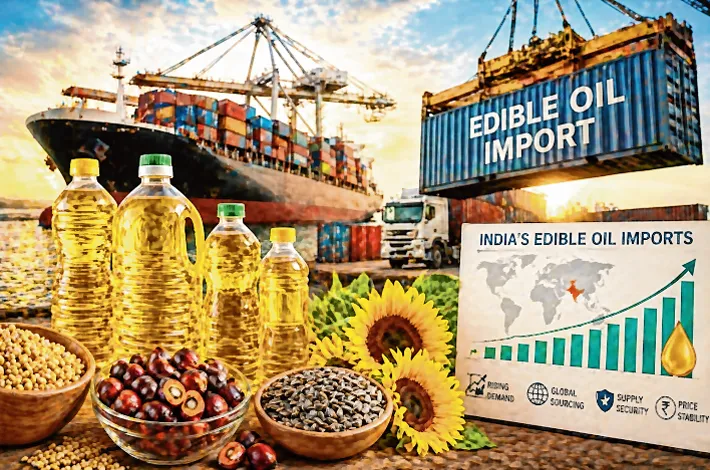
Geopolitical risks, biofuel demand, and climate disruptions reshape import patterns, influencing availability, pricing trends, and procurement strategies across domestic mkts
India’s edible oil import strategy is undergoing a structural shift from price-led buying to supply-driven sourcing, as geopolitical tensions, climate disruptions and energy market linkages reshape global trade flows, according to the Indian Vegetable Oil Producers’ Association (IVPA).
Speaking at the BLACK SEA GRAIN.KYIV-2026 conference, IVPA Vice President Bhavna Shah highlighted three key drivers—weak monsoons, elevated crude oil prices and strong global biofuel demand—that are expected to influence availability in 2026-27.
These factors, she noted, are tightening global supplies and altering traditional procurement strategies. Shah cautioned that edible oil inflation could edge higher due to multiple pressures, including monsoon variability, crude oil volatility, fertiliser shortages and gas-linked production constraints.
Additionally, biofuel mandates are increasingly diverting feedstock such as palm oil away from food use, further tightening supplies. Despite these risks, India’s robust supply chain and flexible import strategy are expected to cushion the impact. She emphasised that India continues to act as a global demand anchor, absorbing surplus supplies from producing regions.
This positioning provides some stability to domestic markets, even as global uncertainties persist. However, the edible oil economy is no longer confined to food consumption alone and must now be assessed across food, feed and fuel segments due to rising biofuel integration. India’s edible oil imports have remained steady at 15–17 mn tonnes annually, with March 2026 imports rising 11% year-on-year to 1.19 mn tonnes.
For the 2025-26 oil year, imports are projected at 16.5 million tonnes, while domestic output is estimated at 9.6 million tonnes, underscoring continued reliance on overseas supplies.
In terms of composition, palm oil is expected to retain dominance due to its cost advantage, while sunflower oil demand remains resilient. Soybean oil supply may face disruptions, although competition between soybean and palm oil is likely to intensify after April 2026.
With imports accounting for nearly 60% of consumption, India remains a critical player in global edible oil markets, even as policy initiatives aim to boost domestic production over the medium term.
In the near term, volatility in global freight rates and currency movements is also expected to influence India’s import bill and sourcing decisions. A stronger dollar could raise landed costs, prompting refiners to recalibrate purchase timing and origins.
At the same time, any easing of geopolitical tensions may improve supply visibility and moderate prices. Industry participants are increasingly relying on diversified sourcing strategies and forward contracts to manage risks. As global markets remain interconnected, India’s import strategy will continue to evolve dynamically, balancing affordability, availability and policy priorities to ensure domestic supply stability.
— ANI