17 September, 2026 | 10:40 PM


What “killed” shopping malls?
12-12-2025 12:00:00 AM
Few reasons for poor performances of malls:
- Wrong location and poor connectivity to catchment areas
- Absence of professional mall management
- Strata-sold models (developers sold shops to hundreds of individual investors and walked away)
- No zoning, poor brand mix and zero churn
- Inadequate parking, unclean premises and outdated infrastructure
- Failure to evolve into “experience hubs” with entertainment, events and F&B
Successful revival, the experts agreed, will require single ownership or professional consolidation, heavy capex for infrastructure upgrade, fresh strategies for branding, shifting to “retail-tainment
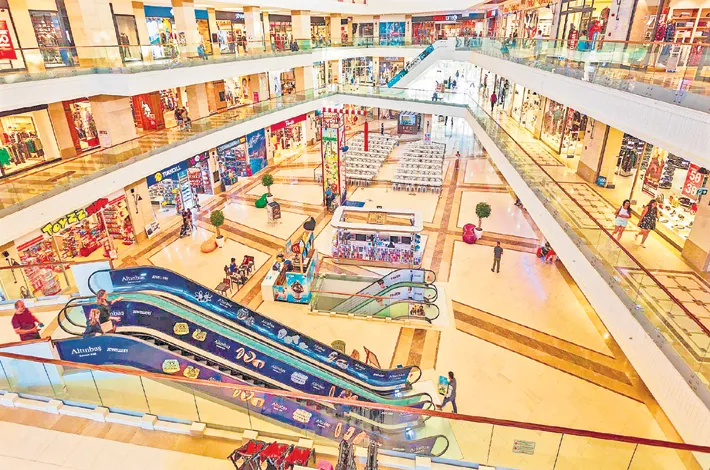
India is witnessing a strange retail paradox: while top-tier malls in metros are bursting at the seams with near-98% occupancy and record footfalls, 74 malls across 32 cities have turned into modern-day ghost towns. Together, these “ghost malls” are sitting on 15.12 million square feet of almost empty space — representing billions in locked capital, thousands of lost jobs and wasted urban infrastructure. Vacancy rates in top-tier malls have dropped below 6%, footfalls remain robust, international and domestic brands are aggressively expanding, and consumers are spending – although selectively.
What exactly went wrong
The same Indian shopper who scrolls through e-commerce apps is also flocking to the right physical destinations, proving that rising consumption can comfortably support both online and offline retail. A top executive of Knight Frank India pointed out that most of today’s ghost malls started sliding seven to eight years ago — well before the rise of 10-minute delivery apps. “Indian consumption is rising fast enough to support both physical and digital retail,” he said, further emphasizing that e-commerce is a contributing factor, but definitely not the key reason these malls died.
A luxury strategist traced the problem back to India’s first-generation malls of the mid-1990s (Crossroads in Mumbai, Ansal Plaza in Delhi), which were built on a “sell-and-exit” real-estate model rather than a long-term leasing and operating model. He pointed out that there was no concept of zoning, no focus on customer experience. The builder made his money and vanished, he said.
He highlighted another growing malaise — identical brand line-ups every few kilometres. Giving the example of Gurugram, he said that one would see the same Zara, H&M, Starbucks and food courts everywhere. He pointed out that there was product, but no service, no culture no differentiation. Successful malls today, he argued, need four things: great Product, trained People, seamless Processes and a distinct Culture.
A representative of Nexus Select Trust, which owns 19 dominant malls including Select Citywalk, shared that his portfolio has maintained 97-98% occupancy for over ten quarters. He stated that the firm constantly manages and monitors — 3,400 stores, nearly 1,000 unique brands, 10 international flagship launches in the last few years.
He mentioned that even pure-play online brands like Nykaa, Lenskart and multiple D2C players are aggressively opening physical stores with Nexus Select because malls drive repeat footfalls and brand salience. Interestingly, consumer behaviour has flipped. Earlier “web-rooming” (see in store, buy online) has given way to “showrooming” (research online, try and buy in store). Post-Covid, people crave controlled, air-conditioned social spaces — a need that well-managed malls are perfectly placed to fulfil.
Can the ghost malls be brought back to life?
Knight Frank estimates that reviving just 15 of the better-located ghost malls could unlock over Rs 350 crore in annual rental income. He pointed out that many such malls are located in isolated and unconnected from the main cities. But the experts cautioned that revival is not guaranteed. But the experts cautioned that revival is not guaranteed.
Successful revival, the experts agreed, will require single ownership or professional consolidation, heavy capex for infrastructure upgrade, fresh strategies for branding, shifting to “retail-tainment” — larger food & beverages, gaming zones, events and experiences, possible category-specific formats (e.g., furniture malls, auto malls, tech malls).
As one retail markets expert put in “Online shopping hasn’t killed the mall. It has only exposed every weakness in the mall model.” In a digital-first world, Indian consumers are voting with their feet — and their wallets — for malls that feel fresh, fun and frictionless. The thriving Grade-A malls are proof that physical retail is very much alive. The 74 ghost malls, on the other hand, stand as expensive reminders that in today’s India, mediocre malls don’t stand a chance.