21 September, 2026 | 5:57 AM


A grateful salute from the Thiruppan Alwar Ammal community
07-12-2025 12:00:00 AM
In a constitutional moment when Bharat is rediscovering its civilisational roots, the acknowledgment given to the Thiruppan Alwar Ammal community in the national discourse surrounding Article 26 carries profound spiritual and historical weight. For us, this recognition is not merely an honour—it is a moment of sacred fulfilment.
On November 12th, 2025, at a quiet gathering held to remember the historic Temple Entry Proclamation Day, Sri Rangarajan of the Chilkur Balaji Temple made an announcement that carries unusual moral weight. He declared that, henceforth, members of the Scheduled Caste and Scheduled Tribe communities would be addressed as “Tiruppan Alwar Ammal.”
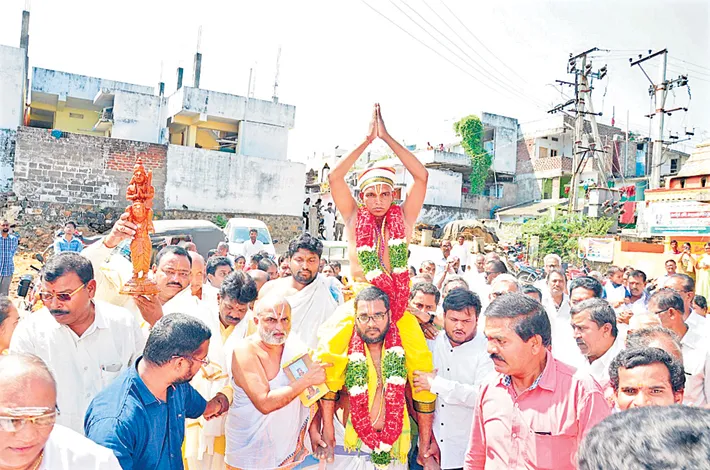
This proposal does not emerge in isolation. Rangarajan is the same priest who performed the now widely noted Munivahana Utsavam in Hyderabad by carrying a Scheduled Caste devotee, Aditya ParaSri, into the Jiyaguda Ranganatha Temple, echoing the ancient, revered episode of Maharishi Lokasaranga lifting Tiruppan Alwar into the Srirangam Temple nearly 2700 years ago. That act, then and now, symbolised the collapse of social barriers before the force of devotion.
For centuries, our community has lived by the teachings of Sri Thiruppan Alwar, the saint who taught a timeless truth: that in the eyes of the Divine, every soul is equal, every being is worthy, every devotee is beloved. His life—a radiant lamp of Bhakti, humility, and total surrender—continues to shape our identity and our responsibilities today.
A revival of dharma through article 26
When the constitutional spirit of Article 26 is invoked to reaffirm the sovereignty of the Deity and the sanctity of temples, our community feels a deep civilisational calling. To be counted among those entrusted with protecting the rights of Deities is not a mere compliment; it is a responsibility we carry with devotion, discipline, and humility. The title “Ammal”—meaning “motherly protection of the child”—captures the very spirit with which our community approaches this duty. It is a title of nurturing guardianship, not assertion; of protection, not power. In this spirit, we embrace the responsibility of defending temples and Deity rights as an act of worship rather than activism.
A Journey from exclusion to guardianship
Our own spiritual history gives this moment a deeper symbolism. Thiruppan Alwar, who once faced exclusion from temple entry due to rigid social barriers, ultimately transcended all discrimination through divine grace, merging with Lord Ranganatha Himself. Today, for that very lineage to be acknowledged as protectors of Deity rights is a civilisational milestone. This journey—from denied entry to guardianship, from silence to recognition, from marginalisation to custodianship of Dharma—belongs not only to our community but to every devotee who has quietly fought for the dignity of temples and the freedoms promised under Dharma.
A commitment to the nation
We offer a solemn assurance to the nation: We will safeguard the sanctity and autonomy of temples. We will honour the constitutional commitment of Article 26 with integrity. We will stand firm whenever the rights of Deities or Dharmic institutions are threatened. We will discharge our duties with peace, devotion, and respect for all traditions. This is not a position of status. It is a lifetime of service. We express heartfelt gratitude to scholars, devotees, constitutional thinkers, and Dharmic leaders who have illuminated the contributions of the Thiruppan Alwar Ammal community.
To recognise us in the ongoing civilisational journey of Bharat is to affirm the saint’s own message: “No one is high or low before the Divine.We all belong to the Lord.” As Bharat rises anchored in Dharma, may temples remain sacred, sovereign, and free. And may service to the Deity remain the highest honour of all.
- Prerna Thiruvaipati The author is a researcher in dalit&women’s rights as well as Hinduism