21 September, 2026 | 8:56 AM


Ramagundam’s slow poison
07-12-2025 12:00:00 AM
■ 6,000 people already have cancer, with tens of thousands in pre-cancer stages
■ The spread of coal ash contains roughly 40% alumina affected over 80,000 acres of forest and farmland
■ Godavari river water quality dropped from ‘c’ to ‘h’ category
In a population of 1.5 million across towns like Manchiryal, Godavarikhani, Ramagundam, Peddapalli, Manthani, Bellampalli, Jaipur, Kamanpur, and Julapalli, we estimate at least 6,000 people already have cancer, with tens of thousands in pre-cancer stages.
EKALAVYA MALLEPALLI I hyderabad
The Ramagundam-Jaipur industrial region in Telangana is under severe environmental and public health stress, as decades of coal-based power and cement production have taken a devastating toll on the area. Experts warn that ongoing emissions, fly ash disposal, and water contamination are creating long-term ecological damage and a serious health emergency for local communities.
Currently, the region’s 5,400 MW thermal power plants consume nearly five million tonnes of coal annually, alongside 9.5 million tonnes of coal burned for Ultratech Cement production. In addition, three new thermal power plants are set to come up in the Ramagundam area, raising concerns among environmentalists and residents about a further surge in emissions and pollution.
Air quality in the region is dangerously poor. The World Health Organization recommends a safe PM2.5 level of 5 µg/m³, yet November readings in Ramagundam and surrounding areas ranged from 175 to 250 µg/m³—35 to 50 times above the safe limit. “This is not just pollution; this is a slow, silent disaster affecting every aspect of life here,” said Uma Maheshwar, an environmentalist from Ramagundam, speaking to Metro India.
“In a population of 1.5 million across towns like Manchiryal, Godavarikhani, Ramagundam, Peddapalli, Manthani, Bellampalli, Jaipur, Kamanpur, and Julapalli, we estimate at least 6,000 people already have cancer, with tens of thousands in pre-cancer stages. Immediate action is the only way to prevent a larger catastrophe.”
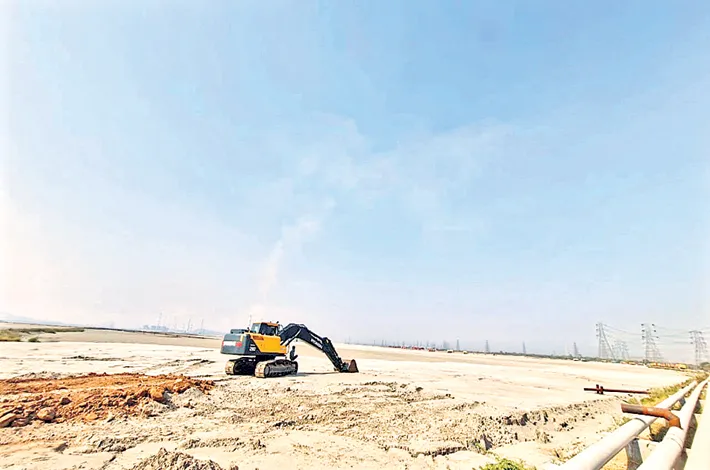
The spread of coal ash, which contains roughly 40% alumina, continues to devastate farmland and forests. Over 80,000 acres in Ramagundam, Kamanpur, and Jaipur mandals have been turned into barren dust dumping areas. Crops fail, greenery disappears, and local communities lose their primary source of livelihood.
Water contamination adds another layer of concern. The Godavari River, which once held ‘C’ category water suitable for bathing, has now been downgraded to the ‘H’ category, indicating complete pollution, largely due to untreated effluents from NTPC, Jaipur Thermal Plant, RFCL, and Basantnagar Cement. The contamination of water sources has severe implications for agriculture, drinking water, and overall public health.
Health consequences are stark. A recent medical camp organized by the Rohini organization among 5,000 residents found 183 individuals in pre-cancer stages and 20 diagnosed with cancer. Chronic exposure to pollutants has led to increasing cases of heart disease, kidney disorders, respiratory illnesses, and premature deaths, even within NTPC townships. According to CSC Director Sunita Narayan, air pollution disproportionately affects low-income populations, where disease burden and mortality rates are 10–11 times higher than those among regular workers.
The upcoming construction of three new coal-based thermal plants in Ramagundam has further alarmed environmentalists and local leaders, who fear a worsening of air and water quality and a spike in health emergencies. Local MLAs, MPs, 100 village panchayat heads, and 170 municipal ward members from towns including Godavarikhani, Manchiryal, and Naspur are being urged to take immediate steps to protect public health and the environment.
Uma Maheshwar stressed, “If the expansion of coal-based thermal plants continues without stringent environmental safeguards, we are heading towards an ecological and health disaster that will impact generations. The government, industries, and local authorities must act now to stop further damage and protect the people of this region.”
The Ramagundam-Jaipur belt is now at a critical juncture. Without urgent intervention to halt further coal plant expansion, prevent open-cast mining, and implement effective pollution controls, the environmental degradation and public health crisis are expected to escalate, leaving communities trapped in a cycle of disease, poverty, and ecological collapse.