21 September, 2026 | 5:08 AM


BRS sets stage for labour code revolt
07-12-2025 12:00:00 AM
metro india news I hyderabad
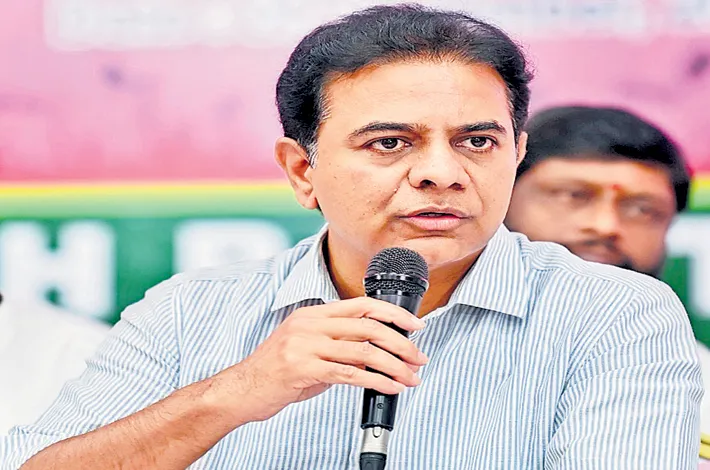
BRS Working President K.T. Rama Rao announced that a nationwide agitation against the Centre’s new Labour Codes would begin from Telangana, asserting that if the State blocks their implementation, it will become a guiding example for the entire country.
Speaking at a round-table meeting with trade unions at Telangana Bhavan on Saturday, he questioned how the Congress government in the State could implement a bill that Sonia Gandhi herself had opposed in Delhi. KTR warned that the Assembly and Council would be stalled until the Labour Codes were halted, and said another round-table meeting would soon be held in Warangal.
KTR argued that laws copied from the United States and Europe cannot simply be transplanted in India without considering local socio-economic realities. He said new reforms were being brought under the pretext of global agreements but were ignoring the lived realities of millions, pointing out that 92% of the population still relies on white ration cards. He recalled how KCR consistently protected workers, awarding Rs 3,500 crore worth of Bathukamma saree orders to Siricilla weavers and extending financial support during crises. He criticised those “speaking without knowledge” and overlooking KCR’s pro-worker decisions.
He compared India’s economic trajectory with China’s, noting that four decades ago China’s GDP was lower than India’s, but has now grown to a $60 trillion economy because its policies continuously evolved in response to people’s needs. He argued that unless citizens give enough parliamentary strength to parties that genuinely fight for workers, such anti-labour laws would continue to emerge. With no BRS representation in Lok Sabha, he alleged that Congress and BJP were jointly pushing harmful legislation.
Citing the recent aviation crisis, KTR blamed monopolistic control for Indigo’s cancellation of 1,000 flights in five days, saying India’s aviation sector being concentrated in the hands of Indigo and Tata was dangerous. He said DGCA had warned airlines about pilot exploitation a year ago, but no corrective action was taken. He cautioned that if Labour Codes were implemented, similar worker-related disruptions could spread across other sectors. He reiterated that BRTU was ready to work with any union in the movement against the codes.
Former minister Ch. Malla Reddy called the new Labour Codes “terrifying” and said workers were no strangers to struggle. He urged unions to take the fight even to Jantar Mantar if required and criticised the poor state of ESI hospitals. He questioned CM Revanth Reddy for suggesting that 20% of increased cinema ticket revenue should go to workers but failing to insist that 30% of benefits enjoyed under industrial policies be allocated to labourers. He announced a contribution of Rs 10 lakh towards the agitation.
Former minister V. Srinivas Goud said the Labour Codes were crafted to benefit big corporates and accused both the Centre and the State of adopting identical anti-worker policies despite political differences. He said industries across the country were being quietly taken over by large corporate groups and suggested that a labour grievance call centre be set up at Telangana Bhavan.
Former MP B. Vinod Kumar criticised the passage of the Labour Codes, saying 29 existing labour laws had been compressed into just four, and blamed Parliament’s deteriorating functioning. He said Telangana had rushed to frame rules while several other States had held back and urged a nationwide movement similar to the farmers’ agitation that forced the Centre to withdraw farm laws. He praised BRS for responding quickly to the issue and recalled how KCR had previously warned the Centre that these laws were anti-labour.
Former MLA Dasyam Vinay Bhaskar said many workers still lacked awareness of the consequences of the new laws, which he claimed would erode job security and restrict essential rights such as health-related leave. He called for district-level round-table meetings and legal strategies to block implementation.