21 September, 2026 | 7:49 PM


A singer’s tears
16-12-2025 12:00:00 AM
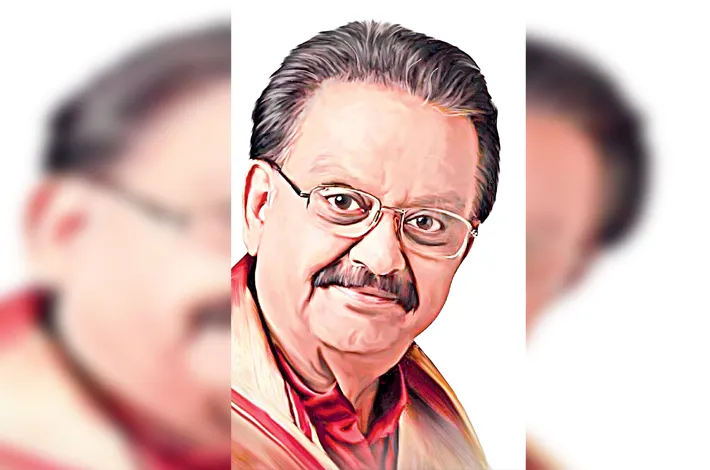
Thirty years after SPB’s plea
Three decades ago, SPB himself tearfully implored a fractious crowd at another statue ceremony to rise above regional, language divisions, insisting that artists like him and his mentor Ghantasala transcended politics. Today, that plea feels like a haunting prophecy unfulfilled.
The current uproar erupted in early December when the Telangana government announced plans to install SPB's statue at Ravindra Bharati on his birth anniversary, December 15. The 79-year-old legend, who passed away in 2020 after a COVID-19 battle, lent his golden timbre to over 40,000 songs across eight languages, earning him the Padma Vibhushan and a Guinness record for most recordings. Chief Minister A. Revanth Reddy's administration hailed the gesture as a nod to SPB's pan-Indian appeal, especially in Telugu cinema, where he voiced heroes from N.T. Rama Rao (NTR) to Chiranjeevi. But the decision ignited backlash from fringe Telangana activists, who argue the venue—named after Bengali poet Rabindranath Tagore—should prioritize local icons like revolutionary balladeer Gaddar or folk singer V. Anil, both Telangana natives who championed the state's 2014 bifurcation struggle.
This is not the first time a statue in Hyderabad's cultural precincts has become a flashpoint. Flash back to February 14, 1993, in the evening the lush expanse of Public Gardens. SPB, then 46 and at the peak of his vocal prowess, had meticulously orchestrated the unveiling of a statue honouring Ghantasala Venkateswara Rao, the gravelly-voiced patriarch of Telugu playback singing who died in 1974. Ghantasala's baritone had defined an era, scoring epics like Missamma and voicing NTR's mythic roles in over 1,000 films. The bronze effigy, sculpted to capture his commanding presence, was to be a beacon of artistic reverence.
SPB invited a bipartisan galaxy: United Andhra Pradesh's Chief Minister K. Vijaya Bhaskar Reddy of the Congress, whose government greenlit the project, and opposition leader NTR, the Telugu Desam Party (TDP) founder and screen god whose political ascent in 1983 had reshaped the state's fortunes. The ceremony brimmed with melody—tributes from contemporaries like S. Janaki—before dignitaries pulled the drape. Speeches followed: Reddy lauded Ghantasala's unifying spirit, NTR evoked his on-screen synergy with the singer's voice.
Then, chaos erupted. Manchu Mohan Babu, the strapping actor and ardent NTR acolyte—later a TDP parliamentarian—stormed the stage uninvited. Pumping fists skyward, he bellowed slogans: "Jai NTR! Jai Telugu Desam!" The air thickened as Congress loyalists in the crowd retaliated with cries of "Vijayabhaskar Zindabad!" and "Congress Zindabad Fists flew, chairs toppled; the garden's serenity shattered into partisan melee. Reddy and NTR, faces taut, exited amid the din, their motorcades vanishing into Hyderabad's haze.
Onstage, SPB stood frozen, tears tracing paths down his cheeks. The man who had serenaded millions with songs now choked on words of anguish. Microphone in hand, he addressed the stunned assembly: "As artists, Ghantasala garu and I have no politics. We belong to no party, no region, no religion. Our voices are for the human heart, above these narrow walls." He recounted Ghantasala's adoration across Tamil Nadu and Karnataka, how his own melodies endeared him to Malayali and Kannadiga fans alike. "This noble event for a timeless soul has been soiled," he lamented, voice cracking. "I apologize to all—for what? For dreaming of unity in art?" The crowd hushed; some wept. The speech, preserved in faded clippings, became folklore, a manifesto for apolitical creativity.