21 September, 2026 | 8:33 PM


Proximity to BJP, Suicidal for Left
16-12-2025 12:06:13 AM
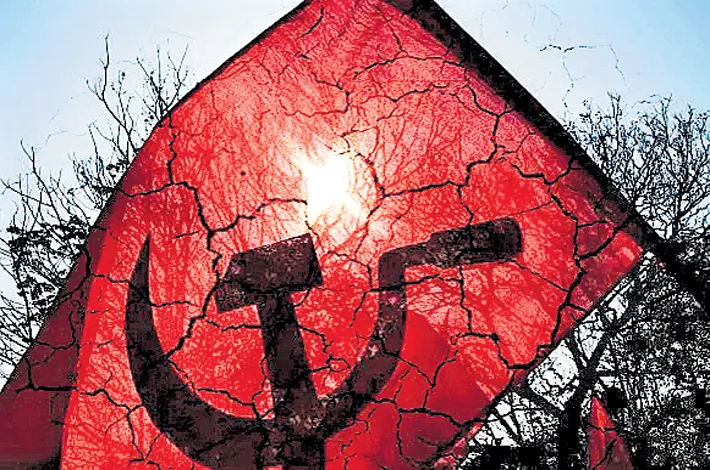
Startling results of the just-concluded local body elections in Kerala is ominous for the future of the Left. It signals a Bengal-type collapse of the Left in Kerala, with cadres moving over to the BJP. Ultimately, it is not collapse just in Kerala, the last of its bastions, but at the national level, as well.
Bucking the trend of alternatively coming to power, the Left, for the first time in decades, retained power for second straight consecutive term in office in Kerala Assembly elections in 2021, owing to its proximity with BJP, which transferred its vote to the Left Front to defeat the Congress. After the short-term gain, the Left stares at colossal long-term loss.
For its part, after 10 years in the Opposition, the Congress has bounced back on to the political centre stage, just ahead of the crucial Kerala Assembly elections in 2026. More importantly, the Congress has managed to emerge as a major pole to counter Left-BJP on its own steam, with Muslims moving over from the Left and consolidating behind the Congress-led UDF.
Similar to Thiruvananthapuram Corporation, where it ceded ground to the BJP, the Left Front lost ground in many of its traditional strongholds, such as Kollam Corporation. In its zeal to push the Congress to the margins, the CPM joined hands with the BJP-Sangh, which may cost the Left party dearly.
Symbolic of the big shift on the ground, Mallapuram, considered a Left bastion in Kerala, has been won decisively by the Congress-led UDF. It proved how suicidal the Left electoral strategy was. Abandoning its Muslim outreach to undermine the Congress, of late, the Left has been working in close tandem with RSS, aimed at Hindu consolidation.
Left calculations in facilitating BJP surge was that the Saffron Party would make inroads only into the Congress. But, this time round, the BJP was able to eat into the CPM base, as well. The Left targeted the Jamaat-e-Islami, Social Democratic Party of India (SDPI) which was formerly Popular Front of India (PFI) and Indian Union Muslim League.
As a result, while the Left Front vote base began to shrink, the BJP expanded its vote base through Hindu consolidation and by focusing on chipping away part of Christian vote. This compelled Muslims to rethink their support to the Left Front.
Alienated Muslims
The Left-RSS nexus has shattered the trust of the Muslims in the Left, not only in Mallapuram, but in Kerala, as well. Not only has Left lost in its own bastion of Mallapuram, but, it can seriously lose power in Kerala to the Congress-led UDF in the upcoming State Assembly elections in 2026.
The CPM-RSS nexus is not a new phenomenon. Ever since it’s breaking away from the CPI in 1964 on the issue of naming China as the aggressor in 1962, the CPM stayed steadfastly with the RSS. The CPI did support the Congress under Indira Gandhi, during the Split in 1969 and propped up her Government along with the DMK, till the Mid-Term Election in 1971, when Indira Gandhi won two-thirds majority. During the Emergency, too, the CPI extended support to the Congress as a progressive party. It was after the demise of CPI Chairman Shripad Amrit Dange that the CPI returned to the Left Front fold under the CPM.
Four decades after its birth in 1964, when CPM General Secretary Harkishen Singh Surjeet steered the CPM away from RSS to prop up the Congress-led UPA Government at the Centre in 2004, the then BJP President M Venkaiah held a press conference and turned emotional at the CPM breaking ranks with the Sangh. Describing the CPM as ideological party, Venkaiah Naidu recalled how the CPM described Pandit Jawaharlal Nehru as the running dog of the Imperialists.
Following the demise of CPM General Secretary Sitaram Yechury, who tried to recast the party strategy since its birth in 1964, of moving away from the RSS, suffered a setback. Soon after the demise of Yechury, party ideologue Prakash Karat stepped in to effectively reverse the trend of rapprochement with the Congress at the national level. In 2008, Prakash Karat, known to be ideologically aligned with BJP leader L K Advani, wrested the political initiative in his party and got the Left Front to withdraw support to the Congress-led UPA Government at the Centre.
In Kerala, Karat enjoyed greater clout. Together with State Chief Minister Pinarayi Vijayan, seen as Karat camp-follower, Prakash Karat took the CPM closer to the RSS. In the short-run, it paid immediate political dividends of retaining power in the State in 2021. But, by the General Election in 2024, the BJP, in concert with Pinarayi Vijayan, managed to open its account for the first time ever, winning Thrissur Lok Sabha seat.
Left, Sangh Efforts
Jan Sangh, precursor of the BJP, and CPM were on the best of terms since the CPM split away from the CPI. In 1967, for the first time, Indira Gandhi retained power at the Centre with thin majority. But in the States across the heartland States, the Congress lost power in the States. CPM, Socialists and Jan Sangh together formed Samyukth Vidhayak Dal (SVD) Governments.
In the Mid-Term Election in 1971, the CPM joined hands with Jan Sangh to form Grand Alliance against Indira Gandhi, but lost the elections.
In 1977, the CPM under the legendary West Bengal Chief Minister Jyoti Basu, made the first-ever opening to the Jan Sangh. Atal Behari Vajpayee and L K Advani reached out for coordination in the Janata Party Government led by Morarji Desai. Then, Jyoti Basu declined to meet them in New Delhi, fearing exposure in the media. In Kolkata, for the same reason, Jyoti Basu refused to receive the Jan Sangh leaders in the State Secretariat.
On Advani's suggestion, Jyoti Basu agreed to meet Vajpayee and Advani at the residence of Sangh leader Viren J Shah. 20 years later, when Vajpayee became Prime Minister, Viren J Shah was appointed West Bengal Governor.
No Policy Revision
For record, the CPM matained that it will remain equidistant, both from the BJP and the Congress. This was euphemism for Anti-Congress line. Post-Babri Masjid Demolition on December 6, 1992, at the Party Congress in April, 1993, CPM General Secretary Harkishen Singh Surjeet suggested change in Party line. After the Babri Masjid Demolition, the party must identify BJP as Enemy Number 1. Uproar in the party leadership forced Surjeet the following day to declare that there is no change in the party line of remaining equidistant from BJP and the Congress.
In 1998, when Vajpayee formed the Government, CPM refused to revise its policy. Till Surjeet brought about a landmark change in 2004, by getting the Left Front to support the Congress. Even that was undone within four years, in 2008.
The CPM faces the stark prospect of fading away in Kerala, just as it did in West Bengal. The CPM, however, will be remembered for its longest collaboration with RSS, even as it tried to occupy the secular space, simultaneously. But its own strategy eroded its political space, leading to erosion of its own popular base across India.