4 November, 2026 | 4:13 AM


Advani: Everybody has become oversensitive
04-11-2026 12:00:00 AM
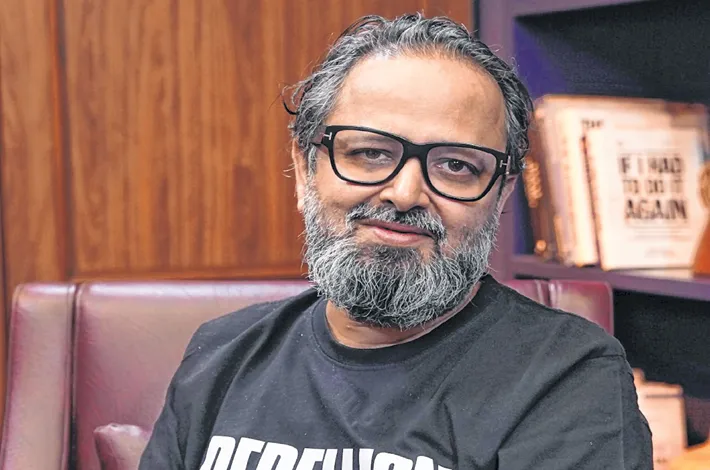
Filmmaker Nikkhil Advani on India’s freedom struggle, political sensitivities & changing space for storytellers
Anushka Jagtiani :
What does In-dia’s freedom struggle have to teach today’s generation? And in a world where every story is scrutinised through a political lens, how much freedom do storytellers really have?
These questions and more were answered on the latest episode of The Free Press Journal’s Buzz by the Bay by acclaimed filmmaker Nikkhil Advani, the director behind Bollywood classics such as Kal Ho Naa Ho and the creative force behind historical dramas exploring India’s freedom struggle, including Freedom at Midnight and The Revolutionaries.
From revisiting the people and events that shaped India’s independence to drawing parallels between the freedom movement and youth protests in India today, Nikkhil shares his perspectives on history, dissent, political perceptions and the power of storytelling to challenge the way we see the world. Excerpts:
The Revolutionaries is very different from Freedom at Midnight, even though both are about the Indian independence movement. The latter deals with Partition, Gandhi’s Satyagraha and the Mountbatten era.
I am such a big fan of Gandhi, Nehru and Patel and what they achieved. The criticism I received for Freedom at Midnight was: “Did you not know that there was also another aspect of the freedom movement that nobody ever talks about?” My initial reaction was, “Yes, so there must have been. But I am a fan of Gandhi and Nehru’s era.” However, that criticism allowed me to go back and read about Rash Behari Bose and the revolutionaries.
The Revolutionaries is based on the life of Rash Behari Bose and is an adaptation of Sanjeev Sanyal’s book, Revolutionaries: The Other Story of How India Won Its Freedom. Why did you choose to tell this story?
We always think about the revolutionaries, or rather, the so-called nationalist extremists, in silos: Bhagat Singh, Chandrashekhar Azad and Subhas Chandra Bose. When I read more, I realised that Rash Behari Bose had actually created a kind of movement, the Ghadar Movement, between 1912 and 1915, which is the period covered in the show. It was a very organised movement.
Why did you choose to make shows on the Indian freedom movement in the first place?
Mainly because I feel that we do not know enough about it. In the India we are living in today, people are passing judgements and making such broad generalisations. People say things like Gandhi was responsible for Partition and Sardar Patel did not get his due. Gandhi always said that Nehru would lead the country and Sardar Patel would run the country. If you think about it today, that’s exactly what is happening. Narendra Modi is leading the country, and Amit Shah is literally running it. I also love Freedom at Midnight as a book. I had read it as a child after my father gave it to me.
Is it a bit of a risk to make historical dramas like Freedom at Midnight, given that subjects such as Gandhi and Nehru are always controversial?
Is it a risk to make these kinds of historical shows? In the world we are living in today, just making anything is a risk. Everybody has become oversensitive and over-opinionated. There is very little space left for a storyteller to fly with a subject.
(Visit the FPJ website to read the full article)