23 October, 2026 | 7:47 PM


Ahilyanagar Fort: The prison where Nehru wrote ‘The Discovery of India’
21-08-2026 12:00:00 AM
Metro India News | AHILYANAGAR
The historic Ahilyanagar Fort, a centuries-old landmark in Maharashtra, holds a significant place in India’s freedom struggle as the prison where former Prime Minister Pandit Jawaharlal Nehru wrote his celebrated book The Discovery of India during his nearly three-year incarceration by the British. Following the launch of the Quit India Movement on August 8, 1942, Nehru and 11 other members of the Congress Working Committee were detained at the fort. They remained imprisoned until their release in March 1945.
It was during this period of confinement that Nehru produced one of his most influential works. He began writing The Discovery of India in April 1944, after spending 20 months in detention. Remarkably, he completed the nearly 1,000-page handwritten manuscript by September 7, 1944—within just five months. The book traces India’s history from prehistoric times to the final years of British colonial rule, while also reflecting Nehru’s ideas about
The original preface, handwritten by Nehru, is preserved at the fort and remains an important attraction for visitors and history enthusiasts. Despite the harsh conditions of detention, Nehru continued to pursue his interest in gardening. With the assistance of the prison authorities, who provided him with the necessary tools and materials, he developed a rose garden within the prison premises.
Today, the prison cells and other preserved sections of the fort serve as reminders of the sacrifices made by India’s freedom fighters. The fort was constructed between 1553 and 1565 by Hussain Nizam Shah I, founder of the Nizam Shahi dynasty. Over the centuries, it came under the control of the Mughals and the Marathas before being captured by the British in August 1803. During the British Raj, the fort was converted into a heavily fortified, high-security prison. The historic site is currently under the administrative control of the Armoured Corps Centre and School (ACCS) of the Indian Army.
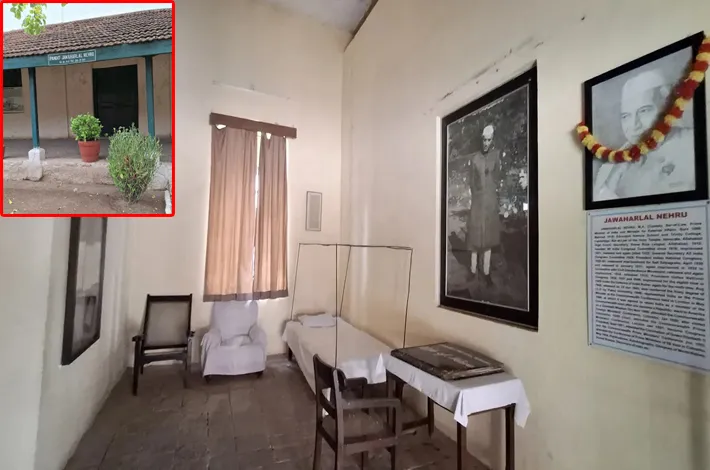
One of the key attractions is the “Leaders’ Block”, where several prominent Congress leaders were detained. The jail room associated with Nehru also preserves several of his personal belongings, including his writing table, chair, sofa and wooden cot with a mosquito net. However, the historical collection could benefit from enhanced curation and modern presentation. Introducing interactive digital exhibits and other contemporary technologies could make the site more engaging and informative for younger generations and help bring the history of the freedom movement to life. At present, the fort is open to the public on two major national holidays—Independence Day on August 15 and Republic Day on January 26. Located around 120 km from Pune, Ahilyanagar Fort is readily accessible and offers visitors a unique opportunity to explore a significant chapter of India’s freedom struggle. For history enthusiasts, students and travellers interested in India’s past, the fort remains an important destination where the memories of the freedom movement continue to resonate.
- (Dr Malladi Krishnanand Additional Director, I& PR(Rtd). Govt of AP.)