26 September, 2026 | 2:33 PM


AI and its impact on Indian Cinema
19-03-2026 12:00:00 AM
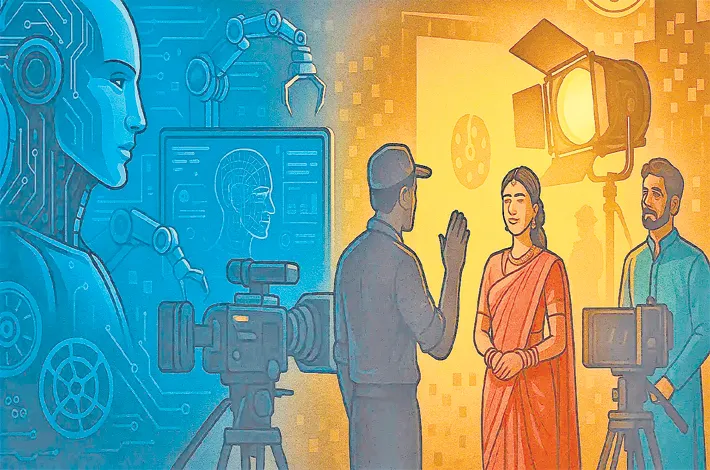
The discussion on the future of cinema in the era of artificial intelligence took center stage at a workshop event conducted by a leading film production company, spotlighting India's soft power through its vibrant film industry. The session blended in-person and virtual participation, reflecting the very hybrid, tech-driven future under discussion.
The core question posed to the panel was straightforward yet profound: What will cinema look like 10 years from now? A director opened by emphasizing feeling over form. He predicted that amid an influx of AI-generated "slop" and mediocre content, the cinema that endures will return to basics—human stories evoking deep emotions. In a world of increasingly robotic lives, audiences will outsource feelings like love, patriotism, and heroism to films, much as Charlie Chaplin brought laughter during the Great Depression. Cinema, he argued, will feel even more profoundly human.
Another award winning film maker offered a technology-leaning perspective, drawing from cinema's historical evolution—from cave paintings and Edison's moving images to sound, colour and now rapid digital advances. As someone immersed in immersive media, she acknowledged her bias toward tech but stressed that the cinema-going experience will transform dramatically. Fewer people attend theatres regularly (only about 20 hands went up when the audience was polled), prompting innovative distribution strategies. She redefined cinema beyond traditional theatres: it could involve VR headsets, immersive worlds like Avatar, or expanded universes encompassing social media, games, TV spin-offs, and online conversations. In the next decade, a film will no longer be a standalone piece of IP but an entire ecosystem.
A producer, a champion of borderless storytelling, expressed confidence that cinema's core power remains intact. Threats from past technologies—like VCRs—never diminished its communal appeal. Technology will enhance filmmaking and distribution, from AI-assisted tools and language dubbing to broader global access for Indian stories—a mission she dedicates her life to. Cinema, she said, is a vital cultural connector for living, eating, and breathing stories; it will shapeshift and adapt but never disappear.
Another director took a more grounded, socio-cultural view. Future audiences, raised on constant visual snippets via Instagram reels and short-form content, face a landscape where every reel competes as a potential story. He suggested the future hinges on the present: the stories told today will shape tomorrow's filmmakers. Technology will be adapted to, but storytelling remains paramount, influenced by a nation's collective consciousness—its fears, fearlessness, politics, economics, and culture. He highlighted the resurgence of film criticism and journalism, as well as the outsized role of censorship ("the scissors") over AI in determining cinema's openness. Observing a young generation that's expressive, angry, sleep-deprived, and phone-addicted, he believes something will eventually "give," unleashing raw, revealing stories.
The conversation turned to interactivity, gaming's massive reach compared to traditional film festivals, and the merger of mediums. A section of the movie makers and writers noted gaming's diverse, family-inclusive audiences and predicted deeper integration with cinema. One writer introduced "epic intimacy"—balancing grand spectacle with personal, conscious experience, drawing from films like Baahubali, RRR, and Spielberg's works, as well as influences from video games and comics. He also touched on ethical AI use, mentioning involvement in C2PA efforts to authenticate human-created content via metadata for fair royalties.
On AI specifically, the general opinion by&large framed it as a tool—not a replacement—derived from human-fed data. Humans alone imagine beyond inputs, as seen in longstanding robot-overlord narratives. AI can innovate in distribution, set design, and pre-production/post-production processes, but it threatens routine jobs more than creative ones. The human experience, craving authenticity over artificial "plastic," remains irreplaceable.