21 October, 2026 | 9:28 PM


AP reports 1,566 Scrub Typhus cases
09-12-2025 12:00:00 AM
Recent deaths in Guntur trigger concern
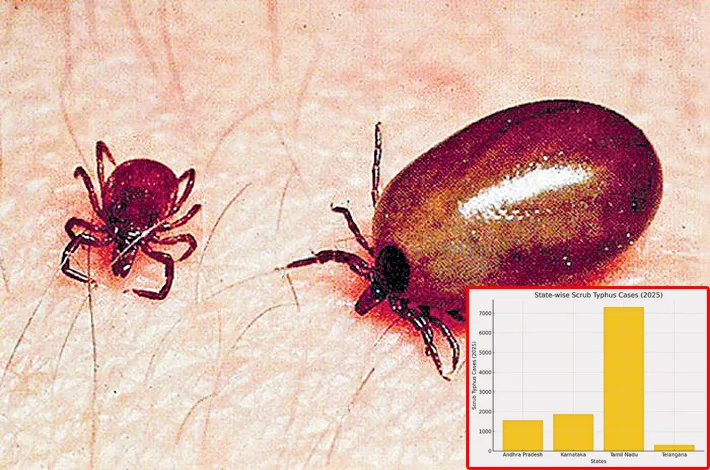
Scrub Typhus, a seasonal infection common in Andhra Pradesh, has resurfaced but remains within expected levels this year, according to health authorities. Data from the IDSP-IHIP portal shows 1,566 cases so far, along with nine suspected deaths statewide. Officials emphasize that the numbers align with previous seasonal patterns and that improved surveillance and laboratory capacity are contributing to quicker, more accurate detection.
Neighbouring states are reporting similar seasonal spikes. This year, Karnataka recorded 1,870 cases, Tamil Nadu 7,308, and Telangana 309. With better diagnostic tools, health workers are distinguishing scrub typhus more accurately from illnesses like dengue, malaria, Japanese encephalitis, and leptospirosis.
Concerns heightened recently after three scrub typhus–positive women died within 48 hours at the Government General Hospital (GGH), Guntur. Luramma (59) of Palnadu district and D. Nagendramma (73) from Bapatla district died on Sunday, while Dhannamma (64) from Prakasam district passed away a day earlier. All had been admitted with severe symptoms; two had multiple co-morbidities.
Across the erstwhile Guntur district, 50 cases have been reported, prompting intensified surveillance. GGH has opened a dedicated scrub typhus ward where 14 patients are currently under treatment. Rapid Response Teams are visiting high-risk villages, screening symptomatic individuals, and conducting field investigations.
To bolster preparedness, the state has rolled out a Scrub Typhus Action Plan. Weekly coordination meetings now bring together district health officials, medical college representatives, and rapid response teams. Hotspots are being mapped using three years of case data to guide early diagnosis. All reported cases are being promptly uploaded to the IDSP–IHIP portal, alongside monitoring of related vector-borne diseases.
Diagnostic capacity has expanded with VRDL labs across government hospitals conducting rapid testing and genome sequencing. Twenty-four laboratories are operational, equipped with 1,562 ELISA and 1,662 rapid test kits. Drug stocks remain abundant, with over 91 lakh Azithromycin and 81 lakh Doxycycline tablets available across PHCs.
Doctors in government and private hospitals have been instructed to check for eschar — a crucial diagnostic sign — in all fever cases. Checklists for fever admissions and training sessions for medical officers and ASHA workers are underway, especially in rural, vegetation-dense regions.
Public awareness campaigns urge people to avoid dense vegetation, wear protective clothing outdoors, and seek medical help for persistent fever. The Health Department has assured that monitoring is continuous and all necessary measures are firmly in place.