23 July, 2026 | 9:49 AM


APSRTC pushes for private participation in electric buses
17-05-2026 12:00:00 AM
Metro India News | AMARAVATI
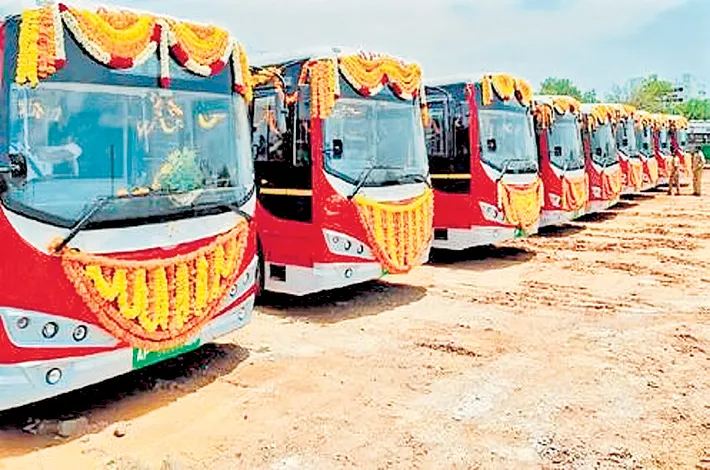
The Andhra Pradesh State Road Transport Corporation (APSRTC) has indicated that private participation in operating electric buses has become unavoidable due to the corporation’s financial limitations and the rising need for sustainable public transport. APSRTC Chairman Konakalla Narayana said the transition towards electric mobility is essential not only for environmental protection but also for reducing operational costs in the long run.
Speaking about the corporation’s future plans, the chairman said APSRTC currently operates nearly 10,000 buses across the state and aims to gradually replace them with electric buses. However, the cost of procuring electric vehicles has emerged as a major challenge. According to him, each electric bus currently costs around Rs.1.6 crore in the market, and replacing the entire fleet would require an investment of nearly Rs.15,000 crore.
He stated that neither APSRTC nor the state government is presently in a position to bear such a massive financial burden. In this context, he said involving private operators while utilising subsidies offered by the Central government appears to be the only practical solution. Under this model, private firms would invest in and operate electric buses, thereby reducing the financial pressure on the transport corporation.
Konakalla Narayana also pointed out that the implementation of free bus travel schemes for women has significantly increased the financial burden on APSRTC. Despite the rising operational costs and increasing diesel prices, the corporation has decided against imposing additional fare hikes on passengers.
Highlighting the economic advantages of electric mobility, the chairman explained that operating a diesel bus currently costs APSRTC around Rs.19 per kilometre, whereas an electric bus costs only about Rs.7 per kilometre. This substantial difference, he said, makes electric buses economically viable in the long term.
The APSRTC chairman maintained that introducing electric buses through private participation would help reduce pollution, improve operational efficiency and allow the corporation to provide better services to commuters without increasing ticket fares. He added that the move would also support the state’s broader environmental and sustainable transport goals.