18 September, 2026 | 7:11 AM


Atomic Energy Bill 2025 : Game changer or mixed bag?
15-12-2025 12:00:00 AM
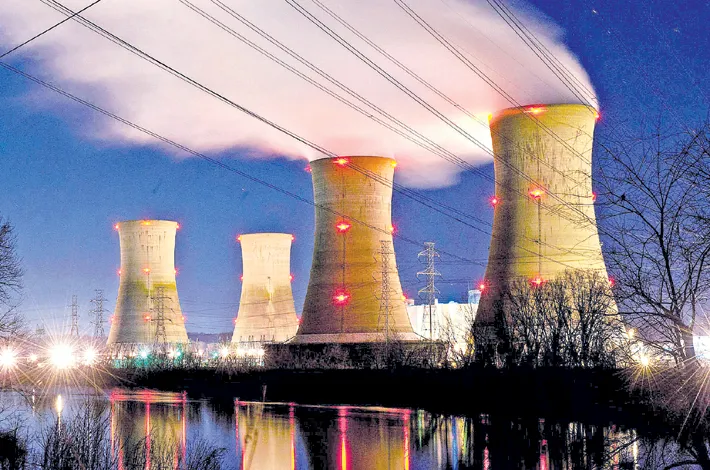
In a historic policy shift, the Union Cabinet has approved the Atomic Energy Bill 2025, also known as the SHANTI Bill (Sustainable Harnessing of Advancement of Nuclear Energy for Transforming India). This legislation marks the first time private sector firms will be allowed to participate in India's nuclear power industry, ending decades of exclusive government control under the Department of Atomic Energy (DAE).
The bill widens the definition of "company" in the existing Atomic Energy Act, enabling private entities registered under the Companies Act 2013 to enter the sector. It proposes expanded licensing norms and potential easing of strict liability rules under the Civil Liability for Nuclear Damage Act. These changes aim to attract private investment across the nuclear value chain, including power generation, fuel fabrication, equipment manufacturing, and atomic mineral exploration.
Speaking on the implications, a top executive of a firm which is a key supplier in the nuclear ecosystem—described the bill as a "landmark legislation" that will transform how power is generated in India. "It was a long time coming," he remarked, noting that private players have previously been limited to supplying components. He anticipates strong demand from private firms to enter nuclear power generation, boosting the entire supply chain.
He also highlighted new opportunities for private firms in building nuclear power plants, beyond the state-owned Nuclear Power Corporation of India Ltd (NPCIL). While entities like NTPC have already begun involvement, the bill could enable major industries to set up their own plants. However, debates remain on managing sensitive aspects like the nuclear island and spent fuel. The reform aligns with India's ambitious target of scaling nuclear capacity to 100 GW by 2047, from the current around 8 GW.
Power sector experts emphasized that achieving this "tall order"—requiring an average of 4 GW annually—necessitates private participation. "There is no infrastructure to deliver that level today," they noted, but expressed confidence in scaling up, with his company planning to triple capacity to deliver equipment for one nuclear plant per year. Private investment is expected to flow fastest into balance-of-plant equipment (such as turbines and pumps), fuel-related segments, and civil construction, according to power sector entrepreneurs.
Critical nuclear island equipment may see fewer entrants due to its complexity. Over the next few years, widespread opportunities across the value chain could emerge, provided regulatory clarity follows. Addressing investor concerns, they stressed the need for insurance mechanisms to protect power generators and financial incentives like Production Linked Incentive (PLI) schemes or long-term low-interest loans, given nuclear plants' 60-year lifespan. They also drew parallels with support extended to solar, wind, and electric vehicles sectors.
At the same time, this bill is not without opposition either. A retired official of the Homi Bhabha National Institute highlighted the massive financial hurdles. "A single gigawatt now costs around Rs 40,000-50,000 crore," he said, estimating that achieving 100 GW would require investments exceeding Rs 50 lakh crore—an astronomical sum that remains unrealistic despite the reforms.
He cited past unfulfilled targets, such as the 1985 goal of 10 GW by 2000, as evidence of the Department of Atomic Energy's (DAE) "lackluster" performance despite talented personnel. While indigenous advancements like 700 MW Pressurized Heavy Water Reactors are operational, bottlenecks persist, including delays in the Prototype Fast Breeder Reactor at Kalpakkam. On private participation, environmentalists, as well as scientists expressed concerns over potential safety compromises if firms prioritize quick returns (15-20% annually) and cut costs.
Private entities lack in-house technology and manpower, likely requiring collaborations with the Nuclear Power Corporation of India Limited (NPCIL). They warned that past private ventures, like Enron's Dabhol project, burdened governments with subsidies. Regarding uranium, environmentalists also noted limited domestic reserves but assured availability through imports post the 2008 deal, as long as India avoids further tests.
On liability under the Civil Liability for Nuclear Damage Act 2010, a section of the scientific community advocated revising the Rs 1,500-2,500 crore cap upward to reflect inflation and reactor costs, while keeping operators primarily responsible and allowing insurance. The SHANTI Bill, set for tabling in Parliament's winter session, aims to amend the 1962 Atomic Energy Act, enabling private roles in generation and the value chain while retaining government oversight on sensitive areas.
However critics argue that without addressing execution delays, high costs, and investor-friendly reforms, the 100 GW dream will remain distant. The bill's final shape—particularly on liability, licensing, and safety oversight—will be crucial. This approval paves the way for the bill's introduction in Parliament, potentially reshaping India's clean energy landscape by unlocking private capital and accelerating capacity addition amid growing energy demands.