17 November, 2026 | 12:03 AM


BJP reads Belonging
17-11-2026 12:00:00 AM
Crosses 1.5 Lakh Sales in a Week
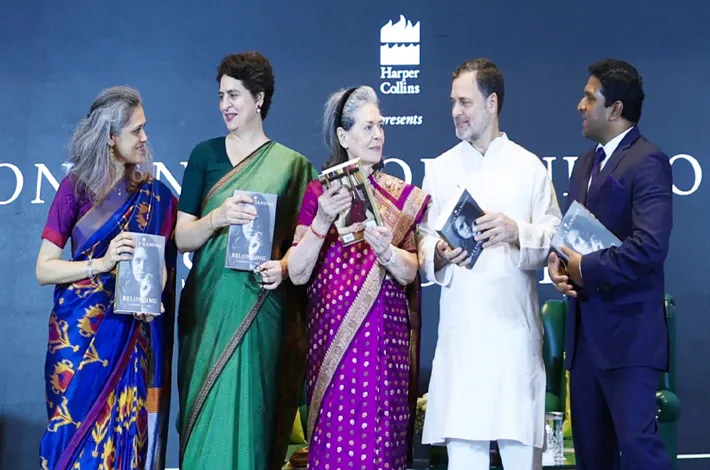
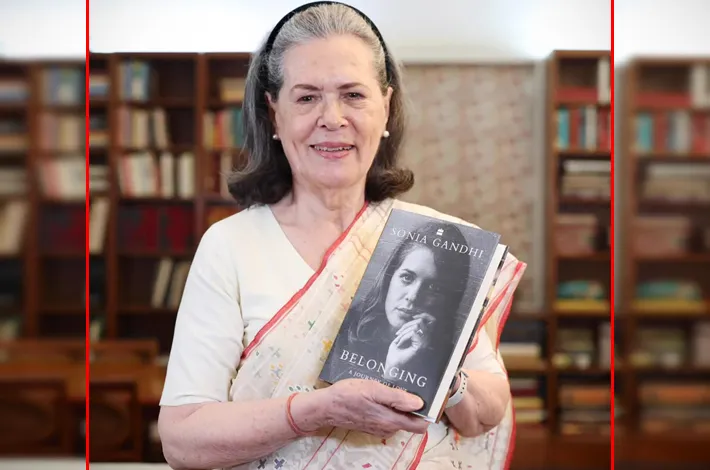
metro india news I hyderabad : Sonia Gandhi’s memoir Belonging: A Journey of Love has emerged as one of the most talked-about books in recent Indian publishing history. Released on 10 November by HarperCollins India, the 544-page account of her life has drawn extraordinary interest from readers across the country. Reports from the trade indicate that sales crossed 1,50,000 copies within the first week of its arrival in bookstores and on online platforms. The figure marks it as the fastest-selling political biography in India in recent memory and places it well ahead of other major non-fiction titles of the year.
Booksellers describe scenes rarely seen since the Harry Potter era. In Delhi’s Khan Market, stores such as Bahrisons and Faqir Chand reported long queues on opening day, with hundreds of copies moving in a matter of hours. One outlet that began with 500 copies sold more than a hundred on the first day alone and immediately ordered additional stock.
Crossword Bookstores, with outlets in dozens of cities, recorded between 1,000 and 2,000 pre-orders and quickly approached the 8,000 mark, projecting further growth in the following days. In Hyderabad, distributors received hundreds of orders within the first hour of distribution. Similar rushes were reported from Bengaluru, Thiruvananthapuram, and other cities. Online platforms and quick-commerce services also saw heavy demand, with discounted copies disappearing rapidly from digital shelves.
The book’s appeal stretches beyond political circles. Readers who do not usually follow politics have been drawn to the personal narrative of a woman who arrived in India from a small Italian village, married into one of the country’s most prominent families, and later found herself at the centre of national events. The memoir covers her early years, her meeting with Rajiv Gandhi, the tragedies that reshaped her life, and her reluctant entry into public life. Its tone is described by early readers as warm, reflective, and free of the usual political rhetoric. That combination of intimacy and historical weight has proved compelling.
What has surprised many observers is the broader effect on reading habits. In an age dominated by short-form digital content, the sudden surge of people walking into physical bookstores, placing online orders, and discussing a long-form memoir has been striking. Store owners note that footfalls rose sharply, and a significant share of their total sales in the days after release came from this single title. Customers who came for Belonging often left with other books as well. Conversations about the memoir have spilled into social media, family gatherings, and reading groups, creating a visible wave of interest in printed books.
Publishers and retailers see the phenomenon as a reminder that the right book, at the right moment, can still command national attention.
The careful logistics of the release—sealed cartons held under embargo until the morning of 10 November, simultaneous availability in more than a hundred cities, and coordinated displays—helped turn anticipation into immediate action. The controversy that briefly surrounded the choice of Indian publisher only heightened curiosity. Once the book reached shelves, the focus shifted from speculation to the text itself.
The response has also highlighted the enduring place of the physical bookstore. While e-commerce and quick delivery played a major role, the images of people waiting outside shops, examining copies, and talking with booksellers have been widely shared. For many younger readers, the experience of buying and holding a hardbound memoir has felt novel and worthwhile. Older readers have spoken of rediscovering the pleasure of settling down with a substantial book rather than scrolling through fragments of information.
Sales figures continue to climb as additional print runs reach the market and as demand spreads to smaller towns. The initial print order of around one lakh copies has been supplemented, and Hindi and other language editions are expected to widen the audience further. Industry voices already describe the launch as one of the defining publishing events of the decade.
Beyond the numbers, the real story lies in the renewed conversation around reading. Belonging has drawn people into bookstores, prompted discussions about personal and political history, and shown that a thoughtfully written memoir can still capture the public imagination. In doing so, it has given a visible boost to the habit of reading full-length books at a time when attention is often fragmented. The queues outside shops, the rapid online orders, and the steady conversation around the text all point to a simple truth: when a book speaks to both curiosity and emotion, readers respond. Sonia Gandhi’s account of her journey has done exactly that, and the result is a notable moment for Indian publishing and for the culture of reading itself.
Interestingly the BJP supporters, spokespersons have also read the book diligently to counter the book in several debates. In the process, Sonia Gandhi became more popular in the BJP cadre.
Priya Purohit @Priyaa_Purohit
SONIA GANDHI'S MEMOIR IS TURNING INTO A PUBLISHING PHENOMENON !!
After Harry Potter, this is being hailed as one of the biggest sensations of the decade.
Over 3 lakh copies sold out in just 6 days !
The book is creating waves across the country and the numbers speak for themselves.
This is not just a book launch, It's publishing blockbuster.