25 October, 2026 | 2:45 AM


Breaking patriarchal barriers: Supreme Court's 2025 ruling on maternal caste
27-12-2025 12:00:00 AM
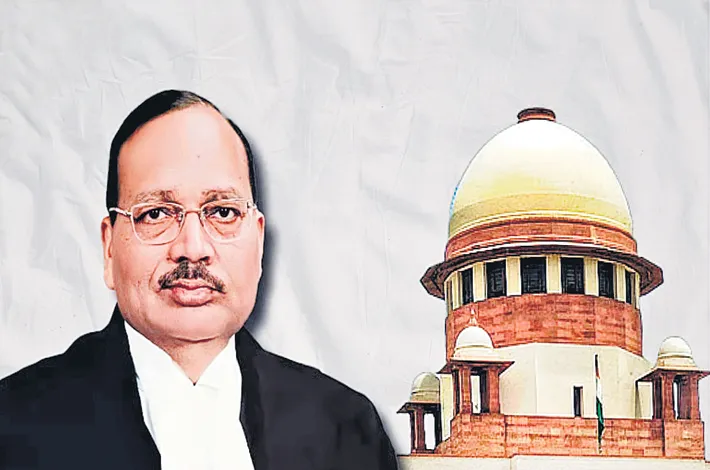
In a significant stride toward gender equality and social justice, the Supreme Court of India has delivered a groundbreaking judgment on December 8, 2025, allowing children to claim Scheduled Caste (SC) status based on their mother's caste, even if the father belongs to a non-Scheduled Caste community. This ruling, celebrated by legal experts and activists alike, builds upon a 2012 precedent and challenges deep-rooted patriarchal norms in caste certification.
Senior advocate Sanjay Hegde, who argued the pivotal 2012 case, expressed his elation on social media, noting how this decision reinforces the principle he championed over a decade ago. As India grapples with evolving family structures and inter-caste dynamics, this verdict marks a pivotal moment in recognizing women as equal transmitters of identity and rights.
The case at hand: A fight for identity and inclusion
The judgment stems from a petition involving a minor girl whose mother hails from the Hindu Adi Dravida community, a notified Scheduled Caste. The child's father, however, belongs to a non-SC community, leading to initial denial of an SC certificate under traditional patrilineal rules. These rules, enshrined in Presidential Notifications from 1965 and 2002, as well as guidelines from the Union Ministry of Home Affairs, have historically traced caste solely through the paternal line.
The mother sought the certificate to ensure her daughter's access to educational and social benefits, arguing that the child was raised in the mother's social environment and faced the same discriminations associated with the SC community. The Supreme Court bench, headed by Chief Justice of India Justice Surya Kant, intervened decisively. Recognizing the realities of modern families—including inter-caste marriages, single-parent households, and diverse upbringing scenarios—the court ruled that caste status cannot be rigidly confined to the father's lineage.
Instead, it emphasized a holistic evaluation of factors such as the child's upbringing, social acceptance within the community, and lived experiences of discrimination. This approach prioritizes child welfare and substantive equality over mechanical application of outdated norms. As the court articulated, "upbringing, social acceptance, and lived experience of discrimination are relevant considerations," echoing the need for a contextual assessment rather than a blanket paternal bias.
This decision does not overhaul the entire framework of caste certification but introduces flexibility in cases where maternal lineage provides a stronger basis for identity. It prevents undue hardship for children in inter-caste families, ensuring they are not deprived of affirmative action benefits due to patriarchal presumptions. Legal scholars view this as a compassionate, child-centered ruling that aligns with constitutional mandates under Articles 14 (equality), 15 (prohibition of discrimination) and 21 (right to life and dignity).
The 2025 verdict is not an isolated event but part of a continuum of judicial evolution dismantling patriarchal structures in Indian law. It directly builds on the 2012 Supreme Court case Rameshbhai Dabhai Naika v. State of Gujarat, where Sanjay Hegde successfully argued for considering case-specific facts beyond mere paternal descent. In that ruling, the court introduced the idea that caste is a social construct influenced by lived realities, not just biological inheritance through the father.
Broader impact on constitutional equality
This judgment is emblematic of the Supreme Court's role in interpreting the Constitution dynamically. By prioritizing social reality over formalistic rules, it upholds the foundational values of equality and justice. It also resonates globally, where movements for gender-neutral laws—such as in inheritance or custody—are gaining traction. In India, where patriarchy intersects with caste hierarchies, such decisions are vital for dismantling systemic inequalities. They foster a society where women's rights are not secondary but integral to progress. As Sanjay Hegde noted, this reinforcement of the 2012 principle is a testament to enduring legal advocacy.
The Supreme Court's 2025 ruling on maternal caste transmission is more than a legal tweak; it's a beacon for women's empowerment and social reform. By moving from patriarchy to parity, it honors the lived experiences of marginalized families and paves the way for a more equitable India. As inter-caste unions rise and family norms evolve, this decision ensures that justice is not bound by outdated traditions but guided by constitutional ideals. In celebrating this milestone, we recognize the ongoing journey toward true gender and social equality.