22 September, 2026 | 9:36 PM


Budget 2026- Tax reforms wish list
10-01-2026 12:00:00 AM
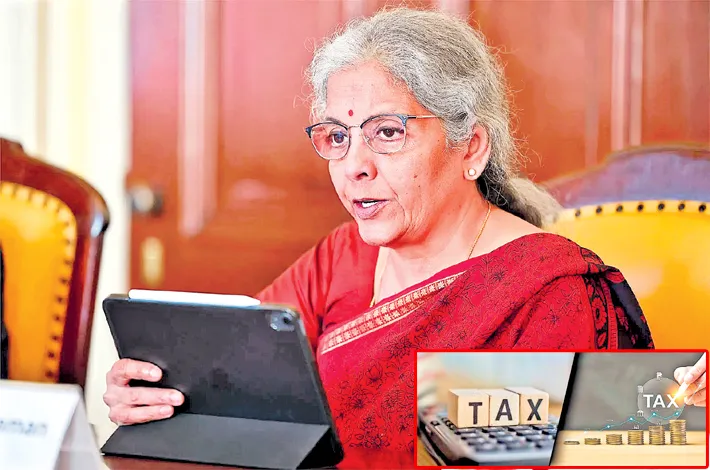
With the Union Budget 2026 less than a month away (set to be presented on February 1, 2026), corporate India, tax experts, and industry bodies have intensified their pre-budget advocacy. Building on last year's significant relief—where the new tax regime exempted income up to Rs 12 lakh and adjusted slabs—stakeholders are now pushing for further simplification, middle-class support, corporate parity, and reduced litigation.
The Institute of Chartered Accountants of India (ICAI) which submitted its pre-budget memorandum to the government, has emphasized measures to benefit the middle class and families. A standout proposal is the introduction of an optional joint taxation system for married couples, treating them as a single tax unit. This would allow couples to file a combined return, potentially doubling the standard deduction (from Rs 75,000 to Rs 1.5 lakh) and raising the basic exemption limit (from Rs 4 lakh to Rs 8 lakh under adjusted slabs). The aim is to curb income/asset transfers to non-earning spouses, simplify succession planning, and enable better tax optimization—especially in households where one partner has losses offsetting the other's profits.
A senior office bearer of ICAI argued that this promotes equality, recognizing the contribution of homemakers to family finances. Taxation experts strongly supported the idea noting its advantages for inheritance joint asset holding, and reducing complex clubbing provisions. They suggested making it optional to avoid imposition, aligning it with concepts like group tax consolidation. However, a former member of the Central Board for Direct Taxes(CBDT) expressed scepticism, pointing out that several countries use family-based taxation but questioning its priority in India. He highlighted recent reforms (e.g., the 30% slab starting at Rs 24 lakh and the Rs 12 lakh threshold) as substantial relief, suggesting the government may not see personal income tax as overly burdensome.
On the corporate front, representatives of various groups discussed aligning Limited Liability Partnerships (LLPs) with companies. Currently, companies enjoy a 22% tax rate under special regimes (e.g., Section 115BAA), while LLPs face higher rates (up to 30%). ICAI has proposed extending the 22% rate to LLPs and introducing tax neutrality for business reorganizations, such as amalgamations, where capital asset transfers in companies incur no capital gains tax—but do in LLPs. These changes, experts argued, would enhance ease of doing business, attract foreign investors (who face issues with LLP profit exemptions lacking credit), and encourage startups and SMEs to adopt LLPs. A section of taxation experts praised ICAI's suggestions as valid, noting LLPs' disadvantages in areas like loss carry-forward and presumptive taxation. Another section acknowledged merit in addressing anomalies but cautioned that LLPs remain partnerships under Indian law, requiring some distinction from corporate entities.
A major theme was the need for stability and predictability over frequent changes. The former CBDT member stressed that after multiple annual tweaks to personal and corporate taxes, taxpayers are confused about applicable rates. He advocated for a single simplified regime (instead of old and new), calibrated exemptions, and building trust through decriminalization of minor defaults, accountability for officials, and appreciation of taxpayer contributions. The discussion turned heated on dispute resolution.
Industry chambers have long demanded faster mechanisms amid massive backlogs, interest, and penalties. Past schemes (e.g., Vivad se Vishwas) made progress but failed to excite widespread uptake. A top executive of a wealth management firm shifted focus from resolution to prevention, praising tools like Advance Pricing Agreements (APA) and urging pre-court understandings. He noted global trends toward prevention and high monetary thresholds for appeals (e.g., no Supreme Court appeals below Rs 5 crore tax effect).
Senior Chartered Accountants Nanda called for decriminalization of certain provisions (e.g., TDS non-payment or failure to produce documents) and rationalizing penalties to avoid dual/multiple levies for the same default (e.g., 200% for misreporting plus additional 100% or 2% on transaction value). A retired bureaucrat of the finance ministry emphasized officer accountability at the assessing level to curb frivolous show-cause notices and ignored submissions, while making processes like APA more time-bound.
Experts agreed that the government has made strides in simplification (including the upcoming Income-tax Act, 2025, effective April 1, 2026) and relief. However, the consensus is that Budget 2026 should prioritize trust-building, equity (e.g., middle-class cuts and LLP parity), and administrative reforms over sweeping cuts. As a senior auditor remarked, the focus should be on a stable, predictable system that fosters compliance through fairness rather than fear. The whole episode underscored a shared hope: that the Finance Minister will address these concerns to boost consumption, investment, and India's growth trajectory amid global uncertainties.