21 September, 2026 | 10:52 PM


Can India beat China in mobile manufacturing?
19-12-2025 12:00:00 AM
A senior office bearer of the India Electronics and Semiconductor Association (IESA), described the milestone as structural rather than episodic. He highlighted that India's electronics production has grown sixfold over the past decade
In a remarkable milestone for India's manufacturing sector, Apple exported $2 billion worth of iPhones from the country in November alone, marking a significant macroeconomic achievement. This figure represents substantial scale, with three out of every four smartphones exported from India that month being iPhones. For the current financial year, iPhone exports have already surpassed $14 billion, underscoring the rapid growth of India's role in global smartphone production.
Just a decade ago, India was barely a player in the global smartphone manufacturing landscape. Today, one in every five iPhones sold worldwide is assembled in India, accounting for 12% of Apple's global production value. The country now operates five iPhone assembly plants and has begun producing high-end models like the Pro and Pro Max—something Apple previously restricted to China. These developments have persisted despite U.S. tariff pressures, with smartphone exports to America rising nearly 200% year-on-year. Smartphones have emerged as one of India's top export categories, climbing from $11 billion two years ago to over $24 billion last year.
At the heart of these efforts is the Semicon India Programme, which encompasses fiscal and infrastructural support to build a complete semiconductor ecosystem. The Production Linked Incentive (PLI) scheme for large-scale electronics manufacturing, extended to semiconductors, offers incentives tied to production volumes, encouraging firms to scale operations domestically. Complementing this, the Semiconductor Fabs Scheme provides up to 50% fiscal support on project costs for approved applicants setting up fabrication units to offset the massive upfront investments required for chip manufacturing.
Similarly, the Scheme for Promotion of Manufacturing of Electronic Components and Semiconductors (SPECS) delivers a 25% incentive on capital expenditure for eligible projects, focusing on components like PCBs and displays to deepen local value addition. The story extends beyond mere assembly. Reports indicate Apple is in early-stage talks with Indian semiconductor firms to explore chip assembly and packaging within the country.
If realized, this would mark Apple's first venture into critical component production outside China, elevating India from an assembly hub to a strategic partner in the high-value segments of the supply chain. This aligns with broader investments from global giants like Intel, Foxconn, Micron, and Lam Research, who are committing billions to India's semiconductor ecosystem. Experts view this as part of a larger shift in global manufacturing power.
A senior office bearer of the India Electronics and Semiconductor Association (IESA), described the milestone as structural rather than episodic. He highlighted that India's electronics production has grown sixfold over the past decade, with exports up eightfold and mobile phone production surging 28 times. He credited government policies, including Production Linked Incentives (PLI), improved logistics, and manufacturing clusters, for enabling this growth. He emphasized increasing localization—of components like PCBs, chargers, and enclosures—and projected India's electronics manufacturing to reach $400 billion by 2030, with smartphones comprising only about 40% of that total.
An Industry analyst called Apple a "poster child" for ecosystem building. He noted that Apple's disciplined supply chain attracts top-tier suppliers, creating a flywheel effect that benefits camera modules, displays, and silicon players. He pointed out that while India excels in chip design—with major R&D centres for companies like Intel, Nvidia, Qualcomm, and MediaTek—it lags in advanced fabrication and packaging, starting primarily with mature nodes.
An economist offered a cautious perspective, stressing net exports over gross figures. While celebrating the $2 billion monthly milestone for its employment and consumption benefits, he noted significant imports from China reduce the net gain to perhaps $500-600 million. He argued that end-to-end supply chains are essential for sustained benefits and highlighted the need for infrastructure improvements, skilled labour, and win-win investment conditions to attract more firms.
Industry and business experts however agree that India's approach differs from China's long-built dominance or Vietnam's assembly-focused model. Government incentives totalling around $30 billion across semiconductor programs, PLI schemes, and component initiatives are making India cost-competitive while fostering technology development, including fabless design and advanced packaging.
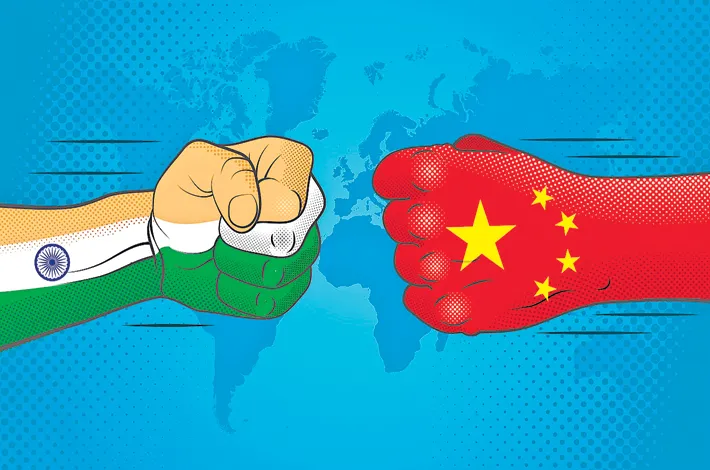
Ultimately, India's iPhone success raises a pivotal question: Can it materially challenge China's grip on global supply chains? While progress in assembly, design, and ecosystem building is evident, experts stress that scaling technology, infrastructure, and indigenous intellectual property will determine if this becomes a blueprint for broader manufacturing relocation—or remains an Apple-led exception. With rising exports, expanding investments, and ambitious policies, India is steadily climbing the value ladder in global electronics.