21 October, 2026 | 11:40 AM


Civic apathy or failure of governance?
21-01-2026 12:00:00 AM
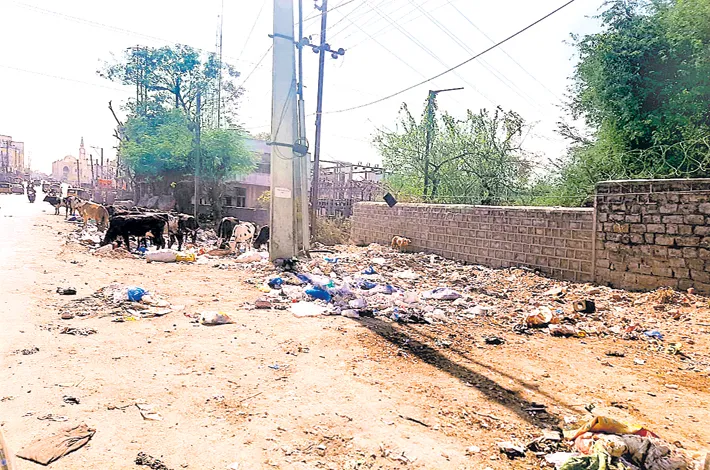
From Noida and Bengaluru to Mumbai, Chennai, Gurugram and Kolkata, India’s cities are increasingly marked by civic breakdowns that range from deadly negligence to chronic infrastructure delays. Pothole deaths during monsoons in Maharashtra, flooding in Chennai, collapsing flyovers in Bihar, and stalled urban transport projects in Karnataka all point to a shared urban malaise. The recent death of a young professional in Noida and the prolonged delay of Bengaluru’s suburban rail project, though vastly different in nature, underline the same troubling reality: poor accountability, fragmented governance and a persistent failure to prioritise public safety and essential services.
In Noida, the death of 27-year-old software engineer Yuvraj Mehta exposed glaring lapses in basic civic responsibility. His car plunged into an unguarded, water-filled construction pit in Sector 150 during dense fog, a site that reportedly had no barricades, warning signs, reflectors or proper lighting. The pit was part of an under-construction commercial project, and residents had earlier flagged the danger, but their complaints failed to trigger any preventive action.
What followed compounded the tragedy. Yuvraj reportedly managed to climb onto his car’s roof and called for help, including a final, desperate conversation with his father. Rescue efforts, however, took nearly 90 minutes due to a lack of trained divers, inadequate equipment at the local level, and obstructions such as iron rods inside the pit. While a delivery agent attempted to help, professional responders hesitated to enter the freezing water, raising serious questions about emergency preparedness in a major urban centre.
Experts have described the incident as entirely preventable. Former senior police officers pointed out that the Noida Authority, one of the country’s wealthiest urban bodies, should have ensured basic safety measures such as barricading, street lighting and reflective markers. The Uttar Pradesh government responded by removing the Noida Authority CEO, forming a Special Investigation Team, dismissing a junior engineer and promising action against those responsible. Yet the episode has sparked wider debate on why accountability is enforced only after lives are lost, why builders and contractors often escape scrutiny, and why urban police and disaster response units remain poorly equipped for routine rescue operations.
In Bengaluru, the crisis is less dramatic but affects millions daily. The city’s long-delayed suburban rail project has become a symbol of unfulfilled urban promises. Envisioned as a solution to chronic traffic congestion, the 148-km network traces its origins to proposals dating back to the 1960s and 1980s. Although formally approved in 2020 with a completion deadline of October 2026, the project has now been pushed to March 2030, extending delays by nearly three and a half years.
Citizen groups argue that the delays reflect deeper planning failures. Representatives from civic platforms have criticised the absence of a Metropolitan Planning Committee, mandated under the 74th Constitutional Amendment over three decades ago, which has resulted in fragmented decision-making. They point out that Bengaluru already has extensive railway lines that remain underutilised, running only a handful of trains per hour compared to cities like Mumbai, where suburban services operate every few minutes. With better signalling and prioritisation, a functional suburban system could have been introduced years ago at a fraction of the cost.
Urban development experts note that India does not lack rules or funds. Standards laid down by the Indian Roads Congress on signage, safety audits and reflective infrastructure are well established. Central schemes such as JnNURM, AMRUT and the Smart Cities Mission have channelled substantial resources into urban areas. The problem, they argue, lies in poor implementation, lack of regular inspections, and an administrative culture that avoids tough action against erring officials and contractors. Some have called for suspensions, funding freezes for non-compliant states, and nationwide safety audits as a corrective “shock treatment” for urban governance.
Both the Noida tragedy and Bengaluru’s stalled rail project reveal a common governance failure. Responsibilities are split across multiple agencies, coordination is weak, and citizen complaints often disappear into jurisdictional grey zones. Road safety committees flag hazards that go unaddressed, planning bodies fail to integrate transport and land use, and corrective action is typically reactive rather than preventive.
As India’s cities continue to expand, these patterns of neglect carry serious consequences. In some cases, the cost is measured in lost lives; in others, in years of wasted time, productivity and public trust. Unless urban governance shifts decisively towards accountability, coordination and a non-negotiable commitment to public safety, civic crises will remain a recurring feature of life in India’s metros and emerging cities alike.