11 October, 2026 | 12:40 AM


Corruption Vs Corruption
11-10-2026 12:00:00 AM
metro india news I hyderabad
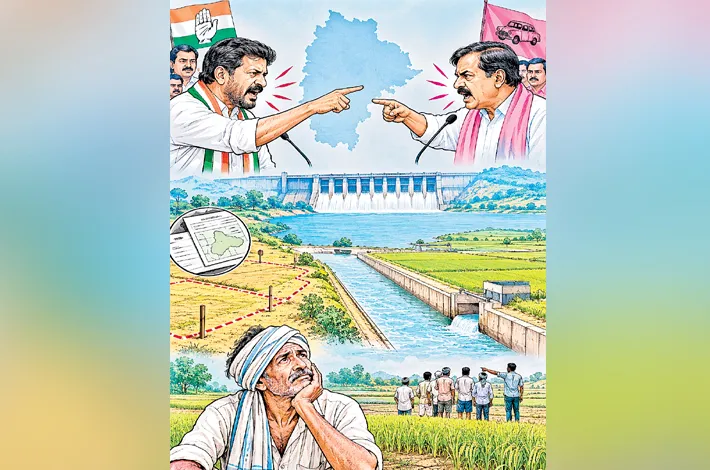
Corruption allegations have reached a peak in Telangana politics as the ruling Congress and opposition Bharat Rashtra Samithi trade charges over land deals, assets, companies and family business interests. What began as debates on policies and governance has shifted to scrutiny of property holdings, government contracts and personal gains linked to leaders on both sides.
Chief Minister Revanth Reddy used the Assembly platform to level serious accusations against former Chief Minister K. Chandrashekar Rao, former ministers KT Rama Rao and T Harish Rao, and their family members. He alleged that during the decade-long BRS rule, these leaders acquired land irregularly. The government ordered inquiries into these claims. Officials were directed to examine revenue records connected to the families.
The focus has intensified on land near KCR’s farmhouse in Erravalli. Survey records for survey number 325 in Erravalli village showed 388 acres on paper, but a recent survey identified only 343 acres. The government says the discrepancy of 45 acres requires explanation. Notices are to be issued seeking relevant revenue documents from KCR and family members. A committee has been formed with powers to collect papers and data from government departments, collectors and local bodies to probe land matters involving several BRS leaders and former representatives.
Congress leaders maintain that power was misused under the previous regime to grab government land, assets and projects. They point to ongoing probes into the Kaleshwaram project, power purchases, phone tapping and Formula E car race as part of a broader pattern.
BRS leaders have responded by targeting the Chief Minister’s family. They allege that Revanth Reddy’s family accumulated assets and business interests worth more than Rs 50,000 crore in the past two years. The party has demanded investigations by central agencies such as the Enforcement Directorate. References have been made to business entities linked to family members, including the Chief Minister’s daughter Anumula Naimisha Reddy, and firms such as Mind Vault. Questions have also been raised about educational institutions in Kompally and matters related to Medicover hospital.
KT Rama Rao specifically accused the government of allocating about five acres of government land in Raviryal, Rangareddy district, to Tesseract company for roughly Rs 7 crore, while claiming the land’s market value ranges between Rs 200 crore and Rs 250 crore. BRS leaders say the firm has connections to the Chief Minister’s brother Anumula Kondal Reddy. They have questioned the company’s capital, employee strength, allocation process and any concessions granted. Broader concerns cover other government land allotments, the list of 22A prohibited lands and decisions affecting Future City area properties that may have benefited private entities.
While these exchanges dominate political discourse, ordinary citizens face hardships linked to El Nino effects. Drought conditions across the state, shortages of irrigation water for farmers and power supply problems have left many struggling. Public frustration is growing as both the government and the opposition appear preoccupied with personal charges rather than addressing these daily difficulties.
Analysts note that mutual accusations between parties are common, but claims involving public land, funds, contracts and institutions demand more than political statements. They argue that records must be examined thoroughly to establish facts on the Erravalli discrepancy, the ownership and valuation of assets linked to the Chief Minister’s family, and the terms of the Tesseract allotment including market value, revenue earned by the government and eligibility criteria.
People expect official documents, audits, independent inquiries and legal processes to provide clarity. Whether in power or in opposition, leaders from Congress or BRS must face accountability when public resources are involved. Only then can citizens benefit. Otherwise, the exchanges risk remaining a cycle of political charges without resolution of the underlying issues affecting the state.