19 October, 2026 | 5:48 AM


EU to help with W Asia energy infra to bypass conflict zones
26-04-2026 12:00:00 AM
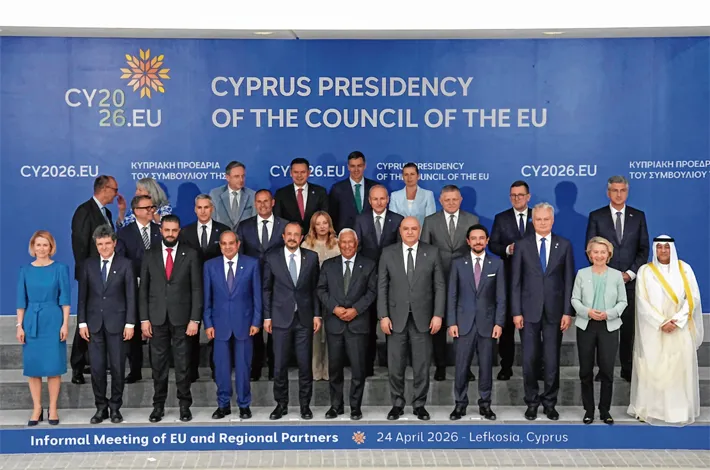
Nicosia: A painful fuel crunch and soaring oil and gas prices triggered by the Iran war have nudged the EU to look hard into funding alternative energy routes in West Asia to circumvent hot spots like the Hormuz strait.
European Commission President Ursula von der Leyen said the EU was ready to work with Gulf nations for new projects conveying energy to global markets that wouldn’t be held hostage to war or geopolitical strife.
“The events of the past month have taught us a hard lesson,” von der Leyen told a news conference at the end of an informal meeting of EU leaders in Nicosia, Cyprus. “Our security is not just related, it is intrinsically linked. A threat to a merchant vessel in the Strait of Hormuz is a threat to a factory, for example, in Belgium.” “We are ready to team up with the Gulf to diversify export infrastructure away from solely the bottleneck of the Hormuz Strait,” she said, offering to help repair Gulf energy infrastructure damaged in the war.
Von der Leyen repeated as a result of the oil and gas price hikes, the 27-nation bloc’s energy bill in the last 43 days skyrocketed by €25 billion ($29.3 billion.) Neither she nor European Council President Antonio Costa offered precise details on which projects are being considered or when they will move forward. But von der Leyen referred to the India-Middle East-Europe Economic Corridor (IMEC) between the EU and the world’s largest democracy.
Von der Leyen said a summit between the EU and the GCC scheduled for later this year will give both sides the opportunity to explore such projects. Cyprus President Nikos Christodoulides (host), France’s Emmanuel Macron, Italy’s Giorgia Meloni, Ireland’s Micheal Martin, Latvia’s Evika Selina, Ukraine’s Volodymyr Zelenskyy, Egypt’s Abdel Fattah el-Sisi, Lebanon’s Joseph Aoun, Jordan Crown Prince Hussein bin Abdullah and Syria’s Ahmed al-Sharaa also attended the summit.
-AP