25 September, 2026 | 2:40 PM


Heartfelt farewell to the moral compass of Indian ecology
12-01-2026 12:00:00 AM
Will we continue to respond to disasters only after they occur, or will we finally listen to science before nature is forced to speak?
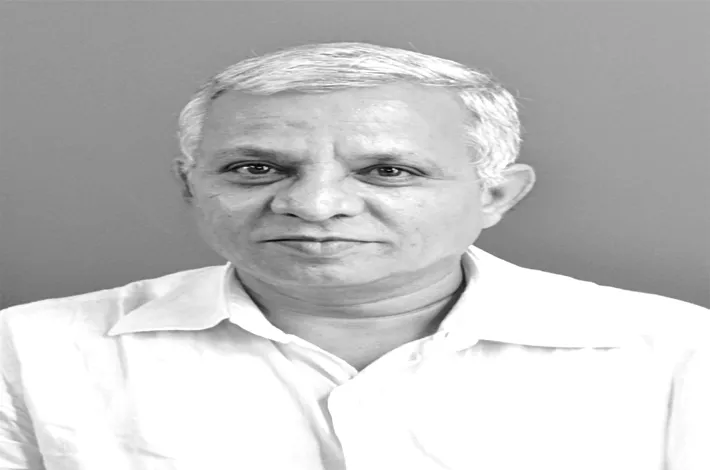
The passing of Prof. Madhav Dhananjaya Gadgil on January 7, 2026, at the age of 83, marks the end of a foundational era marked by a moral compass for a sustainable world while maintaining an ecological balance. Widely regarded as the father of modern Indian ecology, Gadgil was far more than an academic; he was a visionary whose life’s work bridged the often-contentious gap between rigorous scientific data and the lived realities of local communities. As India grapples with the intensifying frequency of climate-induced disasters, Gadgil’s life stands as a testament to the cost of ignoring “inconvenient truths” and a blueprint for a more resilient future.
From Harvard to the Hills:
Born on May 24, 1942, into a scholarly family—his father, D. R. Gadgil, was a renowned economist—Madhav Gadgil was perhaps destined for a life of the mind. However, he chose a path that led him away from the abstract halls of economics and into the vibrant, breathing complexity of the natural world. His scientific pedigree was impeccable; he pursued his doctoral studies at Harvard University under E. O. Wilson, the legendary biologist globally known for his contributions to evolutionary biology. Wilson was hailed as a modern Darwin, renowned for his work on biodiversity and sociobiology, pushing the boundaries of evolutionary science, which earned him the moniker ‘Darwin’s heir’. Wilson mentored Gadgil at Harvard, profoundly influencing Gadgil’s career.
Architect of Institutional Excellence:
One of Gadgil’s most enduring contributions to Indian science was the founding of the Centre for Ecological Sciences (CES) at the Indian Institute of Science (IISc), Bengaluru, in 1983. Under his visionary leadership, the CES blossomed into India’s premier research hub for ecology and conservation biology. His research was remarkably diverse, spanning animal behaviour, landscape ecology, and biodiversity documentation. Yet, the consistent thread throughout his five-decade career was the revolutionary idea that humans are not “external” to ecosystems but are integral participants within them. He challenged the traditional “fortress conservation” model, which often sought to protect nature by excluding the very people who had lived in harmony with it for centuries.
The Western Ghats:
The Western Ghats—a UNESCO World Heritage site and a global biodiversity hotspot—was the landscape to which Gadgil devoted his life. In 2010, the Ministry of Environment and Forests appointed him Chairman of the Western Ghats Ecology Expert Panel (WGEEP), later known as the Gadgil Commission. The resulting 2011 report was a landmark in environmental science, utilising high-resolution mapping and extensive community consultations to designate 64% of the region as Ecologically Sensitive Areas. The “Gadgil Report” was not a call for a blanket ban on development but a proposal for “precautionary science”. It recommended graded regulations on destructive activities, like mining, quarrying, and large dams, while advocating for decentralised decision-making through gram sabhas (village councils).
Tragically, the report faced fierce resistance from vested commercial interests and political lobbies. It lay in cold storage for long. It was subsequently superseded by the Kasturirangan Committee, which reduced the protected areas and shifted toward a more technocratic, top-down approach.
Prof. Gadgil was hurt by the rejection of the WGEEP findings. This pain did not stem from personal vanity or a lack of respect for the subsequent Kasturirangan committee; rather, it was rooted in his profound foresight of the consequences. Having spent five decades studying the region, he knew that the environmental debt being accrued through unchecked quarrying and deforestation would eventually be collected. He specifically cautioned that the steep slopes and dense habitation of Kerala made it particularly vulnerable to the ecological collapse he saw on the horizon. For him, the tragedy was not that his report was ignored, but that the cost of that ignorance would be paid for in human lives and the livelihoods of the most vulnerable.
A Legacy Vindicated by Nature:
Nature, unfortunately, has a way of speaking when science is ignored. Prof. Gadgil lived to see his warnings manifest in the catastrophic Kerala floods of 2018 and the devastating landslides of 2024. He argued with painful clarity that these were not “natural calamities” but “man-made tragedies”—the direct result of unregulated quarrying, deforestation, and the conversion of natural drainage lines into construction sites.
Beyond the Reports:
Gadgil’s influence reached far beyond policy papers. He was a key architect of India’s Biological Diversity Act (2002) and pioneered the “People’s Biodiversity Registers” (PBRs), tools that empowered local communities to document and protect their own traditional ecological knowledge. His early studies on “sacred groves”—forest patches protected through cultural tradition—demonstrated that conservation was often most effective when it was rooted in local belief systems. His contributions were recognised globally through numerous accolades, including the Volvo Environment Prize, the Tyler Prize, and the 2024 UN “Champions of the Earth” award. In India, he was honoured with the Padma Shri and the Padma Bhushan.
The Question Left Behind:
As we mourn the loss of this “moral compass” for environmental stewardship, we are left with his prolific body of work—including over 200 publications and his recent, enlightening memoir, A Walk Up the Hill. Prof. Madhav Gadgil did not just map ecosystems; he mapped the ethical terrain of how we must live on this planet. He leaves us with a haunting question: Will we continue to respond to disasters only after they occur, or will we finally listen to science before nature is forced to speak?
shivaprasad Khened