18 September, 2026 | 1:20 PM


Higher education reforms: Good on paper, but concerns remain
18-12-2025 12:00:00 AM
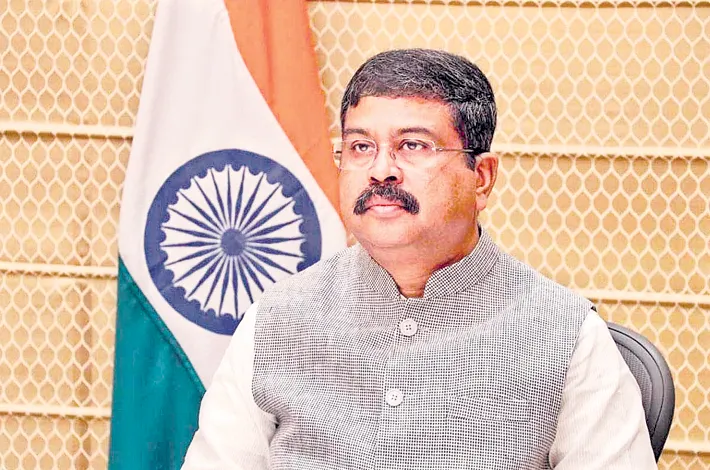
Union Education Minister Dharmendra Pradhan introduced the Viksit Bharat Shiksha Adhishthan Bill, 2025, in the Lok Sabha this week, marking a significant step toward reforming India's higher education regulatory framework. The bill, aligned with the National Education Policy (NEP) 2020, proposes establishing an apex body called the Viksit Bharat Shiksha Adhishthan, along with three independent councils for regulation, accreditation, and academic standards. It aims to repeal the existing University Grants Commission (UGC) Act, 1956; All India Council for Technical Education (AICTE) Act, 1987; and National Council for Teacher Education (NCTE) Act, 1993.
The legislation seeks to address longstanding issues in India's vast higher education system, which encompasses over 1,200 universities and more than 50,000 colleges enrolling millions of students. Current challenges include overlapping jurisdictions among multiple regulators, conflicting regulations, bureaucratic delays, and inconsistencies, particularly for institutions offering multidisciplinary programs in general, technical, and teacher education.
Professor M. Jagadesh Kumar, former UGC Chairperson, described the bill as a necessary evolution. In a recent discussion, he highlighted that while NEP 2020 reforms have been implemented over the past five years, many institutions struggle with the fragmented regulatory architecture. our major national regulators currently oversee more than 90% of higher education students, leading to inefficiencies. The new unified structure, he argued, will harmonize regulations and provide a "light but tight" framework—reducing bureaucracy for high-performing institutions while emphasizing transparency, integrity, and accountability.
Experts like Professor Kumar emphasize benefits for students and institutions. Students will gain access to transparent accreditation reports, a mandatory grievance redressal mechanism, and prioritized feedback in rankings, enabling informed choices even from rural or smaller towns. Institutions will upload key data—finances, faculty qualifications, courses, and outcomes like employment rates—onto a single digital portal, reducing redundant compliance while earning greater autonomy for strong performance.
A key change is the separation of funding from regulation. Unlike the current UGC, which disburses grants, the new framework keeps funding with the Ministry of Education for centrally funded institutions, aiming to avoid conflicts of interest as recommended by NEP 2020. The bill outlines three independent councils: the Viksit Bharat Shiksha Viniyaman Parishad (Regulatory Council), responsible for enforcing standards, ensuring transparency, preventing commercialisation, addressing grievances, and imposing penalties ranging from ₹10 lakh for minor violations to up to ₹2 crore for serious breaches like unauthorised institution setup; the Viksit Bharat Shiksha Gunvatta Parishad (Accreditation Council), focused on developing a transparent accreditation ecosystem and monitoring quality; and the Viksit Bharat Shiksha Manak Parishad (Standards Council), tasked with setting academic benchmarks, learning outcomes, curricula, and promoting innovation and equity.
The introduction faced strong opposition, with MPs raising concerns about excessive centralization of power, potential erosion of institutional and state autonomy, and limited state input in decision-making. Some criticised the Hindi naming of the commission and councils as an imposition undermining inclusivity and federal principles. The government grants overriding authority in policy matters, allowing it to issue binding directions and even supersede bodies if needed.
Addressing opposition concerns about anti-federal overreach and central ministry override, government sources noted enhanced state representation in the apex body and councils compared to the current UGC. He described the structure as collaborative and roundtable, preserving state freedoms in program design while harmonizing national standards. On funding separation—removing grant dispersal from the regulator—the government cited global best practices to avoid conflicts of interest, with direct ministry funding for central institutions and unchanged state funding.
Parliamentary Affairs Minister Kiren Rijiju proposed referring the bill to a Joint Parliamentary Committee (JPC), which the Lok Sabha approved by voice vote on December 16. The 31-member JPC (21 from Lok Sabha, 10 from Rajya Sabha) is expected to submit its report by the first part of the Budget Session in 2026. Education Minister Pradhan defended the bill, stating it promotes a "light but tight" regulation, enhances autonomy for high-performing institutions, and maintains existing state powers. He emphasized collaborative governance with representation from states, academicians, and institutions of national importance.
As the bill heads to the JPC for detailed scrutiny, stakeholders await whether it will balance unified standards with federal concerns, paving the way for a more efficient and globally competitive higher education system in India. As deliberations continue, it balances unified standards with institutional freedom amid ongoing federal debates.