24 September, 2026 | 5:43 AM


Indians affected as marriage no longer guarantees a US Green Card
10-01-2026 12:00:00 AM
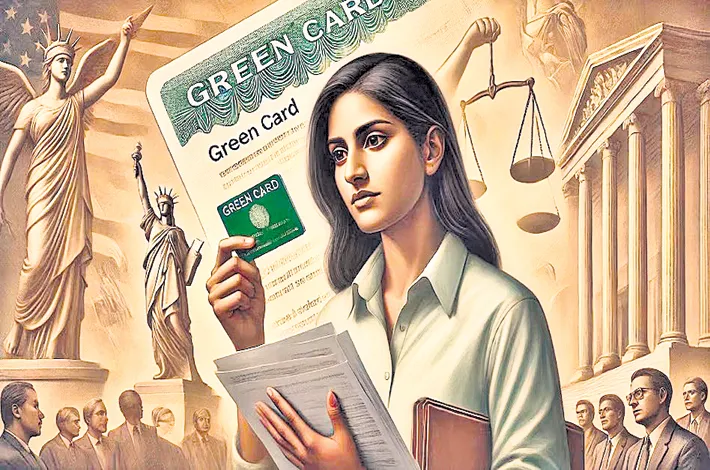
Marriage is no longer an automatic pathway to a United States Green Card, a shift that could significantly impact thousands of Indians and other foreign nationals hoping to secure permanent residency in America. Despite being eligible under family-based immigration rules, applicants now face far more rigorous scrutiny than before.
The change follows sweeping new guidance issued by the U.S. Citizenship and Immigration Services (USCIS), which came into effect on August 1, 2025. The updated policy, incorporated into the USCIS Policy Manual under “Family-Based Immigrants,” tightens procedures for petitions based on marriage to a U.S. citizen or lawful permanent resident. The stated objective is to curb fraudulent or sham marriages and ensure that only genuine couples obtain Lawful Permanent Resident (LPR) status. However, the new framework is also affecting many genuine couples with long-term plans to settle in the U.S.
A Green Card, officially known as a Permanent Resident Card, allows non-U.S. citizens to live and work permanently in the country and is often seen as a key step toward citizenship. For decades, marriage to a U.S. citizen was regarded as one of the most accessible routes to permanent residency. That perception is now changing.
Indians constitute one of the largest groups of Green Card applicants, particularly through employment-based and family-based categories. The tightening of marriage-based adjudications directly affects Indian citizens married to U.S. nationals or permanent residents, as well as those planning to pursue this route. Historically, marriage was attractive because it helped bypass long waiting periods associated with employment-based Green Cards.
Under the revised USCIS rules, a legal marriage certificate alone is no longer sufficient. Immigration officers are now required to assess the “totality of the relationship.” Applicants must submit extensive evidence demonstrating a shared life, including joint bank accounts, leases, insurance policies, household bills, utility records, photographs over time, travel history, correspondence, social media interactions, and affidavits from friends and family.
All marriage-based Green Card applications will now require mandatory in-person interviews with both spouses, ending earlier practices where interviews were sometimes waived. Officers will also conduct stricter background checks, closely examining applicants’ immigration histories, visa usage, and any inconsistencies in prior filings. Prolonged physical separation, unless supported by strong reasons such as employment or education, may trigger deeper investigations.
While marriage to a U.S. citizen still qualifies an applicant as an “immediate relative,” approval now depends on convincing evidence and credible interviews. Marriage remains a valid path to U.S. residency, but it now demands far more than a wedding certificate, placing the burden firmly on couples to prove the authenticity of their shared life.