10 October, 2026 | 1:16 AM


Is NJAC on return mode?
03-12-2025 12:00:00 AM
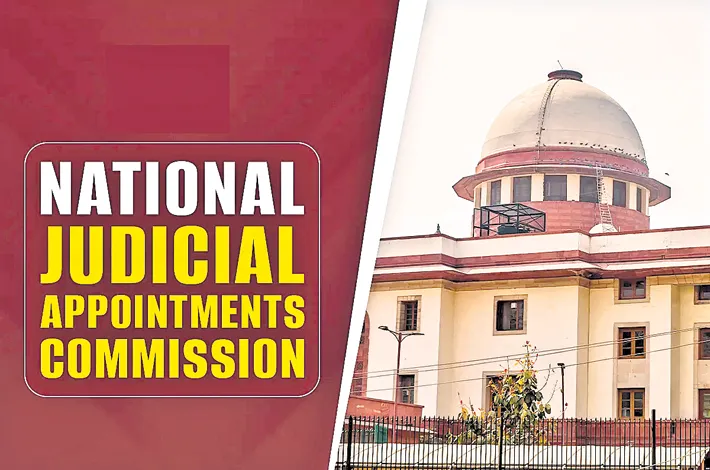
On 26 November 2025, Chief Justice of India Sanjiv Khanna Justice Surya Kant gave a seemingly harmless and normal oral assurance: “Yes, we will see.” Those four words, uttered in Courtroom No. 1, have electrified constitutional lawyers, politicians, and judges alike. Advocate Mathews J. Nedumpara’s decade-old prayer to revive the National Judicial Appointments Commission (NJAC) and bury the collegium system forever is suddenly no longer academic. For the first time since the unexpected 4:1 strike-down in 2015, the Supreme Court appears willing to reopen one of the most polarising chapters in India’s judicial history.
The original defeat of 2015
In 2014, Parliament passed the 99th Constitutional Amendment and the NJAC Act with near-unanimity (one lone dissent in Lok Sabha). The proposed commission was to have the Chief Justice of India as chairperson, two senior-most Supreme Court judges, the Union Law Minister, and two “eminent persons” chosen by a panel comprising the Prime Minister, the Leader of Opposition, and the CJI. For the first time since 1993, the executive would have a formal seat at the table of judicial appointments.
A five-judge bench struck it down on 16 October 2015 in Supreme Court Advocates-on-Record Association v. Union of India. The majority (Justices Khehar, Madan Lokur, Kurian Joseph, and Goel) held that the presence of the Law Minister and the “eminent persons” clause violated the “basic structure” doctrine because it compromised the independence of the judiciary. Justice J. Chelameswar’s lone dissent remains the most quoted judicial lament of the last decade: “The fortress of independence is not built on the fear of executive interference but on the strength of internal accountability.”
Defenders of the 2015 judgment—senior advocates like Fali Nariman, K.K. Venugopal (before he became Attorney General), and a large section of the Supreme Court Bar—still argue that any executive role, however diluted, is like a “secret agent of politicians”. They point to the 1980s and early 1990s, when transfers and appointments were allegedly used by the governments to punish inconvenient judges. While admitting that the collegium is not perfect, former CJI R.M. Lodha however opined that it is the only vaccine we have against, what he called “return to the days of committed judiciary.”
Viewpoint: Parliament as ultimate sovereign
Former Vice-President Jagdeep Dhankhar, former Law Ministers Ravi Shankar Prasad and Kiren Rijiju, and many others see the 2015 judgment as judicial overreach of the highest order. Their argument is simple and devastating: an amendment ratified by 16 state assemblies was nullified by four judges. “When the people’s representatives speak with one voice, who are judges to say ‘we know better’?” Dhankhar asserted in 2022.
Viewpoint three: Public Interest Litigator’s middle path
A third, less vocal but increasingly influential group—comprising Ashok Desai, Mohan Parasaran, and younger voices like Sanjay Hegde—believes both sides are stuck in 20th-century. They propose a hybrid: keep the NJAC structure but make the “eminent persons” chosen by a broader, supposed to be unbiased committee; mandate publication of reasons for selections and rejections; create a permanent secretariat with data on diversity, backlog reduction potential, and domain expertise of candidates. This group points out that the collegium has miserably failed on diversity. As of 2025, there have been just 2 Dalit Chief Justice of India and only five women have ever sat in the Supreme Court at the same time.
The timing of the revival plea is hardly coincidental. The Modi government enjoys its strongest-ever parliamentary majority and faces a Supreme Court that has, in the last two years, struck down the electoral bonds scheme, read down portions of the PMLA, and repeatedly pulled up the executive on appointments to tribunals and information commissions. The NJAC ghost offers a rare chance to reset the balance of power without appearing vindictive.
For the judges, reopening the issue risks being seen as surrender to executive pressure. For the government, pushing too hard risks confirming the very fears of authoritarianism that the 2015 bench articulated. And for the citizens—who rarely get a say in who interprets their Constitution—the irony is bitter: a system meant to protect their liberties remains the one arena where their elected representatives are treated as outsiders.