21 October, 2026 | 1:16 AM


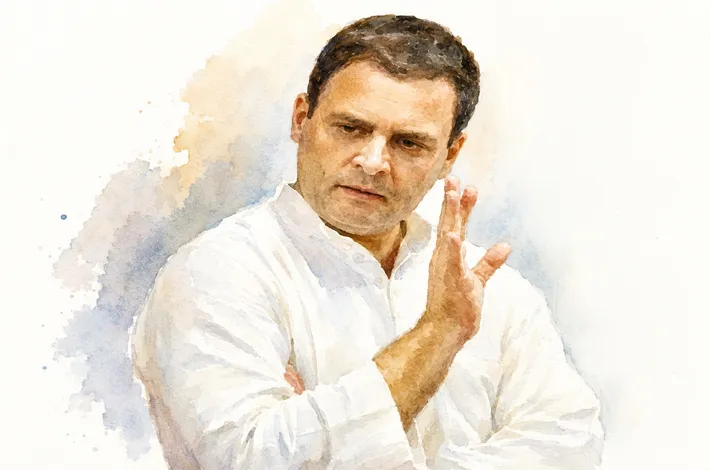
Is Rahul Gandhi Anti Hindu?
18-06-2026 12:00:00 AM
DEEPAK J I hyderabad
Rahul Gandhi, the prominent face of the Indian National Congress, has long positioned himself as a defender of secularism, constitutional values, and minority rights. However, in recent years, a significant section of public opinion and political discourse has accused him and his party of harbouring an "anti-Hindu" bias.
This perception stems from consistent patterns: fierce criticism of Hindu cultural organizations like the RSS, selective outrage over Hindutva, alliances with overtly religious minority groups and hypocrisy in governance.
One of the most cited incidents occurred during Rahul Gandhi's maiden speech as Leader of Opposition in the Lok Sabha on July 1, 2024. He stated: "All our great men have spoken about non-violence and finishing fear... But those who call themselves Hindu only talk about violence, hatred, untruth… Aap Hindu ho hi nahi" (You are not a Hindu). Prime Minister Narendra Modi and BJP leaders immediately condemned this as an insult to all Hindus, accusing Gandhi of equating Hinduism with violence while positioning the BJP as its true defender. BJP spokespersons framed it as part of a pattern of demonizing Hindus and Hindutva.
Critics argue that Rahul’s politics systematically undermines Hindu identity and institutions while extending undue accommodation to minority appeasement. In the recent Trump road controversy, Rahul had repeatedly labeled Prime Minister Narendra Modi as “Narendra Surrender” for engaging with Trump, portraying the U.S. leader as a bully hostile to India. Yet the Congress government in Telangana named a prominent road after Trump, citing economic ties. This duplicity, critics say, extends to cultural issues — Rahul’s ecosystem bashes Hindutva but pragmatically courts investments and global icons.
Other flashpoints include Gandhi's remarks on "Shakti" during the 2024 election campaign, which BJP interpreted as calling for a fight against Hindu divine feminine power, and his broader critiques of "Hindu terror" narratives from the UPA era or alleged minority appeasement policies. RSS functionaries have described his parliamentary interventions as a "sinister attempt to demonize Hindus and Hindutva," accusing him of repackaging a distorted version of “secularism” to divide society.
The perception recently deepened with former Rajasthan Chief Minister Ashok Gehlot’s statement that Indira Gandhi, if alive, would have banned the BJP for promoting Hindutva and targeting Muslims. This remark, made in 2026, was seen as revealing Congress’s “Emergency mindset.” In Kerala, the Congress-led government demanded apologies and resignations from three vice-chancellors for merely attending a public RSS centenary lecture. BJP leaders argue Rahul’s “Bharat Jodo Yatra” and “Hindu” symbolism are performative, masking a deeper ideological discomfort with assertive Hindu identity. Ashok Gehlot’s ban-BJP fantasy and Rahul’s own past remarks on “Hindu terror” or RSS are frequently cited as evidence of institutional bias.
Several commentators and right wingers have explicitly linked Rahul Gandhi’s politics to an anti-Hindu tilt. Eminent author and political observer Dr. Anand Ranganathan described Congress’s stance as the “tip of the hypocrisy iceberg,” accusing the party of treating Hindus as second-class citizens while shielding minority extremism. “Hindus are poisonous,” said a Samajwadi Party leader (Congress ally), prompting outrage from BJP and right wing ecosystem.
Ratan Sharda, RSS ideologue, argued that Congress’s selective secularism — comfortable with Muslim League platforms or Hamas-linked rallies but allergic to RSS — stems from vote-bank compulsions. “In a Hindu-majority India, how can RSS be an outcast?” he asked.
Some analysts see the debate as reflective of deeper polarization. Rahul's comments often target the BJP-RSS ecosystem specifically, not Hindus at large. For instance, he has praised Sanatan Dharma's emphasis on self-observation, humility, and compassion, claiming he has "read the Gita and Upanishads" and found no mandate for aggression. Supporters view accusations as a tactic to consolidate Hindu votes by manufacturing outrage, especially ahead of elections. Critics maintain that Rahul’s approach alienates the Hindu majority — estimated at 80% of the population — by equating cultural assertion with communalism.
Concern for minorities, not anti-Hindu
Congress leaders and Rahul’s supporters reject the “anti-Hindu” label as a BJP-orchestrated smear. The party senior leader Sanjay Jha emphasized that Hinduism’s core is tolerance and inclusivity. “Concern for minorities is actually the core tenet of Hinduism itself,” he argued, positioning Rahul’s politics as protective of constitutional secularism rather than hostile to Hindus. Jha highlighted issues like lynching, calls for genocide against Muslims by fringe BJP leaders, and the need to prevent 200 million citizens from feeling like second-class citizens.
Defenders point to Rahul’s temple visits, participation in Hindu rituals during election campaigns, and emphasis on syncretic Indian culture. They argue that criticizing RSS or Hindutva is not anti-Hindu but opposition to majoritarianism that marginalizes minorities. Party spokesperson Tehsin Poonawala, defending Telangana’s Trump road decision, framed Congress actions as pragmatic nationalism focused on development and equal partnerships, not ideology. Congress representatives like Harish Muhammad Ibrahim stress that vice-chancellors bear responsibility for shaping young minds and should avoid organizations perceived as promoting regressive ideologies.
“Congress under Rahul has an anti-Hindu mindset. Highlighted selective secularism — comfortable with Muslim League and extremists but allergic to RSS.”
– Ratan Sharda,
RSS ideologue
“Rahul Gandhi and Congress display hypocrisy by treating 80% of the population
(Hindus) as second-class citizens. ”
— Siddharth Yadav,
BJP party worker
“Rahul’s politics is not anti-Hindu but protective of constitutional secularism and preventing 200 million Muslims from becoming second-class citizens.”
– Sanjay Jha,
Congress spokesperson