21 October, 2026 | 1:19 PM


Middle East turmoil-What next for India?
20-01-2026 12:00:00 AM
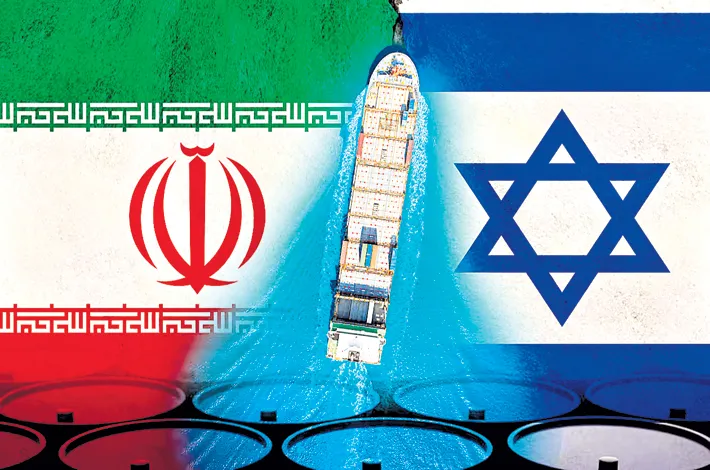
As per pro-government sources and voices, New Delhi has long maintained a careful and calculates posture toward the region's complex conflicts, embracing multi-alignment to engage opposing camps successfully
The geopolitical landscape in recent years has been dominated by bloodshed, war, and uncertainty, making moments of positive momentum rare and precious. It would have been encouraging to focus on the strengthening ties between India and Europe, bolstered by German Chancellor Friedrich Merz's successful official visit to India on January 12-13, 2026. This trip, his first to Asia since taking office, highlighted deepening strategic cooperation, including discussions on security, trade, emerging technologies, and the potential acceleration of an India-EU free trade agreement. With European leaders steadily engaging New Delhi as 2026 begins, such developments signal a constructive path forward amid global tensions.
Yet, attention inevitably shifts to the volatile Middle East, where fresh waves of protests in Iran once again dominate the region's fraught moral, political, and security landscape. These developments carry significant implications for India, particularly as U.S. President Donald Trump weighs the option of military strikes against Iran. Just days ago, on January 14, 2026, reports of imminent U.S. action circulated widely, fueled by ground movements of military assets and frantic expert analysis.
This echoed Trump's previous decisive intervention less than a year earlier, when, in June 2025, U.S. B-2 stealth bombers struck Iran's key nuclear enrichment facilities (including Fordow, Natanz, and Isfahan) during the 12-day Israel-Iran war. That operation, part of Israel's broader campaign to dismantle Iran's nuclear program and weaken its proxies following the October 2023 Hamas attack, set a precedent for bold U.S. involvement.
From India's vantage point, no emerging scenario in the Middle East seems genuinely favorable. A full collapse of the Iranian regime would trigger acute destabilization, spreading conflict to ethnic groups like Kurds, Baloch, Azeris, and others, while involving Israel and Syria. However, there is a section of geopolitical experts and observers who opine that a weakened but enduring regime under intensified sanctions poses even greater long-term risks. As per some ex-diplomats, India's strategic balance is further complicated by deepening rifts in the Gulf, notably between its key partner, the United Arab Emirates (UAE), and Saudi Arabia. At the same time, the UAE appears on the back foot amid these tensions, while Saudi Arabia drifts closer to allies like Pakistan and Turkey, creating uncomfortable new convergences.
As per pro-government sources and voices, New Delhi has long maintained a careful and calculates posture toward the region's complex conflicts, embracing multi-alignment to engage opposing camps successfully. This approach has included energy ties with Iran for strategic depth in Afghanistan and access to Central Asia, as well as the International North-South Transport Corridor (INSTC)—a complementary route to reduce dependence on the Suez Canal. Meanwhile, few senior officials of Ministry of External Affairs view that India has leveraged goodwill with GCC countries and Israel through initiatives like the India-Middle East-Europe Economic Corridor (IMEC), building on the Abraham Accords from Trump's first term.
However, both INSTC and IMEC have faltered due to persistent regional instability since 2023. With India-U.S. bilateral trade at around $1.6 billion and ongoing trade agreement talks stalled, New Delhi has little incentive to antagonize Washington. The broader damage lies in the uncertainty deterring private investment and long-term plans, including INSTC extensions to Armenia, where India is a major defense supplier.
There is also another view that beyond Iran, India must navigate the Saudi-UAE rift, which risks new alignments, including closer Riyadh-Ankara ties potentially complementing Saudi-Pakistan defense cooperation. While no formal tripartite pact exists, Pakistan's role as a conduit for technology and intelligence across China, Turkey, the Caucasus, and the Middle East adds complexity. India, despite convergences with these players, has often been sidelined in shaping conflict resolutions, as seen in Gaza and Armenia.
The Middle East today faces not a single crisis but a confluence of crises, with Israel pressuring Iran's proxies, Syria fractured, and Turkey and Israel asserting greater influence. Amid this, the Saudi-UAE divide extends to proxy conflicts in the Red Sea regions (Yemen, Somalia, Ethiopia, and beyond). India must proactively engage emerging UAE-Israel convergences to safeguard opportunities while monitoring these shifts. As these dynamics unfold, India's multi-alignment strategy faces its toughest test yet—balancing caution with proactive diplomacy in an increasingly unpredictable region.