24 October, 2026 | 7:49 PM


Outlook 2026: Economists' perspectives on India's economic trajectory
23-12-2025 12:00:00 AM
The current account deficit (Total imports minus exports)is broadly consensus at around 1% of GDP, but balance of payments inflows(surplus if inflows into the country over outflows) show greater variance, averaging $7.6 billion yet ranging from near-zero or negative outflows to as high as $20 billion
A recent discussion conducted by business forum of leading economists paints a cautiously optimistic picture for India's economy in the coming years. For the current fiscal year (FY26), GDP growth is projected at 7.5%, but expectations moderate to 6.8% in FY27, reflecting a sharp divide among experts—half forecasting around 6.5%, while the other half anticipates over 7%. Consumer Price Index (CPI) inflation is expected to average 4% in FY27, again with a split: 50% of economists predicting as low as 3.8% and the rest above 4%.
The current account deficit (Total imports minus exports)is broadly consensus at around 1% of GDP, but balance of payments inflows(surplus if inflows into the country over outflows) show greater variance, averaging $7.6 billion yet ranging from near-zero or negative outflows to as high as $20 billion. Most economists expect limited rupee depreciation, with the currency stabilizing around 92 to the dollar by the end of FY27.
Chief economist of a leading public sector bank remained confident in the government's glide path. Despite pressures on revenue and slower nominal GDP growth, he expects the Centre to meet its fiscal deficit targets through expenditure compression and switches, potentially bringing it below 4.4% in the coming year.
Gross borrowings for Centre and states combined are seen at 27-28 trillion rupees—not significantly higher than current levels—with net borrowings lower due to buybacks. He anticipates some RBI open market operations (OMOs) of 1.5-2 trillion rupees to support market appetite, but does not foresee sharp rises in the 10-year government securities yield, which he expects to hold steady or trend marginally lower.
Inflation outlook across various sections was moderate. Different groups of economists see CPI hovering around 4%, within a 3.8-4.2% range, supported by structural declines in core inflation trends. Some of them highlighted broader Asian dis-inflationary(reduction in inflation) forces, including China's sharper-than-expected slowdown, which should keep commodity prices in check. Nominal GDP growth, however, remains a point of caution: while the poll averaged 9.7% for FY27, Some even believes 10.5-11% is achievable if real growth holds near 7%.
The discussion turned to capital expenditure as a growth driver. Government capex, having peaked at around 3.2% of GDP, is expected to moderate with only marginal increases ahead. Financial experts were more upbeat on private capex picking up the slack. Indicators such as rising project pipelines, approvals in bank funding, and capacity utilization above long-term averages for over 13 quarters suggest incremental momentum. Easing domestic financial conditions—through liquidity, credit growth, and currency adjustments—along with lower global trade uncertainty post-US elections, could further support rate-sensitive sectors like housing.
GST Reforms
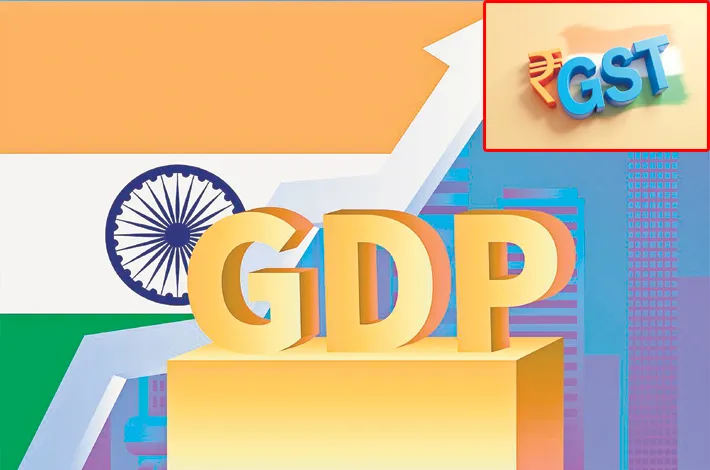
Regarding GST, leading experts expressed confidence that the groundbreaking GST 2.0 reforms implemented from September 22, 2025, will drive long-term revenue growth, even as November collections showed a modest slowdown. The reforms, described as "path-breaking and unprecedented," simplified India's GST structure into primarily two slabs—5% and 18%—while introducing a 40% rate for luxury and de-merit goods. Key reductions included shifting many consumer durables, automobiles, and appliances from 28% to 18%, alongside cuts on essentials to boost consumption.
One expert, a top executive of a leading taxation firm dismissed concerns over the November figures, noting that collections remained "neck-to-neck" with the prior year despite significant rate reductions of up to 10 percentage points in several categories. "It takes a few months for volumes to catch up and compensate for lower rates," he said, drawing parallels to similar patterns after 2018-19 cuts.
He highlighted strong performance across sectors like automobiles, real estate, FMCG, travel, and hospitality, contributing to India's robust GDP growth exceeding 8% in recent quarters. "With these reforms combined with high GDP momentum, GST collections are destined to rise significantly. There's only one way they can go—up."
Another management consultant agreed, pointing out that the revenue-neutral rate has fallen below 10%, yet overall collections have grown substantially over the years. He acknowledged the expected short-term dip but emphasised that Rs 48,000 crore is manageable in the broader fiscal context. "We're heading in the right direction, with year-on-year growth projected around 9% post-cuts.", he remarked.
On total tax collections for FY26, experts anticipate no major deficits, supported by economic momentum and greater disposable income. They noted reduced seasonality in GST inflows, making revenues more stable and predictable—beneficial for fiscal planning compared to quarterly advance taxes. External risks dominated the closing concerns. Various economists flagged potential challenges from global price bubbles, elevated valuations and possible US labor market weakness. Overall, the experts' outlook for 2026 balances steady growth and controlled inflation against the need for private investment to step up and vigilance on global financial stability. With many domestic tailwinds emerging, the year could mark a transition toward more balanced and sustainable expansion.