30 September, 2026 | 12:20 PM


Rare liver transplant saves 18-month-old at Osmania Hospital
01-05-2026 12:00:00 AM
Metro India News | Hyderabad
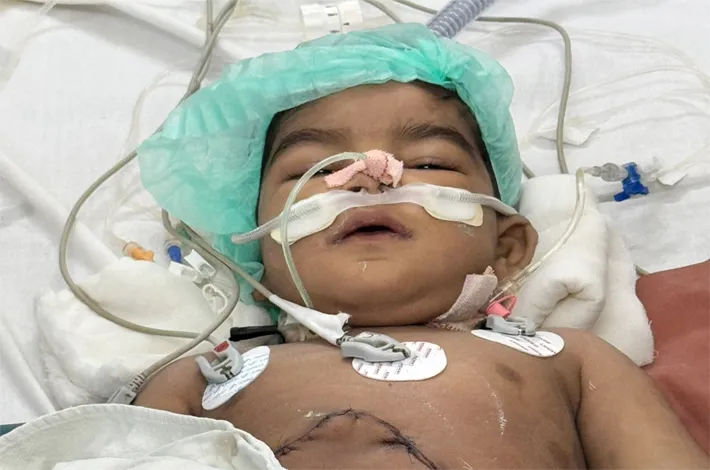
In a remarkable medical feat, doctors at Osmania General Hospital successfully performed a complex liver transplant on an 18-month-old boy suffering from Glycogen Storage Disease (GSD) type III, a rare metabolic disorder.
The child, weighing just 10 kg, underwent a 14-hour-long living donor liver transplant, during which doctors implanted a 240-gram portion of liver donated by his father.
The surgery was led by Prof. Dr CH. Madhusudhan, head of the department of surgical gastroenterology, along with a multidisciplinary team. Doctors said the child is now stable and recovering well.
The boy, identified as Afan, son of Mohd Irfan and Saziya from Hyderabad, had been experiencing severe health issues, including excessive hunger, abdominal distension and episodes of drowsiness, particularly in the early hours of the day.
Medical investigations revealed recurrent low blood sugar levels, high lipid content and an enlarged liver. Further evaluation confirmed Glycogen storage disease type III.
Explaining the condition, doctors said the disease is caused by the deficiency of an enzyme required to convert stored glycogen into glucose. This leads to repeated hypoglycaemic episodes, liver enlargement and muscle weakness, with potential long-term complications affecting the heart, brain and skeletal muscles.
Given the child’s deteriorating condition, doctors opted for a liver transplant as a definitive treatment. The father was identified as a suitable donor, and a portion of his liver was surgically transplanted into the child.
Hospital authorities said the highly expensive procedure, which can cost up to Rs 50 lakh in private hospitals, was carried out free of cost under the Rajiv Aarogyasri scheme. Post-transplant medications will also be provided free by the government.
Doctors noted that such procedures are extremely rare in government hospitals in India, especially for conditions like GSD.