1 October, 2026 | 7:40 PM


RTC sliding toward Andhra control?
30-03-2026 12:00:00 AM
metro india news I hyderabad
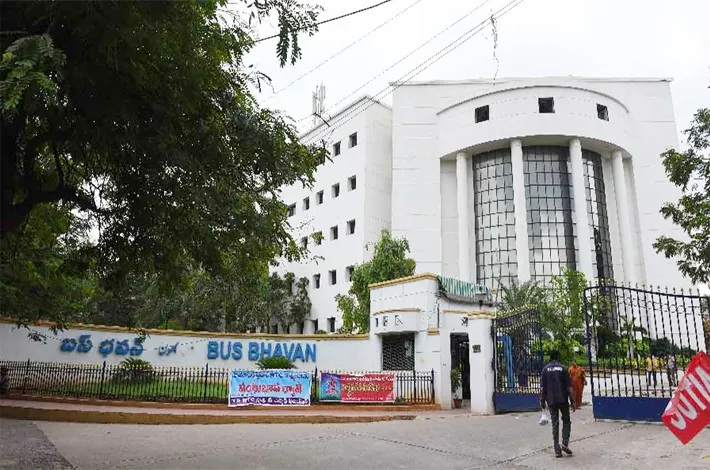
Growing concerns are being raised over the future of the state-run Road Transport Corporation (RTC), with employee unions alleging that recent government decisions are steadily paving the way for private, largely Andhra-based corporate control over the public transport system. What was once seen as isolated administrative decisions across departments is now being viewed as part of a broader pattern, with RTC emerging as the latest flashpoint.
Until recently, the induction of personnel from Andhra Pradesh into Telangana’s government departments was done discreetly, but that trend has now become overt. From the irrigation department to the power sector, officials at various levels—including advisory roles, OSDs, and even DEE-rank officers—are increasingly being brought in from Andhra Pradesh and placed in key positions. Employee unions argue that this is not limited to a few departments but is gradually becoming a widespread phenomenon across the state machinery.
They allege that the government appears to be prioritizing individuals and interests from the neighboring state over local employees, raising serious concerns about administrative autonomy.
Beyond government jobs, unions claim that contracts, businesses, companies, and even land assets in Telangana are increasingly falling under the control of Andhra-based leaders, contractors, and business groups. They cite the controversial Naini coal mine issue in Singareni as a recent example where the involvement of Andhra contractors drew sharp criticism. Against this backdrop, attention has now shifted to RTC, where a series of developments have triggered alarm among workers.
The introduction of electric buses (EVs), initially promoted as an environmentally friendly move to reduce carbon emissions, is now being questioned by RTC unions. They allege that the policy has been structured in a way that benefits private investors, particularly from Andhra Pradesh. Under the phased rollout of EV buses, private corporate companies are manufacturing these buses, availing a central government grant of Rs 36 lakh per vehicle, and leasing them to RTC.
Currently, around 500 EV buses are operating across Hyderabad city and other parts of the state. However, the rental model has drawn criticism, with RTC reportedly paying varying rates to different companies—around Rs 40.50 per kilometre to one firm and Rs 60 per kilometre to another. Despite the presence of multiple EV manufacturers in the market, unions allege that contracts have been selectively awarded in a manner favoring Andhra-based investors.
The issue has intensified with the use of RTC depots by private companies. Telangana has approximately 96 RTC depots, and these are now being used to charge and maintain the leased EV buses. The government plans to expand the EV fleet to 3,000 buses within the next two years and aims to transition entirely to electric buses over the next five to six years.
Unions argue that allowing private companies to use RTC depots for charging infrastructure and maintenance effectively hands over operational control. They point out that RTC is bearing significant costs—estimated between Rs 10 crore and Rs 12 crore—for setting up EV substations within its depots, while private companies are only covering installation expenses. Despite using valuable depot land and infrastructure, these companies are reportedly not paying any rent, which workers say amounts to indirectly transferring public assets into private hands.
Employees further allege that the government is simultaneously failing to clear dues owed to RTC, pushing the corporation deeper into financial distress. They fear that this combination of rising debt and increasing dependence on private operators could eventually strip RTC of its operational control.
According to unions, the phased introduction of leased EV buses is part of a larger strategy. They claim that as more depots come under the operational influence of private companies, RTC’s role will gradually diminish. In the long run, they warn, the corporation itself could be fully privatized, with Andhra-based contractors and business groups taking complete control.
Drawing parallels with the alleged influx of Andhra officials into various government departments, unions argue that a similar pattern is now unfolding in RTC. If the current trajectory continues, they caution, the state-run transport system could soon be entirely in the hands of private contractors, fundamentally altering its public service character.