1 October, 2026 | 9:37 PM


Vijaypat Singhania’s ordeal
30-03-2026 12:00:00 AM
A test case in point
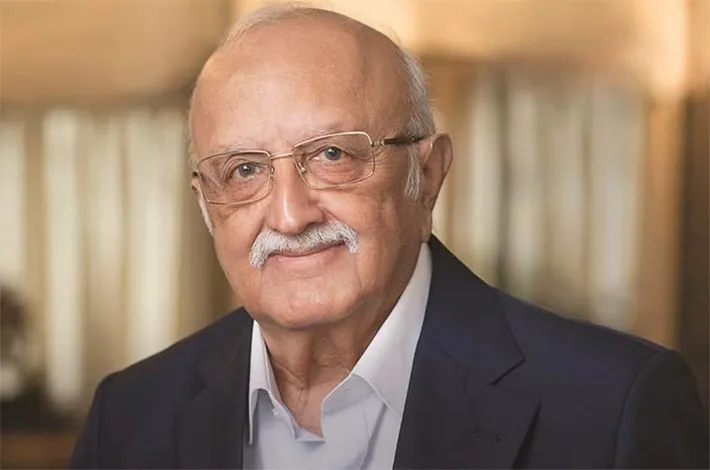
Hyderabad: Padma Bhushan awardee Vijaypat Singhania, the legendary industrialist who transformed Raymond Group into India’s premier suiting brand, passed away peacefully at his residence here on Saturday evening. He was 87. His son and current Raymond Chairman Gautam Singhania announced the news on X, describing his father’s demise as a moment of “profound grief.” The funeral will be held today at 1:30 pm in Mumbai.
Singhania’s death has cast a long shadow over the business world, coming just as the Telangana government introduced the Parents Support Bill (Telangana Employees Accountability and Monitoring Bill-2026) in the state legislative assembly. Lawmakers cited rising complaints of parental abandonment, and Singhania’s well-documented estrangement from his son has become an unspoken but poignant backdrop to the debate.
Born on October 4, 1938, into the prominent Singhania family, Vijaypat inherited a modest textile mill when the family acquired Raymond in 1944. He assumed chairmanship in 1980 after the death of his cousin and steered the company through three transformative decades. Under his leadership, Raymond evolved from a single fabric mill into a diversified conglomerate spanning premium textiles, ready-to-wear apparel, steel, and hospitality. He turned “The Complete Man” campaign into a cultural phenomenon, making Raymond synonymous with elegance and trust across Indian households. By the time he stepped back, the group was valued in thousands of crores and counted among the country’s most respected brands. Singhania’s vision and risk-taking earned him the Padma Bhushan in 2006 and the title of Sheriff of Bombay.
Still, Singhania was never merely a boardroom titan. His flamboyant lifestyle captured public imagination. An intrepid aviator, he set a world record in 2005 by reaching the highest altitude in a hot-air balloon at age 67. In 1988, he piloted a microlight aircraft from London to Delhi in 23 days, chronicling the feat in a bestselling memoir. He owned private jets, yachts, and a sprawling family mansion — JK House — in Mumbai’s elite Malabar Hill. Photographs of him in flight gear or hosting glittering parties painted the picture of a man who lived life at full throttle, balancing industrial ambition with personal adventure.
That glittering chapter ended abruptly in 2015 when Singhania gifted his entire 37.17 per cent stake in Raymond — then valued at over Rs 1,200 crore and today estimated at nearly Rs 12,000 crore — to his younger son Gautam.
He later described the decision as the “height of stupidity,” claiming it stemmed from emotional blackmail and assurances of a peaceful retirement. What followed, according to Singhania’s public statements and court filings, was a systematic ouster. He was removed as chairman-emeritus, physically barred from his office, and denied entry to JK House. His personal belongings, including the Padma Bhushan medal, were allegedly taken. Forced into a modest rented two-room apartment, the once-wealthiest industrialist lived without a car or driver, surviving on meagre residual funds.
In interviews and his 2021 autobiography-An Incomplete Life, Singhania spoke bitterly of betrayal. “I gave him everything… He backed out in two seconds,” he told reporters. He accused his son of denying him access to grandchildren and turning the company he built into a battleground. Legal skirmishes dragged on for years; the father-son rift played out in boardrooms, courtrooms, and the media. Even as Gautam expanded Raymond’s fashion footprint, Vijaypat lived in relative obscurity, his final years marked by regret, isolation, and quiet indignation. Friends described a man who once commanded boardrooms now reduced to writing letters seeking intervention from authorities.
Tributes poured in from industry leaders, who remembered Singhania as a pioneer who dressed millions and touched the skies. “His vision defined modern Indian menswear,” said a senior CII official.
Vijaypat Singhania is survived by his wife and children, including Gautam. As the nation mourns a larger-than-life industrialist and aviator, his final chapter serves as a sobering reminder that no fortune is immune to the fractures of family. The Telangana bill, now under legislative scrutiny, may well become the first institutional response to prevent other parents from sharing his lonely fate.