11 October, 2026 | 6:19 PM


Rupee and Dollar: Anticipation and Ambit
06-01-2026 12:00:00 AM
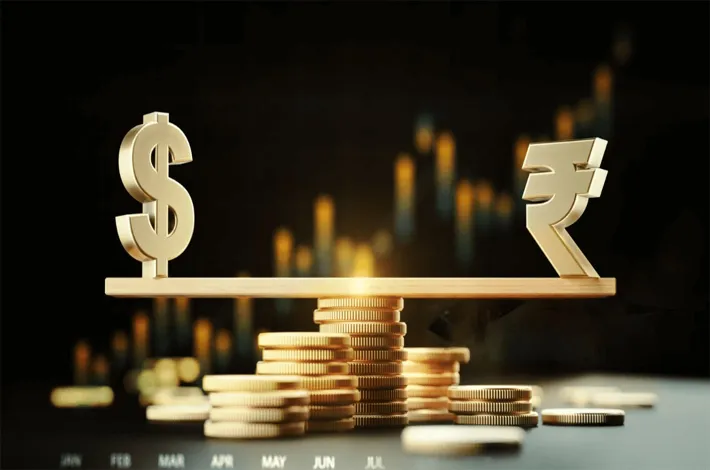
Global forex market has daily volume of $10 trillion. Volume of daily trade in goods & services in the world is $700 billion. Daily volume of the bond markets is $ 560 billion, equity markets is $ 424 billion, and cross-border trade is $100 billion. Annual global cross-border investment of $1.58 trillion breaks down to $6.1 billion per day. Thus, with close to 100 times volume over the underlying transactions value, forex is the biggest market in the world. Countries such as North Korea, Cuba, Vatican City, Monaco, etc., do not have stock exchanges and listed companies.
But there is no country without global trade and without forex market. Countries with higher forex volumes include UK with $4.2 trillion, USA with $2.2 trillion, Singapore with $1.3 trillion, Hong Kong with $0.9 trillion, China with $0.8 trillion, and Japan with $0.4 trillion. India has $60 billion daily forex turnover against its total domestic activity of $30 billion. Forex volumes include forex trade, merchandize trade, remittances, and foreign investments. Same is the situation for most of the countries.
However, India experiences critical impact from currency exchange prices as its stakeholders face severe challenges. Reserve Bank of India (RBI) must maintain forex reserves to meet import bills. Businesses must settle trades. Individuals have remittances for foreign expenses. Forex traders must settle positions. Households get impact of exchange induced prices of products and gold.
From Rs. 17 in year 1991 to the present Rs. 90 against US Dollar, Rupee depreciated 430% cumulatively and on an average 4.5% over the past 35 years. The annual depreciation in the last 10 years is 5%, last 5 years 4%, and in the last year again 5%. These depreciations are net after the occasional interventions by the RBI. During 2013 taper tantrum, buying back of bonds by US Fed pushed US bond-yields higher.
This caused return of investments from many countries back to the US. Currencies of many countries depreciated severely. Indian Rupee slipped more than 20% against US Dollar. After depreciating from Rs. 55 to Rs. 69, with interventions of RBI, Rupee recovered to 62 levels. The active intervention at that time was facilitated by India’s managed float exchange rate mechanism. It is not possible for any country to hold fixed exchange rate without impacting the economy.
Hong Kong and Saudi Arabia are exceptions due to their economic ties. Hong Kong pegged HK Dollar to US Dollar for 43 years now and is still stable although there were instances of real estate bubbles. Saudi Arabia pegged its Riyals to US Dollar for 40 years now. Rupee is currently hovering at 90 against US Dollar after touching 91.38 in December 2025. Between January to December 2025, RBI spent $35 billion (Rs. 3,10,000 crs) to support Rupee value.
When Rupee touched 91.38 levels, market expected Rupee to see further accelerated depreciation. But timely interventions of RBI influenced Rupee to trade with lower daily swings of 0.06%. The situation is still uncertain. US tariffs issue is still pending, oil imports are continuing higher, and India’s current account deficit remained higher at $24 billion in Q3 of FY 2025-26. The current forex reserves of $696 billion provide teeth to RBI for more interventions if exchange rate slips way beyond 90 levels.
However, as per the current global developments, oil prices may have bearish trend. Reversing their past few months trend, FIIs may infuse funds into Indian markets. In the immediate future Rupee may see mild appreciation and further interventions may not be required. Markets may expect RBI to cause induced appreciation for Rupee. But any insistent intervention by RBI may cause weakness, increased inflation, outflow of foreign investments, and loss of forex reserves.
Also, the crawling peg exchange rate mechanism of RBI restrains it from intervening unless it severely warrants. Due to these reasons, Rupee may mildly appreciate, RBI may not intervene, and the forward premiums may moderate. Correspondingly, FII inflows are expected, RBI may buy Dollars to refill its reserves, and Indian stock markets may see positive actions.
- Dr. Kishore Nuthalapati
The author is serving as the CFO of BEKEM Infra Projects
Pvt Ltd