21 October, 2026 | 4:40 PM


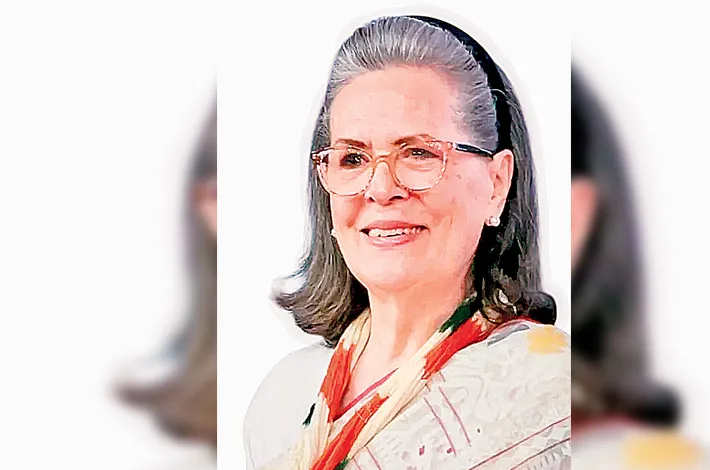
Sonia Gandhi turns 80
09-12-2025 12:00:00 AM
Under her leadership, the UPA years saw the introduction of several rights-basedwelfare legislations, including the Right to Information Act, MGNREGA, the Right to Education Act, and the National Food Security Act.
Sonia Gandhi, who has shaped the Congress party’s course for nearly three decades, turns 80 today. The milestone offers an opportunity to reflect on her role in navigating the party through periods of crisis and transition.
In Telangana, Sonia Gandhi continues to command a special place in public memory for her role in the statehood process. Despite political resistance, including from within her own party, she moved the 2013 Congress Working Committee Resolution that paved the way for the creation of Telangana — bringing to a close a movement that had stretched over several decades.
Sonia Gandhi’s political journey has often been defined by her restraint. She has projected politics as public service rather than a pursuit of office, most visibly in 2004 when she declined the prime ministership after leading the Congress to a surprise victory. Her supporters view the decision as an example of personal conviction; her critics frame it differently. Either way, it remains one of the most debated moments in contemporary Indian politics.
Under her leadership, the UPA years saw the introduction of several rights-based welfare legislations, including the Right to Information Act, MGNREGA, the Right to Education Act, and the National Food Security Act. Laws on forest rights, manual scavenging, and land acquisition were also passed during this period, shaping the governance landscape in significant ways.
Her personal background has been a recurring theme in political discourse — from her early years in Italy and her student life in Cambridge, to her marriage into the Nehru–Gandhi family. Those close to her often recall her low-profile lifestyle and her decision to avoid political roles for years, including after the assassination of Rajiv Gandhi. She eventually entered active politics in 1998, at a time when the Congress faced internal divisions and electoral setbacks.
Sonia Gandhi gradually built her political stature, establishing rapport across state units and learning the workings of Parliament. Her interventions in debates — including on the Kandahar episode and the POTO legislation — signalled her growing confidence as Leader of the Opposition.
As she steps into her 80s, Sonia Gandhi remains a senior figure in the Congress and one of its key voices at a time of heightened political polarisation. For many within the party, she represents continuity; for others, a link to a different era of politics. Her role in the Congress’s future trajectory will continue to draw close attention.