15 September, 2026 | 10:46 AM


Systemic flaw or mismanagement?
05-12-2025 12:00:00 AM
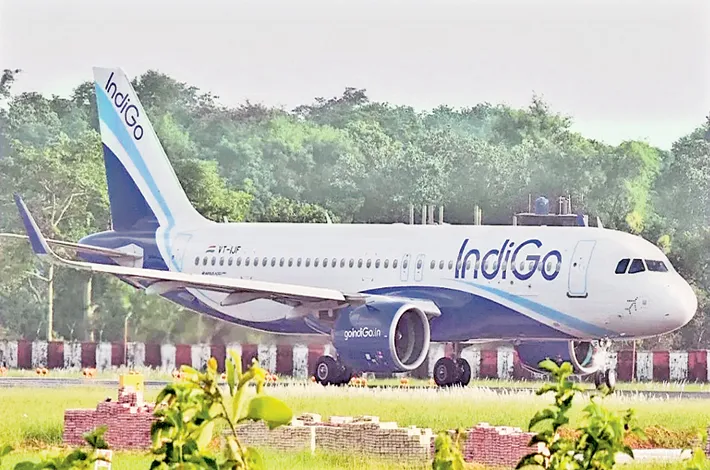
Punctuality Plunge
- 110–200 flights cancelled in one day
- Over 2,200 flights operate daily
- On-time performance dropped to 35%, implying ~1,400 delayed flights
- Crew weekly rest increased from 36 to 48 hours
- Night landings per crew reduced from 6 to 2
- Winter schedule added 856 weekly flights across Indian carriers
India’s largest airline, Indigo, is grappling with one of its most severe operational crises in history, leaving tens of thousands of passengers stranded and sparking a nationwide debate about aviation preparedness, safety, and communication. What began as scattered delays has escalated into a full-blown meltdown, with cancellations, baggage chaos, and plummeting punctuality across major airports.
The crisis became fully visible on Wednesday when Indigo cancelled at least 110 flights, though some sources suggested the number could exceed 200. Operating more than 2,200 flights daily, the airline saw its on-time performance drop to just 35 percent—a dramatic fall for a carrier long associated with punctuality. This implies around 1,400 delayed flights in a single day. Airports in Delhi, Mumbai, Bengaluru, and Hyderabad reported widespread disruptions, leaving terminals in chaos.
Passengers scrambled to check last-minute updates, often discovering delays only upon arriving at airports. The holiday season has magnified the impact, with even a 5 to 10 percent disruption affecting hundreds of flights and tens of thousands of travellers.
At the heart of the crisis is the phased rollout of Flight Duty Time Limitation (FDTL) norms, which restrict the maximum hours pilots and cabin crew can operate. Introduced gradually, the new regulations became stricter from November 1. Crew now require 48 hours of weekly rest, up from 36, reducing available staff significantly. Night landings per crew were cut from six per week to two, directly affecting Indigo’s reliance on late-night and red-eye flights.
These changes caused acute crew shortages, amplifying delays and cancellations. Aviation experts say the airline should have anticipated the effects. Indigo’s on-time performance has dropped to the lowest among major Indian carriers, highlighting management and planning shortcomings.
Passengers reported confusion and lack of assistance. Rajkumar Rawal described chaos at Delhi Terminal 1, where travellers waited three to four hours for baggage. Multiple belts were non-functional, and staff were unable to provide information, leaving passengers with medical emergencies or connecting flights stranded. This points to a major failure in communication.
Captain Amit Singh noted that when airlines fail to communicate during crises, the system collapses. India’s aviation oversight relies heavily on self-regulation, with airlines expected to maintain robust internal processes. When those fail—due to weather, technical issues, or roster shortages—passengers bear the brunt. Communication gaps between airlines, airports, regulators, and passengers foster mistrust and inefficiency.
Aviation analyst Devesh Agarwal said carriers were caught off guard by the FDTL rollout, expecting a possible extension. He explained that Indigo’s point-to-point network, unlike hub-and-spoke models of other carriers, makes operations vulnerable. Many pilots travel as “deadheads” to reach operational cities. A single delay triggers domino effects across multiple flights. With 2,200 daily flights, even minor disruptions escalate quickly.
Agarwal added that small issues—software updates, winter congestion, airport belt failures, and adverse weather—combined with crew shortages to create a perfect storm. While Indigo cited “unforeseen operational challenges,” experts question why other carriers were largely unaffected, pointing to management failures as the main reason.
Dr. Vandana Singh highlighted that Indigo’s aggressive expansion and reliance on late-night operations made it vulnerable under the new rules. Proactive planning for FDTL implementation was lacking, and crew management failures, not technology glitches, are the root cause of the crisis.
The debate also touches on airport infrastructure and passenger experience. Baggage belt failures prevent proper loading of security-screened luggage, while passenger details often fail to reach airlines when booked through travel agents. Experts advise passengers to update their contact information directly with airlines to receive flight updates.
Looking ahead, analysts say Indigo’s recovery will not be immediate. Although the airline indicated stabilization could take 48 hours, ripple effects may last a week or more. Resetting rosters, clearing backlogs, and restoring punctuality across 2,200 flights daily will take time. Concurrently, a new debate has emerged over rising airport user development fees, with travellers questioning why they should pay extra when basic services fail.
As Indigo struggles to regain control, the episode raises wider questions about safety culture, fatigue management, data transparency, and financial pressures on low-cost carriers. For now, passengers continue to face uncertainty while the aviation sector closely monitors how India’s busiest airline recovers from one of its biggest operational shocks.