19 September, 2026 | 3:05 AM


Telangana’s start-up ecosystem gains traction
20-05-2026 12:00:00 AM
metro india news I hyderabad
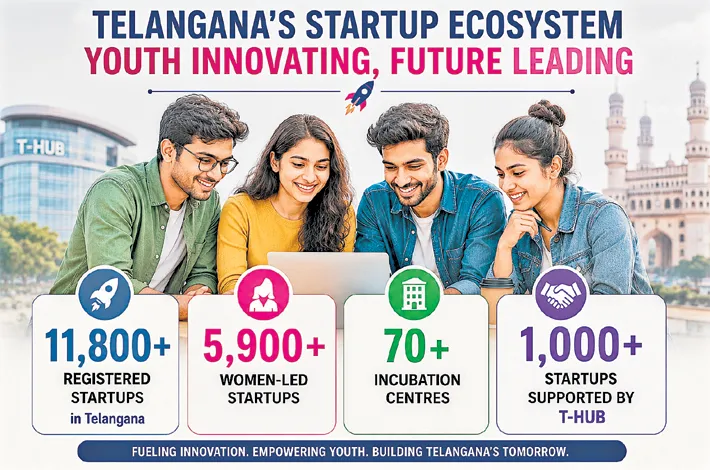
The start-up ecosystem in Telangana is gaining traction. The youth is turning towards small businesses, digital services, freelancing and start-ups. According to the State Startup Portal, Telangana currently has more than 11,800 registered start-ups. Significantly, around 5,900 of these are women-led start-ups. The State also has over 70 incubation centres supporting entrepreneurship and innovation.
Hyderabad, which is emerging as one of India’s major startup hubs, is opening up new opportunities for aspiring entrepreneurs. The government says platforms such as T-Hub are providing technical support, mentoring, investor connections and market access to young innovators. Statistics indicate that T-Hub has supported more than 1,000 startups so far. WE-Hub is conducting special programmes to encourage women entrepreneurs, while TASK is focusing on improving employability skills among students in line with industry requirements.
Youth are increasingly entering sectors such as food delivery, cloud kitchens, YouTube channels, social media marketing, graphic designing, app development, freelance coding and digital content creation. Interest is growing in businesses that can be started from home with small investments. Even in rural areas, young people are exploring opportunities in agritech, dairy, food processing and handicraft product sales.
However, experts point out that turning startup dreams into reality is not easy. Raising initial capital remains a major challenge. Many youth struggle to obtain bank loans, while private investor support is limited. Lack of knowledge about business management, marketing, accounting, legal permissions and taxation is forcing several entrepreneurs to abandon their ventures midway.
Analysts say rural youth face greater difficulties due to weaker market connectivity, limited digital infrastructure and lack of training opportunities compared to urban areas. Financial conditions within families are also becoming a hurdle, as many parents still prefer stable salaried jobs over risky business ventures.
Meanwhile, women are also showing growing interest in self-employment through online boutiques, home food businesses, beauty services and digital content creation. Yet issues related to safety, financial independence and family responsibilities continue to remain challenges.
Though governments claim to be promoting self-employment through Mudra loans, startup schemes and entrepreneurship incentives, criticism persists that the benefits are not effectively reaching deserving youth at the grassroots level. Many complain that they are forced to make repeated visits to banks for loans.
Despite the challenges, analysts believe the idea that self-employment is the future is gaining strong momentum among Telangana’s youth. However, they stress that the success of this transformation will depend not only on the determination of young people but also on sustained government support, investment access, market opportunities, skill development and stable policies.